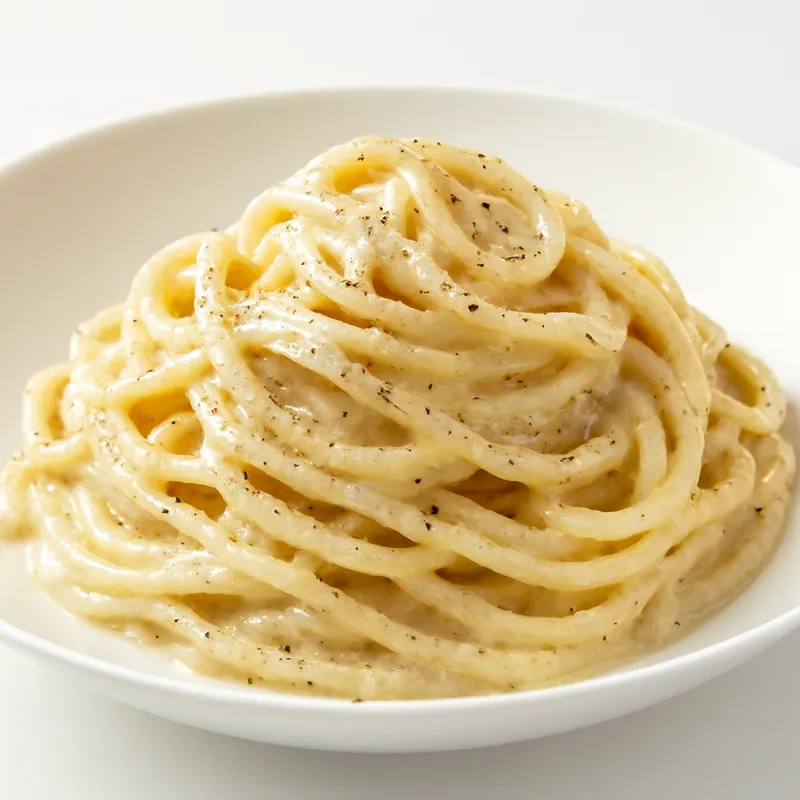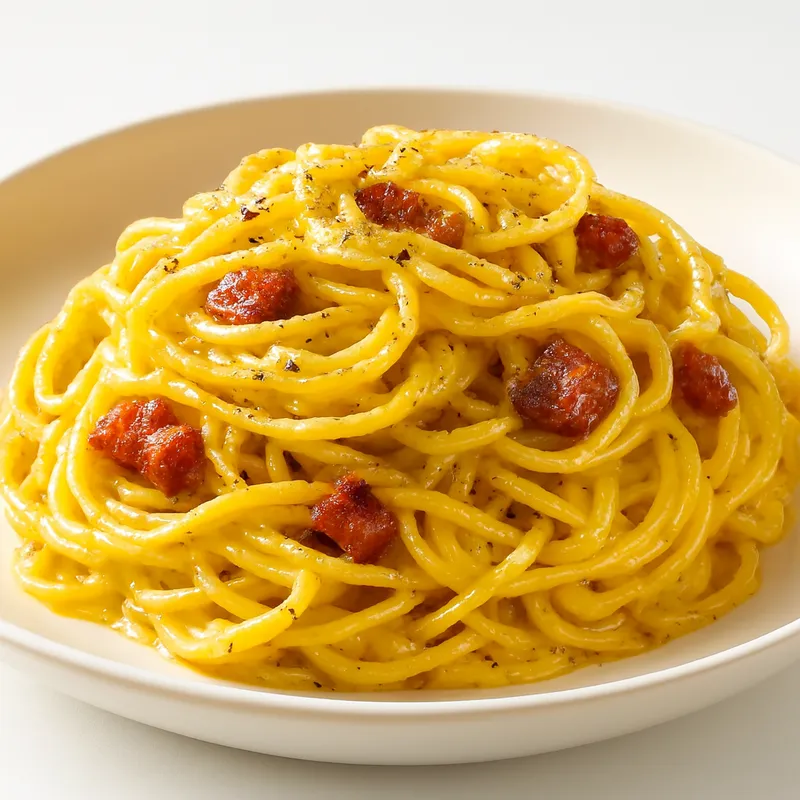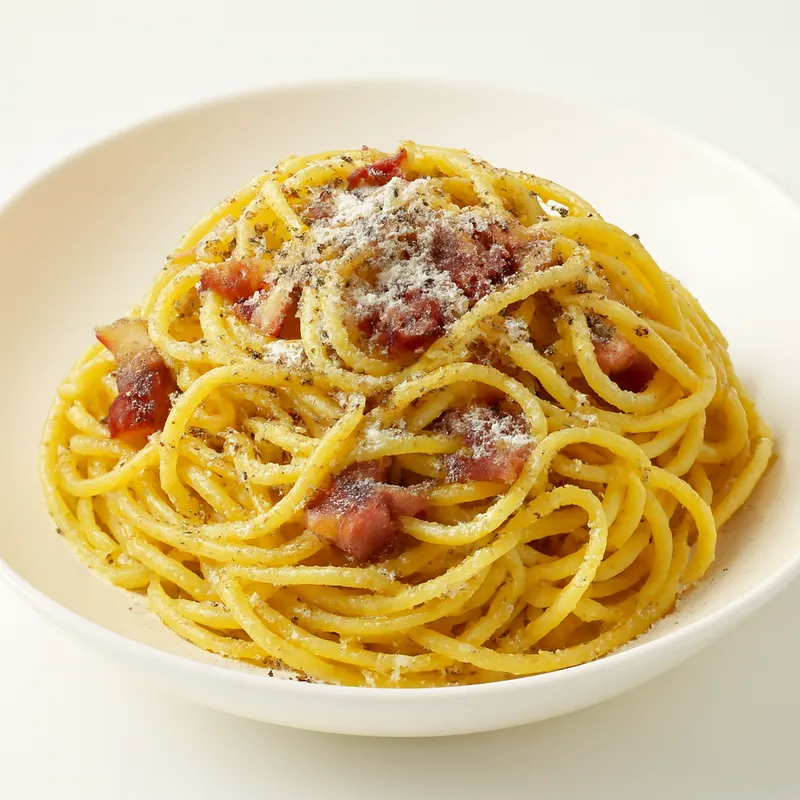
A rustic Roman delight, where the creamy, peppery emulsion of pecorino and guanciale clings to al dente spaghetti.



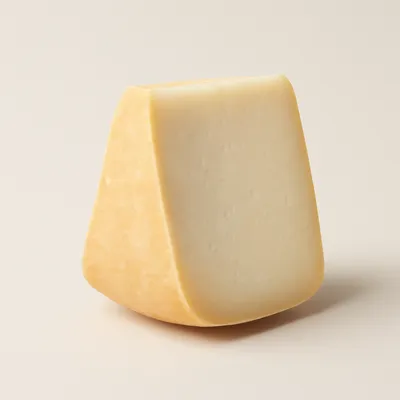
Gricia is Roman countryside food from the Lazio Apennines — shepherd cooking, often called "the white amatriciana" because it's amatriciana minus tomato. The name is sometimes traced to grici, vendors of bread and cured goods in 17th-century Rome, but the etymology is contested. Tomatoless, it predates amatriciana; tomato only entered the Lazio shepherd kitchen in the late 1700s.
Lazio Apennine shepherd food, sometimes called 'white amatriciana' because it predates the tomato — guanciale, pecorino romano, black pepper, pasta water. Above 70 degrees C the cheese seizes; pull the pan off the burner before the pecorino goes in.
Dry-looking spaghetti, no red, no cream, no egg — a Roman dish that's basically pasta, pork cheek, sheep cheese, and pepper. Crisped guanciale cubes scattered through; pecorino romano melts into the starchy pasta water and coats every strand. Cracked black pepper everywhere. Salty, fatty, sharp from sheep cheese. If it looks dry on the plate, you forgot to add pasta water.
Guanciale, not pancetta — pork cheek has firmer fat and a peppery cure that pancetta lacks; substituting flattens the dish. The cheese sauce is an emulsion of rendered guanciale fat, pasta cooking water (rich in starch), and grated pecorino, whisked off heat. Above ~70°C the pecorino seizes into clumps; the trick is to pull the pan off the burner before the cheese goes in.
Variations
Amatrice's mountain version uses chunky guanciale lardons and rigatoni; Roman trattorias like Felice a Testaccio run thinner pork and tonnarelli; the gricia bianca variant skips pepper-blooming entirely and grinds it raw at service.
On the Palate
Where Spaghetti alla Gricia sits in the Italian flavor cloud
Ingredients


How it's made
5 steps · 23 min
- 110 min
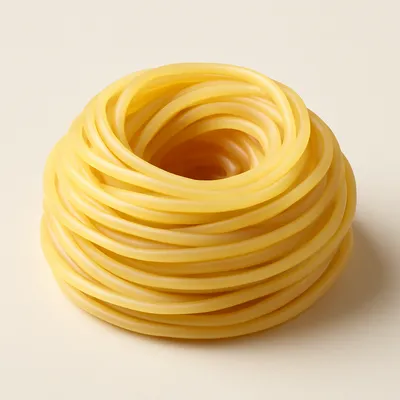
Bring a large pot of well-salted water to a rolling boil. Add the spaghetti, stirring occasionally, and cook until al dente, about 10 minutes.
Watch outDon't overcook the pasta; it should be firm to the bite.
- 25 min
While the pasta cooks, heat a pan over medium heat. Add sliced guanciale and cook until it renders fat and turns crisp, about 5 minutes.
Watch outEnsure the heat is not too high to avoid burning the guanciale.
- 33 min
Reserve a cup of pasta water, then drain the spaghetti. Add the pasta to the pan with guanciale, tossing to coat in the rendered fat.
- 43 min
Sprinkle grated Pecorino Romano and freshly cracked black pepper over the pasta. Toss vigorously, adding reserved pasta water as needed to create a creamy sauce, about 3 minutes.
Watch outDon't let the cheese clump; add pasta water gradually to keep the sauce smooth.
- 52 min
Serve immediately, ensuring each plate gets a generous portion of guanciale and sauce.
Archive tool suggestions — not reviewed
These legacy suggestions have not been evidence-reviewed and are not presented as required tools.