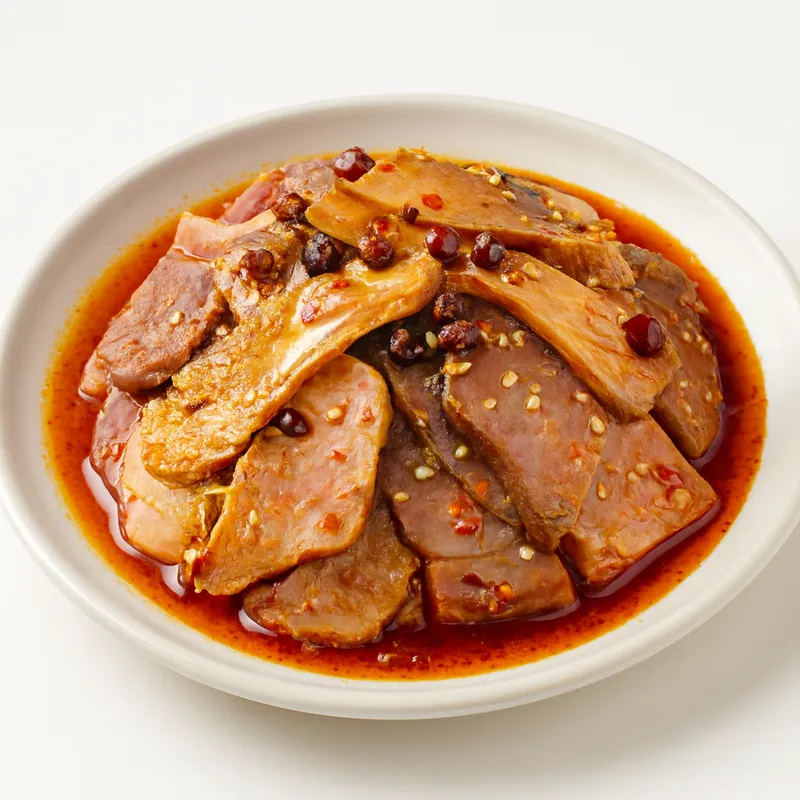
A western Liaoning one-pot dish in which a single large sheet of wheat dough is laid flat as a lid directly over a simmering stew, then the pot is covered so the bread cooks through on the rising steam while its underside drinks up the braise below. The classic pairing is catfish stewed with eggplant in soybean paste (鲶鱼炖茄子烀饼); pork ribs with string beans (排骨豆角烀饼) is equally standard. When the stew is done the bread is cut into wedges and eaten with the meat, vegetables, and broth — stew and staple finished in one pot. The cooking verb 烀 means to cook under a tight lid with only a little liquid, between steaming and boiling.


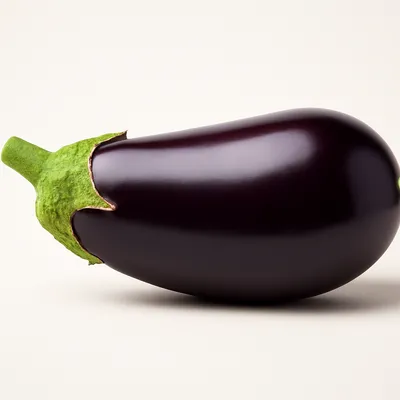



Stew-lid flatbread belongs to the big-iron-pot 一锅出 (one-pot) tradition of rural northeastern China, where a single wood-fired pot had to cook the protein, the broth, and the staple at once. It is most strongly associated with western Liaoning (辽西) and the city of Jinzhou (锦州); the pork-rib-and-bean version (排骨豆角烀饼) and the catfish-and-eggplant version (鲶鱼炖茄子烀饼) are its best-known forms. As a folk farmhouse method it has no recorded single inventor or date. The dish reads as a refinement of the same one-pot logic that produces the corn-cake-rimmed iron-pot stew: where the older country version slapped cornmeal cakes around the dry pot wall, the wheat-flour sheet of 烀饼 is laid flat over the food itself. The name comes from the verb 烀 — a northern colloquial cooking word meaning to cook with a little water under a tightly closed lid, half-steaming and half-boiling the food through.
Lift the lid and the bread has risen into one pale, puffed sheet; cut it into wedges and the two faces are completely different. The top is dry-set and soft, faintly springy, with the plain sweetness of steamed wheat. The underside is darker, dense, and soaked through with the brown soybean-paste broth, savory and a little chewy, sometimes lightly browned where it kissed the pot. Underneath, the catfish pulls into clean garlic-clove flakes, slippery and tender, and the eggplant has gone completely soft, collapsing and sweet with absorbed broth; ribs, if used, are falling off the bone. Done well the bread is cooked through with a flavor-laden bottom and a dry, fluffy top. Done badly the dough is laid too thin and dissolves into the broth, or too thick and stays gummy and raw in the middle, or the fire is rushed and the underside scorches bitter.
The bread is cooked by the stew, not by an oven. Once the braise is simmering, the sheet of dough laid over it sits just above the liquid: rising steam carries heat up into the dough from above, while conduction where its rim meets the broth and hot pot heats it from below — exactly the 半蒸半煮 (half-steam, half-boil) sense of the verb 烀. As the dough climbs past roughly 60–80°C the wheat starch gelatinizes — the granules swell and absorb water, the gluten network sets, and the crumb turns from raw paste to a firm, fluffy bread. The lid is essential: it traps the steam so the top sets without drying out, which is why a well-made 烀饼 is soft on top rather than crusted. The underside works by capillary absorption — pressed against the bubbling braise, it wicks up the soybean-paste broth and its dissolved amino acids and salt, so the bread carries the stew's umami in its lower half. This is the key contrast with the corn cakes (贴饼子) of iron-pot stew: those are stuck to the dry, hot pot wall above the waterline, where their exposed face bakes by conduction and dry heat and browns into a crisp crust through the Maillard reaction, getting only a little steam from below. 烀饼 is one soft sheet steamed over the food and soaked from beneath; 贴饼子 are separate cakes baked crisp against dry iron.
Variations
The protein swaps freely while the method stays the same: catfish with eggplant (鲶鱼炖茄子烀饼), pork ribs with string beans (排骨豆角烀饼), and free-range chicken (笨鸡烀饼) are the common forms; other freshwater fish or a plain bean-and-potato stew also work, the bread always laid on near the end. The dough is usually plain white wheat flour mixed with warm water and rested soft, rolled into one large sheet; some make it thicker so the soaked bottom carries more broth, the point being that it must be thick enough to cover the food and drink the flavor, never thin. The close sibling — but a distinctly different form — is 贴饼子, the cornmeal cakes pressed around the rim of a 铁锅炖 (iron-pot stew) above the waterline, which bake to a crisp browned crust rather than steaming soft like a stew lid.
On the Palate
Where Stew-Lid Flatbread (Hubing) sits in the Chinese flavor cloud
Ingredients
Serves 4


How it's made
8 steps · 30 min
- 112 min
Make the dough lid: mix plain wheat flour with warm water into a soft dough, knead smooth, cover, and rest for about 10 minutes so it relaxes and can be rolled wide.
- 28 min
Clean the catfish, scald off the slime, and cut into thick sections; cut the eggplant into large chunks. Smash the garlic and slice the ginger and scallion.
- 34 min
Heat oil in a wide pot, fry the scallion, ginger, garlic, and dried chili until fragrant, then stir in soybean paste and a little soy sauce.
- 43 min
Add the catfish and eggplant, pour in water to nearly cover, bring to a hard boil, then lower to a simmer to braise the stew.
- 55 min
Roll the rested dough into one large sheet a little wider than the pot, slightly thick so it can hold the broth without dissolving.
Watch outRoll the dough slightly thick, a bit wider than the pot — too thin and it dissolves into the broth instead of setting into bread.
- 61 min
When the stew has about 20-25 minutes left, lay the dough sheet flat over the food so it covers the surface like a lid, then put the pot lid on.
- 720 min
Keep at a steady simmer so the steam cooks the bread through and the underside soaks up the broth, about 20 minutes, until the top is set, soft, and dry to the touch.
Watch outKeep a steady simmer with the lid on about 20 minutes until the top is set, soft, and dry to the touch — that's steam cooking it through from above while the underside drinks the broth.
- 83 min
Cut the flatbread into wedges and serve it together with the catfish, eggplant, and broth straight from the pot.
Archive tool suggestions — not reviewed
These legacy suggestions have not been evidence-reviewed and are not presented as required tools.