
Lagan nu custard is the Parsi community's rich baked milk custard, served above all at weddings (lagan means wedding). Full-cream milk is simmered down and sweetened, then whisked with eggs and scented with green cardamom and nutmeg, often a little rose water and vanilla, and studded with almonds and charoli nuts. The mixture is baked in a dish until just set, firm but still wobbly, with a freckled, lightly blistered top. It is cut into squares and served cool as the sweet close to a Parsi meal.


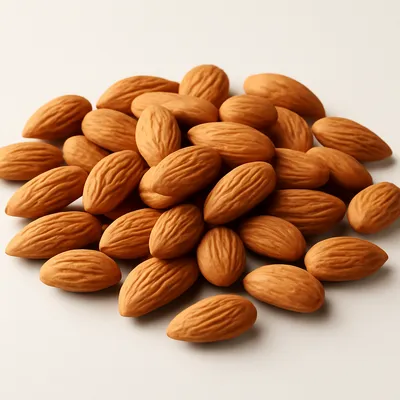
The custard belongs to the Parsis, the Persian-descended Zoroastrian community of western India, and is most associated with the lagan nu bhonu, the traditional Parsi wedding feast served on banana leaves, where it appears as the dessert. Its form is widely understood as an Indian adaptation of the English baked custard the community encountered under British rule, enriched in the Parsi manner with cardamom, nutmeg, rose water and nuts to suit local taste. That Persian-and-Indian double inheritance, dried fruit and nuts from Persia, warm spice from India, is the hallmark of Parsi sweets.
Served cool, it cuts into a clean square, firm enough to hold its shape yet trembling and silky on the spoon. The taste is deeply milky and sweet, fragrant with cardamom and a warm rasp of nutmeg, with slivered almonds and small charoli nuts for crunch. The blistered top carries a faint toasted, caramelized note over the pale custard beneath. Rich but not heavy, it is meant to be eaten chilled in small wedges.
This is an egg-and-milk custard set by gentle baking. Eggs supply the protein that coagulates and traps the liquid into a sliceable gel; simmering the milk down first concentrates its milk solids and sugars, so the set is firmer and the flavor deeper than with fresh milk. Baking in a moderate oven, traditionally in a covered dish, holds the custard near the protein's setting point of roughly 80°C so it firms without curdling. The top is left exposed at the end to brown and blister lightly. Overbaking or too high a heat drives the proteins to squeeze out liquid, weeping the custard and turning it grainy.
Variations
Recipes range from a softer, spoonable custard to a firmer, sliceable lagan version cut for a crowd. Some cooks add a thin layer of caramel beneath, bringing it close to a crème caramel, while the plainer wedding style relies on the milk, eggs and spice alone. A closely related Parsi sweet is lagan nu istew or the milk-and-vermicelli sev; the nutmeg-and-cardamom scenting links it to the wider family of Parsi and Irani milk puddings.
On the Palate
Where Lagan nu Custard sits in the Indian flavor cloud
Ingredients
Serves 8


How it's made
6 steps · 20 min
- 125 min
Simmer the full-cream milk over low heat, stirring, until reduced by roughly a third; stir in the sugar to dissolve and let it cool slightly.
Watch outReduce the milk by about a third before mixing — concentrating the milk solids gives a firmer set and deeper flavor than fresh milk.
- 25 min
Beat the eggs well, then whisk them into the warm (not hot) sweetened milk.
Watch outWhisk the eggs into warm milk, never hot — pour them into scalding milk and they scramble into threads instead of a smooth custard.
- 32 min
Mix in green cardamom, grated nutmeg and, if using, rose water and vanilla.
- 43 min
Stir in most of the slivered almonds and charoli nuts, reserving some to scatter on top.
- 550 min
Pour into a greased baking dish, scatter the reserved nuts over, and bake in a moderate oven until just set with a lightly blistered top.
Watch outBake just until set with a lightly blistered top — overbake and the custard weeps liquid and turns rubbery.
- 660 min
Cool to room temperature, then chill; cut into squares to serve.
Archive tool suggestions — not reviewed
These legacy suggestions have not been evidence-reviewed and are not presented as required tools.


