A Taiwanese flaky white pastry the size of a hockey puck, its pale dome cracked open across the top where the layers puffed apart in the oven. Inside is smooth, fine-textured mung-bean paste; the classic Taichung version folds in a spoonful of savory minced braised pork and fried shallot, so the sweet paste carries a salty, oily savor underneath. A traditional Mid-Autumn and betrothal pastry, also written 绿豆凸.



Mung Bean Pastry is a Han-Chinese flaky pastry that took its definitive form in Fengyuan, Taichung — a town so dense with cake shops it is nicknamed the 'pastry pit.' During the Japanese colonial era, local Han bakers absorbed wagashi technique, shrinking and refining the traditional Chinese cake (hanbing) into a small mung-bean-filled round called the 'Huludun cake,' the pastry's direct ancestor; the long-standing Fengyuan house Xuehuazhai, founded in 1900 by Lu Shui, is widely credited with the form. The name borrows the Taiwanese (Min-nan) word for 'to bulge/swell up' (椪, written interchangeably as 凸), after the way the white dome cracks and puffs in the oven. No single documented inventor or date is reliably recorded beyond this Fengyuan lineage, so it is best understood as a regional Taiwanese cake tradition rather than one chef's invention. Classic Taichung versions are savory-sweet, the mung-bean paste wrapped around minced braised pork (rou-zao) and fried shallot; it is eaten above all at Mid-Autumn and as a betrothal gift cake.
The first thing you notice is the cracked dome — the top has split where the layers rose. Press it and the snow-white crust shatters into flakes, shedding crumbs across the plate; it is barely held together. Underneath, the mung-bean paste is dense, smooth and fine, sweet without being cloying. In the savory Taichung version a salty, oily thread of braised pork and fried shallot runs through the sweetness, and that contrast — sweet paste, salty meat, fragile crust — is the whole point.
The flake comes from Chinese lamination: a water dough (flour, lard, sugar, water) wrapped around a pure fat-and-flour dough (lard plus low-gluten flour), then rolled into a tongue, coiled, rested, and rolled and coiled a second time. This builds many alternating layers of dough and fat. In the oven the lard melts and the dough's moisture flashes to steam between the sheets, forcing them apart and pushing the unwashed pale top up until it cracks open — the 'puff' that names the cake. The filling is made separately: skinned mung beans are steamed soft, mashed, then dry-fried with sugar and oil to cook off water until the paste turns dense and smooth enough to hold its shape. Bakers commonly fire it hot first (around 190°C) to set the rise, then drop to about 165°C to bake through while the crust stays white.
Variations
The classic Taichung style is savory-sweet, mung-bean paste around minced braised pork and fried shallot; health-minded makers now sell an all-mung-bean version with no pork or lard. Other fillings include salted egg yolk, peanut, and mochi (qq). It is built on the same oil-skin/oil-pastry shell as the egg-yolk pastry (danhuangsu), differing only in the filling, and stands beside the sun cake (taiyangbing) as a Taichung pastry classic. Do not confuse it with mung-bean cake (lvdougao), which is a steamed, soft, crustless cake of mung-bean (or rice) flour, not a baked flaky pastry.
On the Palate
Where Mung Bean Pastry sits in the Taiwanese flavor cloud
Ingredients
Serves 10


How it's made
10 steps · 1 hour 30 min active + 1 hour waiting
- 150 min
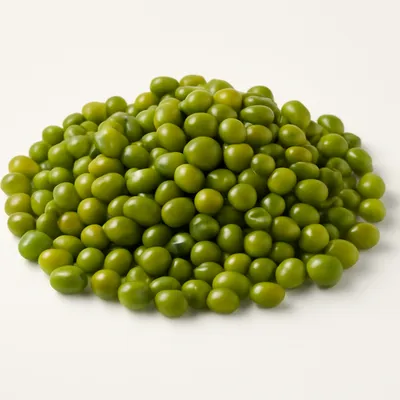
Make the mung-bean filling: rinse skinned split mung beans, soak 2 hours, then steam until very soft, about 40 minutes. Mash to a smooth paste while warm.
- 220 min
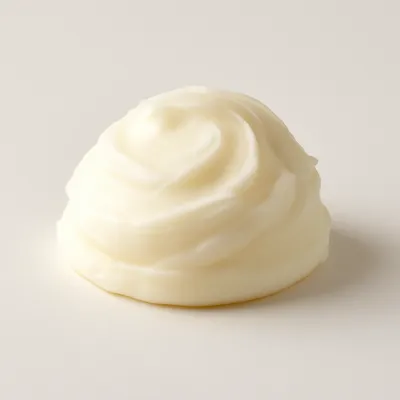
Dry-fry the paste in a pan with sugar and a little oil over low heat, stirring constantly, until the water cooks off and the paste is dense enough to hold a ball, about 20 minutes. Cool.
Watch outDry-fry the bean paste until it's dense enough to hold a ball, about 20 minutes — under-dried it's too wet to wrap and will weep in the pastry.
- 315 min
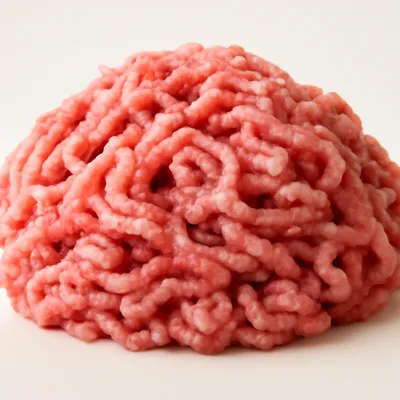
For the savory Taichung version, separately fry minced pork with fried shallot, soy sauce and a little sugar into a dry rou-zao; cool. Divide the bean paste into portions, tucking a little pork into the center of each, and roll into balls.
- 425 min
Make the water dough (oil skin): mix all-purpose flour, lard, sugar and water and knead until smooth and stretchy. Rest 20 minutes under cover.
- 510 min
Make the oil pastry: rub lard into low-gluten flour until it forms a soft dough. Divide both doughs into equal portions to match the filling balls.
- 615 min
Wrap each oil-pastry piece fully inside a piece of water dough, sealing the seam.
- 735 min
Roll each wrapped ball into a tongue shape, coil it up, and rest 15 minutes; then roll and coil a second time and rest again 15 minutes.
Watch outRoll and coil the wrapped dough into a tongue, rest, then roll and coil again — this two-round lamination builds the many flaky layers; rush it and it won't puff.
- 820 min
Flatten each coiled piece into a round, place a filling ball in the center, gather the edges over it and seal into a smooth bun, seam down. Press gently into a flat disc.
- 95 min
Bake top-side up, unwashed (no egg glaze), in a hot oven around 190°C for about 5 minutes to set the puff.
- 1017 min
Lower to about 165°C and bake a further 15 minutes until cooked through and the top has cracked open while staying white. Cool on a rack.
Watch outBake until the top cracks open while staying snow-white — no egg wash; the split-but-pale top is the whole look, so hold the heat down after it sets.
Archive tool suggestions — not reviewed
These legacy suggestions have not been evidence-reviewed and are not presented as required tools.


