
Phuket's flaky-pastry bean cake — a small round pastry whose pale shell peels apart in fine layers around a soft, sweet mung-bean filling, often laced with taro and a salted egg yolk. It is the island's branch of the Hokkien and Teochew tau sar pia tradition, brought by the Chinese who settled Phuket during the tin boom and still made in the old Old Town bakeries. Sold by the box, it is everyday teatime sweet and festival gift at once, its golden-baked top stamped or dotted red.




Tao sor is the Phuket name for the Hokkien-Teochew bean pastry known across the Straits as tau sar pia — in Hokkien tau sar is bean paste and pia is a baked cake. It came with the Fujian and Chaozhou Chinese who migrated through Penang and Singapore to Phuket's tin mines in the nineteenth century, the same Peranakan stream that shaped the island's food. The sweet mung-bean-and-salted-yolk pairing it shares with the mooncake ties it to Chinese gift-giving and the mid-autumn season, though on Phuket it is now baked and eaten year-round; old town bakeries such as the long-running Keng Tin are still known for it.
Pick one up and the top sheds a few pale flakes before you even bite. The shell is short and dry-crisp, parting in thin leaves rather than crumbling, and gives way to a filling that is smooth, dense and only gently sweet — cooked mung bean with the texture of a fine paste, the taro lending a soft, faintly nutty note. If there is a salted yolk it arrives as a savoury, slightly grainy heart that cuts the sweetness and makes you want the next bite. The whole thing is small, rich and clean-finishing, made for tea.
The flaking comes from Chinese spiral lamination, not from butter. Two doughs are made — a water dough of flour, a little sugar and oil, and a short oil dough of flour worked with lard or oil. The water dough is wrapped around the oil dough, rolled flat, rolled up, flattened and rolled up again; each turn stacks alternating sheets of dough and fat, and in the oven the fat melts and steams the layers apart into leaves. Keeping the oil dough soft and not overworking the gluten is what lets the shell stay short rather than tough. The filling must be cooked down dry and stiff enough to hold its shape, or it weeps moisture into the pastry and undoes the crisp; the salted yolk is steamed or baked first to firm it and render some of its fat for richness. A low, even bake sets the layers pale — browning would harden the leaves toward biscuit.
Variations
The classic split is sweet mung-bean against a savoury version seasoned with fried shallot and pepper. Taro filling is a Phuket favourite, sometimes tinted purple; durian and black-sesame fillings appear too. A salted egg yolk in the centre is the festive upgrade, echoing the mooncake. Sizes range from a coin-sized one-biter to larger gift cakes, and the red stamp on top marks an auspicious, celebratory batch.
On the Palate
Where Tao Sor sits in the Thai flavor cloud
Ingredients
Serves 8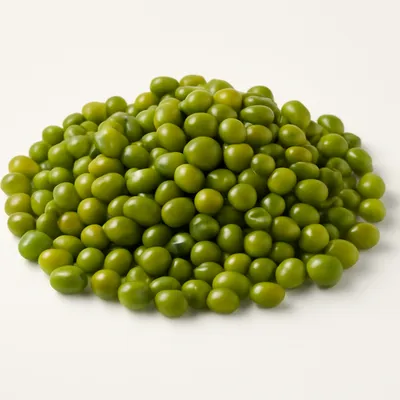
How it's made
8 steps · 1 hour 20 min active + 1 hour 10 min waiting
- 135 min
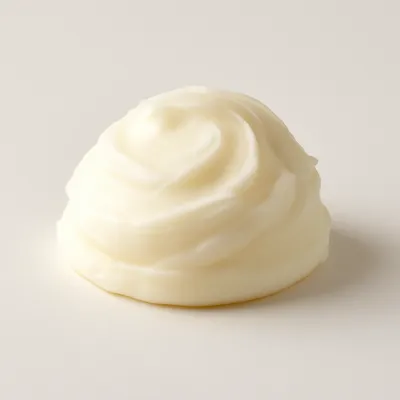
Steam dried split mung beans until soft, then mash and fry down with sugar and a little oil into a stiff, dry paste; cool.
Watch outCook the bean paste down until it's stiff and dry enough to hold a ball — a wet filling seeps out and blows the pastry apart in the oven.
- 220 min
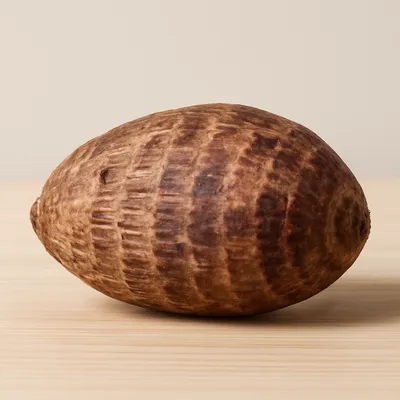
Cook and mash taro and fold it into part of the bean paste; steam salted egg yolks until firm.
- 325 min
Make a water dough of flour, sugar, oil and water, and rest it; separately rub flour with lard into a soft oil dough.
- 420 min
Wrap each portion of water dough around oil dough, roll out, roll up, flatten and roll up again to build layers.
Watch outKeep the oil dough soft and don't overwork the gluten — that's what lets the spiral bake into short, flaking leaves instead of a tough shell.
- 515 min
Flatten each spiralled piece into a round and wrap it tightly around a ball of filling, sealing the seam.
- 65 min
If using, push a salted yolk into the centre of the filling before sealing.
- 75 min
Set the cakes seam-down on a tray, brush the tops lightly, and stamp or dot them red.
- 830 min
Bake at a low, even heat until the pastry is set and only pale gold, then cool completely so the layers crisp.
Watch outBake at low heat to only pale gold, then cool completely before touching — the layers crisp as they cool; brown it and the shell tastes scorched.
Archive tool suggestions — not reviewed
These legacy suggestions have not been evidence-reviewed and are not presented as required tools.


