Banh chuoi is a southern Vietnamese banana cake — essentially a coconut-rich banana bread pudding — made by layering very ripe bananas with torn day-old bread (or a rice- and tapioca-starch batter), then soaking it in sweetened coconut milk and baking or steaming it into a dense, chewy slab. The baked version (banh chuoi nuong) comes out with a deep caramelised top and edges; the steamed version is softer and more translucent. It is moist, fragrant, only lightly sweet, and famously forgiving — a homely way to use up bananas gone too soft to eat. Sliced into wedges or fingers, it is eaten as a snack or dessert, often with a little extra coconut sauce.

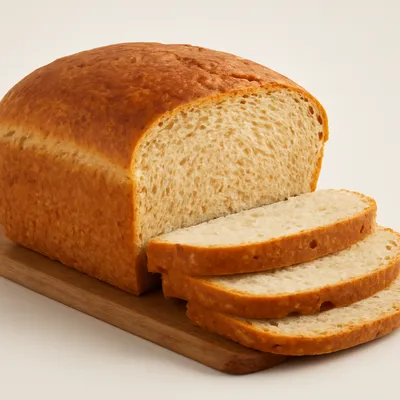



Banh chuoi belongs to the thrifty home-baking tradition of southern Vietnam, a way of rescuing over-ripe bananas, and Chinese-language references describe it plainly as a banana cake or bread-pudding dessert of the Vietnamese south. The bread-based baked version reflects the French-colonial legacy of the baguette in Vietnamese kitchens — stale bread became the structure of the pudding — while the rice- and tapioca-starch steamed version follows the older local cake-making line. It is everyday food without a single inventor or fixed date; what is documented is its southern home and its two clear methods, baked and steamed.
The baked version is the showy one: a dark, almost toffee-like crust on top and at the edges, chewy and caramel-bitter, giving way to a dense, custardy, banana-soaked middle. The steamed version is paler, springier, and more jelly-like, the banana slices showing through. Either way the banana is concentrated and jammy, the coconut runs all the way through, and it is far less sweet than a Western cake — the ripeness of the fruit does most of the sweetening. It cuts into clean, sticky slices that hold together in the hand.
Ripeness is the engine: bananas must be heavily speckled to near-black, when their starch has turned to sugar and they go soft and intensely fragrant — under-ripe fruit makes a bland, starchy cake. In the bread version, stale bread is the structure, torn up and left to drink the sweet coconut custard until saturated, then baked long enough to caramelise the top and set the middle; the sugar and banana on the surface are what build the dark crust. In the starch version, a rice- and tapioca-starch batter binds the fruit and is steamed to a chewy, translucent set. Resting the baked cake before slicing lets it firm so it cuts cleanly.
Variations
The two big camps are baked (banh chuoi nuong), with its caramel crust, and steamed (banh chuoi hap), softer and often served sliced with coconut sauce. Cooks use either torn baguette or a rice-and-tapioca batter as the base; some fold in shredded coconut, raisins, or chopped peanuts, or scent it with vanilla and a little rum. A pan-fried fritter style (banh chuoi chien), banana battered and deep-fried, shares the name but is a different snack.
On the Palate
Where Banh Chuoi sits in the Vietnamese flavor cloud
Ingredients
Serves 8
How it's made
6 steps · 25 min active + 1 hour 5 min waiting
- 110 min
Mash or slice very ripe bananas; toss the slices with a little sugar and set aside to macerate.
Watch outUse bananas speckled to near-black — that's when the starch has turned to sugar and they're soft and fragrant; underripe fruit bakes bland and starchy.
- 215 min
Tear day-old bread into pieces and pour over warm sweetened coconut milk beaten with egg; let it soak until fully saturated.
- 35 min
Fold the soaked bread together with most of the bananas, a pinch of salt, and a splash of vanilla.
- 45 min
Butter a tin, spread the mixture in, and arrange the reserved banana slices over the top.
- 560 min
Bake at 180°C until the top is deeply caramelised and the centre is set, about 50-60 minutes.
Watch outBake until the top is deeply caramelized and the center set — that dark crust is the banana and sugar browning; a wobbly middle means it needs longer.
- 630 min
Cool completely in the tin before turning out and slicing; serve with extra coconut sauce if you like.
Archive tool suggestions — not reviewed
These legacy suggestions have not been evidence-reviewed and are not presented as required tools.


