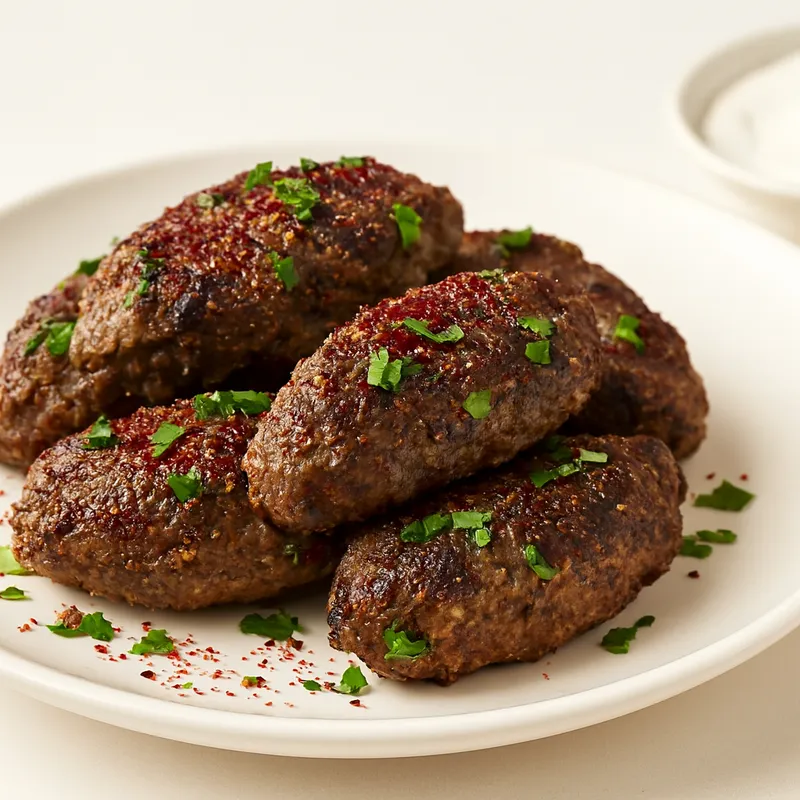
Ezme is a spicy, finely hand-chopped raw meze from southeastern Turkey — ripe tomato, hot and sweet pepper, onion, garlic and parsley minced to a coarse relish, then sharpened with pomegranate molasses, lemon and olive oil and lifted with chili. Heat comes from fresh chili and from dried pepper flakes — coarse pul biber (Aleppo/Maraş pepper) and dark, raisiny Urfa isot. Crushed walnuts are common in the Gaziantep style. It is the standard opening plate at any ocakbaşı (grill house) or kebab restaurant, eaten with warm flatbread and used to cut the richness of charred meat. Crucially it is chopped, never blended, so it stays chunky and juicy rather than smooth.






Ezme belongs to the kebab belt of southeastern Anatolia — Gaziantep, Şanlıurfa, Adana and Mardin — the same region that gave Turkey its dürüm and its tray-baked lahmacun, and it travels nationwide as the default 'spicy salad' on grill-house tables. The name is literal: ezme is the noun from the verb ezmek, 'to crush, to mash' (from Proto-Turkic), describing the texture rather than a fixed recipe, so by definition ezme is something pounded or chopped fine rather than left whole. No single inventor or founding date is recorded; it is a regional folk meze tied to the southeast's pepper culture rather than a named creation. It is essential to distinguish ezme from acuka (the Turkish muhammara): acuka is a cooked, blended paste built on red-pepper paste (biber salçası) and ground walnut, thick and smooth; ezme by contrast is raw, hand-chopped fresh tomato, pepper and onion kept deliberately chunky, with walnut as an optional southeastern grace note rather than the base. The dressing trio is regional too — pomegranate molasses (nar ekşisi), the coarse dried flake pul biber from the Maraş/Aleppo pepper, and the dark, fermented-dry Urfa isot, all signatures of the Gaziantep–Urfa table.
The first bite is bright and almost slushy-juicy — chopped tomato and onion giving up their water — then the layered heat arrives: the clean sting of fresh chili up front, the slow fruity burn of pul biber behind it, and the dark, raisin-and-tobacco depth of Urfa isot lingering at the back of the throat. Pomegranate molasses pulls everything tart and faintly sweet, lemon brightens, olive oil rounds the edges, and parsley keeps it green and fresh. Where walnuts are used, they add little oily-bitter crunch against the soft vegetables. Scooped onto torn flatbread between bites of grilled lamb, it resets the palate — sharp, cooling-then-burning, never heavy.
Hand-chopping rather than blending is the whole point: a knife cuts cell walls cleanly and only at the cut faces, so the tomato, pepper and onion release some juice but keep distinct chunks and a fresh, raw bite; a blender shears every cell open at once, whipping in air and turning the same ingredients into a pink foam-paste that tastes flat and stewed. The three souring/heat layers each work differently. Pomegranate molasses is reduced pomegranate juice whose tartness comes mainly from malic and citric acids, contributing acidity plus a touch of residual sugar that balances the chili. Pul biber (Maraş/Aleppo pepper) is sun-dried and coarsely ground, fruity and only mildly hot, so it adds aroma and even heat; Urfa isot is dried by day and 'sweated' under cover by night, a slow drying-fermentation that darkens it to purple-black and builds raisin, tobacco and smoke notes without any wood smoke. The heat itself is capsaicin, fat- and oil-soluble — which is why olive oil both carries the chili flavor evenly through the relish and slightly tempers the burn. Salting the chopped vegetables draws out water by osmosis, so well-made ezme is often briefly drained or left to sit and then tipped of excess liquid to stay thick rather than watery.
Variations
The Gaziantep ('Antep ezmesi') style leans richest — generous Urfa isot, pomegranate molasses and often crushed walnuts; the Adana style runs hotter and looser, sometimes with cumin; some Şanlıurfa versions are nearly all isot for a dark, smoky relish. Texture is a regional argument: traditional purists chop everything by hand to keep it chunky, while many home and restaurant cooks pulse it briefly for a coarse spreadable dip — both are sold as ezme. Common additions are fresh mint, a little tomato or red-pepper paste (salça) for body and color, and chopped cucumber in summer. It should not be confused with acuka/muhammara, the cooked blended walnut–red-pepper paste; ezme stays raw and chopped. Outside Turkey it is often labeled simply 'spicy Turkish salad' or 'ezme dip,' and the heat is usually dialed down for non-Turkish palates.
On the Palate
Where Ezme sits in the Turkish flavor cloud
Ingredients
Serves 4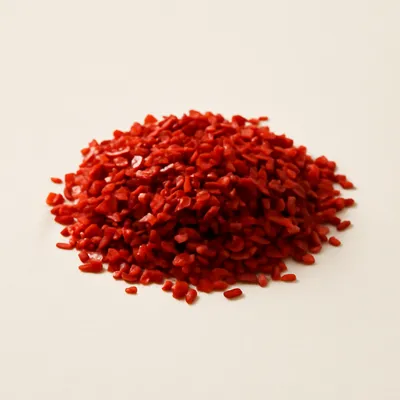

How it's made
7 steps · 25 min
- 16 min
Finely dice ripe tomatoes; if very watery, scoop out some seeds first so the ezme does not turn to soup.
Watch outIf the tomatoes run watery, scoop out some seeds first — leave them in and the ezme weeps into soup instead of staying a thick, chunky relish.
- 28 min
Finely chop the green/sweet pepper, onion, garlic and parsley by hand — keep everything small and even, but do not blend.
Watch outHand-chop everything small and even and stop there — a blender whips it into pink foam-paste that tastes flat and stewed instead of fresh and crunchy.
- 32 min
Combine the chopped vegetables in a bowl with crushed walnuts if using.
- 43 min
Add pomegranate molasses, lemon juice and olive oil, then season with salt, pul biber and Urfa isot to taste.
- 52 min
Mix thoroughly with a spoon, pressing lightly so the flavors mingle and the vegetables give up a little juice.
- 625 min
Let sit 20-30 minutes for the flavors to marry; tip off any excess liquid so it stays thick.
- 72 min
Taste and adjust acid, salt and heat, then serve at room temperature with warm flatbread.
Archive tool suggestions — not reviewed
These legacy suggestions have not been evidence-reviewed and are not presented as required tools.