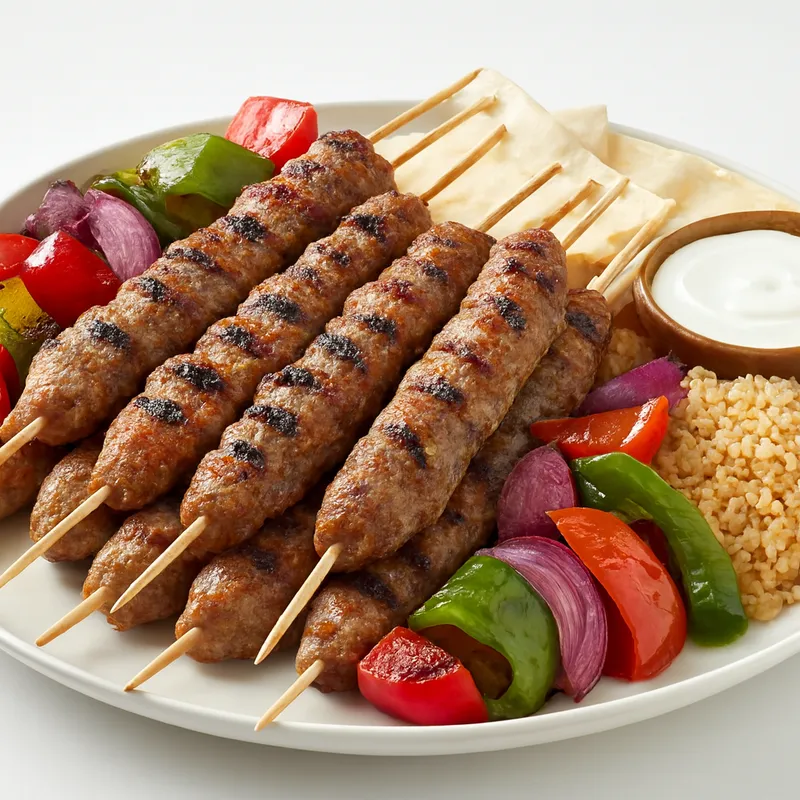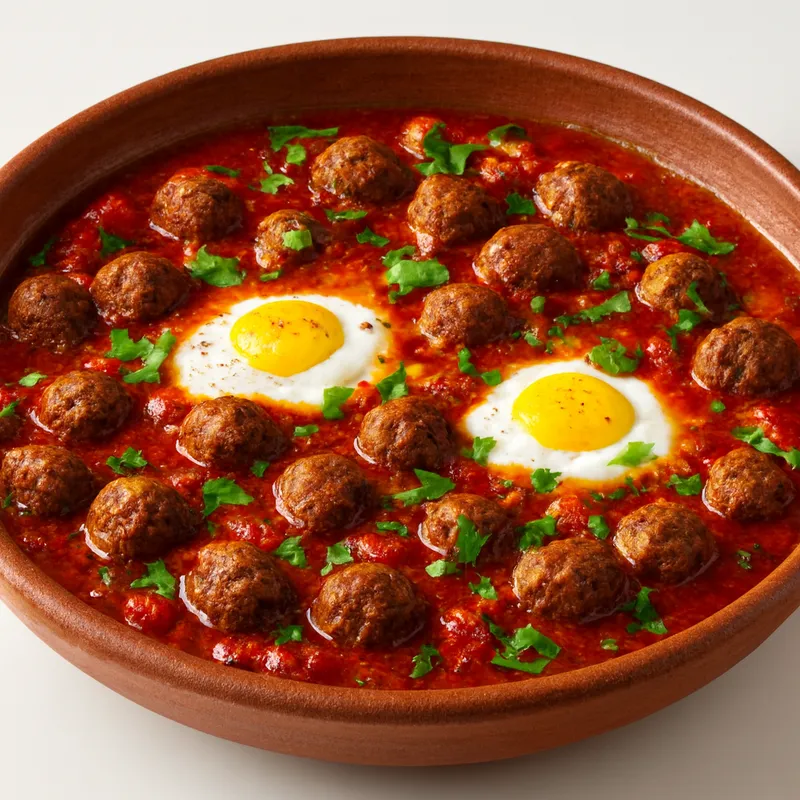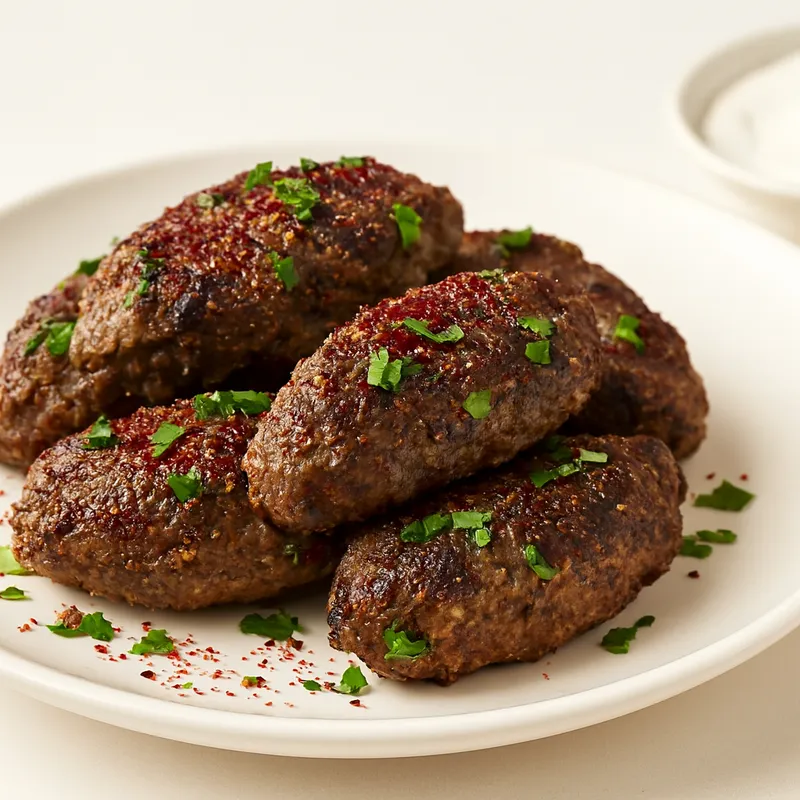
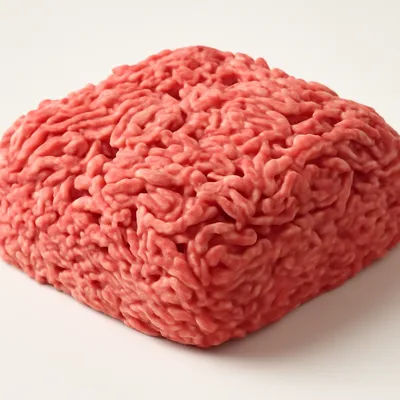

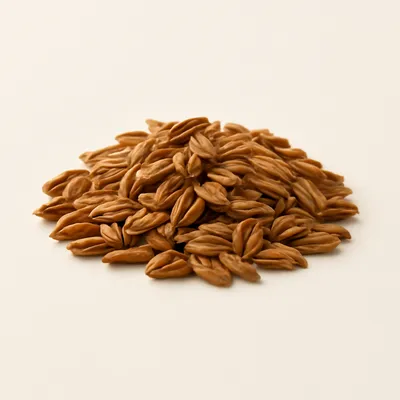



The word köfte derives from Persian kūfta, meaning pounded — the technique reached Anatolia with the Seljuks in the 11th century and was localized into an estimated 200-plus regional versions over the Ottoman centuries. İnegöl köfte was created by one man, Mustafa Efendi, who settled in the town in 1892 and began selling köfte at the Ankara–Bursa road market the following year, with the recipe spreading nationwide from the 1930s, and individual towns (Tekirdağ, Akçaabat, Sivas) carry geographically protected formulas today.
Word from Persian kūfta (pounded) — reached Anatolia with the Seljuks in the 11th century. Tekirdağ, Akçaabat, Sivas and İnegöl carry geographically protected formulas today. Five minutes of slap-kneading extracts myosin so the patty holds together without binders; under-knead and it crumbles, over-knead and it goes rubbery.
Hand-shaped lamb-or-beef ovals, kneaded with grated onion, breadcrumbs, cumin and parsley until the mince turns sticky, then grilled over charcoal or pan-fried. Served with grilled green peppers, raw onion sumac salad, and pide. Pink center is welcome; dry through-and-through is overcooked. Each region's recipe tilts: İnegöl adds breadcrumbs, Tekirdağ adds nothing, Akçaabat goes pure black pepper.
The kneading isn't seasoning, it's structural — working the mince extracts myosin, the muscle protein that cross-links and gives köfte its springy bite without binders falling apart on the grill. Five minutes of slap-kneading transforms loose mince into a tacky, cohesive mass. Skipping it produces meatballs that crumble; over-kneading goes rubbery. Old İnegöl shops claim the dough must be rested overnight for the proteins to relax.
Variations
İnegöl köfte (with breadcrumbs, raw onion ban); Tekirdağ köfte (no breadcrumbs); Akçaabat köfte (pure black pepper, Trabzon mountain version); Sulu köfte (the saucy lemon-stew form, eaten with rice).
On the Palate
Where Köfte sits in the Turkish flavor cloud
Ingredients


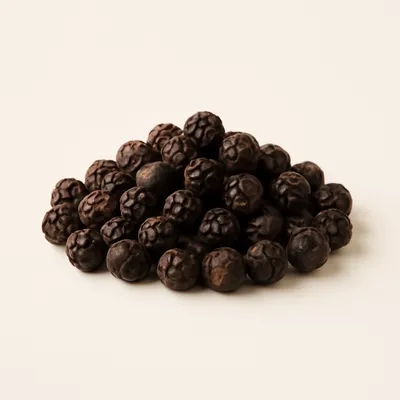

How it's made
5 steps · 45 min
- 15 min
Soak bread in water, then squeeze out excess moisture.
- 23 min
Mix ground beef, chopped onion, soaked bread, egg, cumin, and sumac in a bowl.
- 37 min
Add parsley and grated garlic, knead until combined.
Watch outKnead and slap the mince a good five minutes until it turns tacky and pulls together in one cohesive mass — that working draws out the protein that gives köfte its springy bite; skip it and they crumble on the grill.
- 45 min
Shape into small balls or patties.
- 58 min
Grill or pan-fry until browned and cooked through.
Watch outGrill on a hot grate until the outside is well browned with a firm crust but the inside stays juicy — press one and it should feel springy, not hard; overcooked köfte goes dry and dense.
Archive tool suggestions — not reviewed
These legacy suggestions have not been evidence-reviewed and are not presented as required tools.
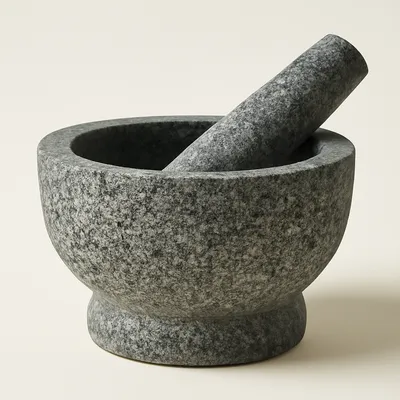
The simplest tool in any kitchen: a heavy bowl and a club to bash things in it. Different cuisines use different stones — Thai cooks pound green papaya in a tall granite mortar (krok hin); pesto Genovese requires the soft-pored Carrara marble; Indian masalas grind down on rough basalt. The bash-don't-cut motion releases volatile oils that a blade keeps sealed in the cell wall.
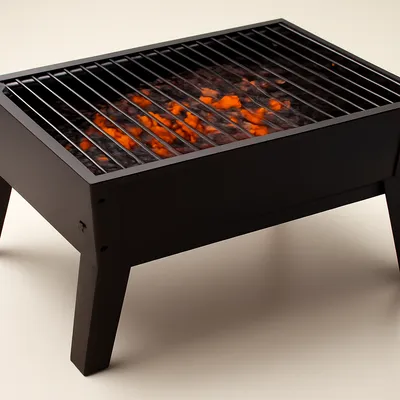
An open or hooded metal frame holding a bed of glowing charcoal embers, with a grate above. Charcoal burns at 700°C+ on the surface and emits short-wave infrared, which cooks proteins faster and with deeper Maillard browning than gas. Hardwood lump charcoal (oak, mesquite, fruitwood) lends its own smoke; cheap briquettes do not. Mastery is mostly heat zoning — direct over coals for searing, indirect off-coals for slow-roasting.