
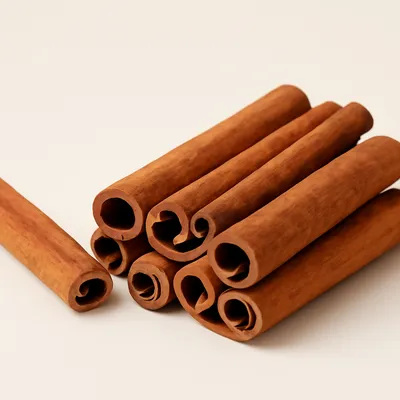
Muhallebi is the plainest and most foundational of the Turkish milk puddings: whole milk sweetened with sugar and thickened on the stovetop with rice flour and/or cornstarch until it sets into a pale, glossy, spoonable cream. It carries no eggs, no rice grains and no other body — just milk, sugar, starch and perfume. The classic scent is rose water, and in many Istanbul kitchens a pinch of crushed mastic resin, which lends a faintly piney, almost chewy aroma. Poured into individual dishes and chilled, it is finished with crushed pistachios or a dusting of cinnamon. The entire family of Turkish pudding-shop sweets — and the muhallebici shops themselves — take their name from this single dessert.




Muhallebi is the Turkish form of the broader Middle Eastern milk pudding known in Arabic as muhallabiyya / mahalabia. By popular legend the dish and its name are traced to the late 7th century, when a Persian cook is said to have served the pudding to the Arab commander al-Muhallab ibn Abi Sufra, who supposedly liked it so much it took his name; this attribution is unverified, and some writers instead derive the word from the Arabic halib, 'milk.' What is documented is that recipes for muhallabiyya appear in the earliest surviving Arabic cookery: the 10th-century Baghdadi Kitab al-Tabikh compiled by Ibn Sayyar al-Warraq records several early versions — milk thickened with ground rice, milk with rice and shredded chicken, and an egg custard. The dish was absorbed into Ottoman palace and street cookery, where it became the cornerstone of a whole repertoire of milk puddings; the muhallebici (pudding shops) that still dot Istanbul are named directly after it and also sell its relatives such as sutlac, kazandibi and tavuk gogsu.
Cool, pale and almost silken, muhallebi yields to the spoon with a soft, barely-set wobble and melts smoothly on the tongue with no grain or chew. The flavour is gently milky and clean rather than rich, the sweetness restrained so the floral lift of rose water — or the resinous, pine-like edge of mastic — reads clearly. Crushed pistachios add a green, oily crunch and cinnamon a warm dusting against the cold cream.
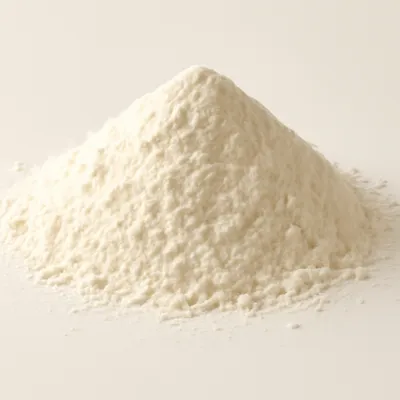
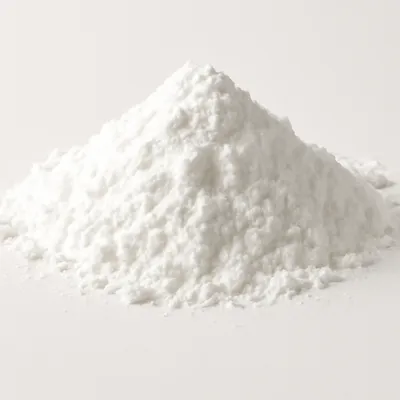
Muhallebi sets without eggs or gelatin: it is thickened entirely by starch gelatinization. As the rice flour or cornstarch is heated in the milk past roughly 70-85 degrees C, the starch granules absorb water, swell and burst, releasing amylose and amylopectin chains that trap the liquid into a soft gel — cornstarch gives a clearer, more wobbling set, rice flour a faintly opaque, shorter one. Constant whisking keeps the granules dispersed so the pudding stays lump-free and does not scorch on the base; the mixture must reach a full simmer for the starch to fully hydrate and lose any raw, floury taste. Sugar competes for water and slightly softens the gel, while chilling firms it as the starch network retrogrades. Mastic is ground with a little sugar before use, both to break the brittle resin and to stop it clumping; its aromatic terpenes disperse into the warm milk fat.
Variations
The flavouring is where regional and household versions diverge: plain rose-water muhallebi is the everyday form, while sakizli muhallebi leans on mastic and keskul folds in ground almonds (and sometimes coconut). Some cooks thicken with cornstarch alone for a glossier, more trembling set, others with rice flour for a fuller body, and many blend the two. Toppings range from pistachios and cinnamon to shredded coconut, raisins or a spoon of fruit syrup; across the Arab world the same pudding appears as mahalabia, often perfumed with orange-blossom water instead of rose. It should not be confused with its pudding-shop cousins: sutlac is a rice pudding with whole grains and a broiled brown skin, while tavuk gogsu is built on the same milk base but bound with finely shredded chicken-breast fibres.
On the Palate
Where Muhallebi sits in the Turkish flavor cloud
Ingredients
Serves 6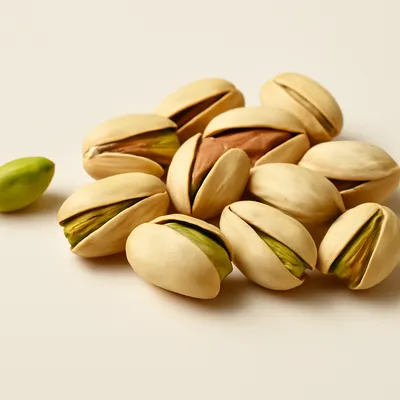
How it's made
7 steps · 10 min
- 13 min
In a small bowl, whisk the rice flour and cornstarch into about half a cup of cold milk until completely smooth and lump-free; set this slurry aside.
- 25 min
Pour the remaining milk and the sugar into a heavy saucepan and warm over medium heat, stirring, until the sugar dissolves and the milk is hot but not yet boiling.
- 32 min
Whisking constantly, pour the starch slurry into the hot milk in a steady stream, then continue whisking over medium heat so no lumps form on the base.
Watch outPour the slurry in a thin stream while whisking non-stop — dumped in, the starch seizes into lumps you can't whisk out.
- 410 min
Bring the mixture to a gentle simmer and cook, whisking without stop, for 8-10 minutes until it visibly thickens, coats the back of a spoon and loses any raw, floury taste.
Watch outCook past the point it coats the spoon and the raw-flour taste is gone — under-cooked starch and it won't set, and tastes chalky.
- 51 min
Off the heat, stir in the rose water (and the mastic, if using, pre-ground with a little sugar), mixing until evenly perfumed.
- 6180 min
Pour the hot pudding into individual serving dishes, smooth the tops, and cool to room temperature, then chill at least 2-3 hours until set and cold.
- 71 min
Just before serving, scatter with crushed pistachios or dust with cinnamon.
Archive tool suggestions — not reviewed
These legacy suggestions have not been evidence-reviewed and are not presented as required tools.



