Pan-fried Black Sea turbot — thick steaks of kalkan dusted in flour and fried in hot oil until the crust is gold and the flesh stays moist on the bone, served with lemon and raw onion in sumac. Turbot is the prestige fish of the Turkish Black Sea, larger and far costlier than the everyday anchovy, and frying steaks in flour (tava) is the plainest, most respected way to let its firm white flesh speak for itself.
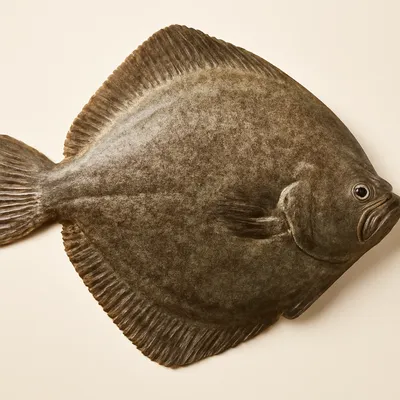




Kalkan (turbot) is the most prized fish of the Turkish Black Sea, where the cold currents grow it large and firm-fleshed. Unlike the cheap winter anchovy that everyone eats daily, turbot is special-occasion and restaurant fish, sold by weight at a premium along the coast from Istanbul to Trabzon. Tava — frying flour-dusted steaks in a shallow pan — is the standard treatment for the region's better fish: minimal seasoning, no batter, just flour, oil, salt and lemon, on the principle that a good firm fish needs nothing more. The same plain frying is given to lüfer (bluefish) and other prestige catch.
A thick turbot steak with a thin, crackly gold crust giving way to dense, sweet white flesh that holds together in firm flakes — nothing like the soft fall-apart of lighter fish. The flour shell is barely there, just enough to crisp and to keep the surface from sticking; the bone keeps the centre juicy. A hard squeeze of lemon cuts the fry-oil, and the sumac onion on the side adds a sour-sharp bite. This is fish at its plainest and best — the whole point is the quality of the kalkan.
A light flour coat is the key to a clean fry: the thin starch layer dries the wet fish surface, browns fast via Maillard reactions into a crisp shell, and stops the delicate flesh from gripping the hot metal and tearing on the turn. The oil must be hot before the fish goes in — a cool pan lets the flour absorb oil and go greasy instead of crisp. Turbot's firm, low-fat flesh and the protective skin and bone let it take the high direct heat of frying without drying out, which is why it suits tava better than oilier or softer fish. Each side needs only a few minutes; overcooking turns even turbot stringy.
Variations
Black Sea canonical with thick bone-in steaks, flour, lemon and sumac onion; some cooks dredge in a flour-cornmeal mix for extra crunch, echoing the cornmeal habit of the anchovy coast. Small whole turbot can be fried flat rather than cut into steaks. The same plain tava treatment is given to lüfer (bluefish), istavrit (horse mackerel) and other firm catch; restaurants may finish the pan with a little butter and a splash of lemon for a quick sauce. It is distinct from buğulama, where fish is steamed over vegetables rather than fried.
On the Palate
Where Kalkan Tava sits in the Turkish flavor cloud
Ingredients
Serves 4
How it's made
6 steps · 20 min active + 5 min waiting
- 15 min
Pat the turbot steaks thoroughly dry and season both sides with salt.
Watch outPat the turbot bone-dry before it's floured — a wet surface makes the coating slide and the fish grip and tear on the turn.
- 24 min
Spread flour on a plate and dredge each steak, pressing lightly and shaking off the excess so only a thin even coat remains.
- 33 min
Heat a generous layer of oil in a wide pan until shimmering-hot.
Watch outThe oil must be shimmering-hot before the fish goes in — a cool pan lets the flour drink oil and go greasy instead of crisp.
- 44 min
Lay the steaks in without crowding and fry, undisturbed, until the underside is deep gold and releases easily, about 3-4 minutes.
Watch outLeave it undisturbed until the underside is deep gold and releases on its own, about three to four minutes — nudge it early and the crust tears off.
- 54 min
Turn once and fry the second side until gold and the flesh is just opaque to the bone, another 3-4 minutes; drain briefly on paper.
- 63 min
Slice raw onion thin, toss with sumac and salt, and serve alongside the fish with lemon wedges.
Archive tool suggestions — not reviewed
These legacy suggestions have not been evidence-reviewed and are not presented as required tools.