The everyday roast bird of the Cantonese siu-laap counter — a duck seasoned from the inside out, lacquered with a maltose glaze, air-dried and roasted to a crisp, dark-amber skin. Where Peking duck is left bland inside so it can be wrapped in pancakes with scallion and sweet sauce, the Cantonese roast duck is stuffed with a wet spiced marinade so the meat itself is fully flavored and eaten straight, chopped over rice or on its own. It hangs beside the roast goose, char siu and roast pork, and is the more affordable, more daily of the roast fowls.

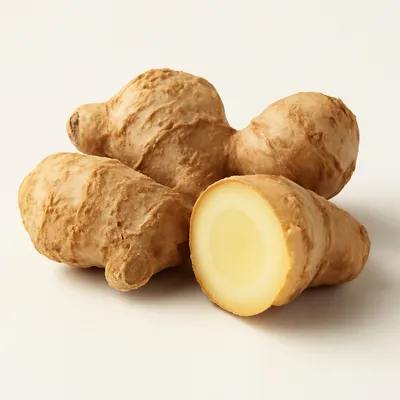


Roast duck travels the same southward route as roast goose: the lacquer-and-hang-roast craft came down from the north, and Guangdong gave it a local accent. The defining split from the northern bird is one of seasoning philosophy. Peking duck, perfected in the imperial capital, is air-pumped and roasted but left unseasoned within, built to be sliced and rolled with scallion, cucumber and sweet flour sauce. The Cantonese cook instead sews a wet marinade — sand-ginger, five-spice, the fermented bean-paste chu-hau, sugar and soy — into the cavity before roasting, so the duck stands on its own at the chopping block. Because geese are dearer and scarcer, duck became the common roast of the siu-laap shop; the rural 'deep-well' (sham-tseng) pit method prized for goose is applied to duck as well.
Chopped through the bone, the duck shows a thin, crackling skin gone dark amber, a clean layer of rendered fat, and meat that is moist and seasoned right through — you taste sand-ginger and five-spice in the flesh itself, not just on the skin. It is leaner and more sharply savory than goose, the cavity marinade having soaked the breast and thigh as it roasted. Eaten as is or over rice with a spoon of the cavity juices, it needs no dip, though a little plum sauce is welcome on the fattier pieces.
Crisp skin and seasoned meat are achieved together but by separate means. A wet marinade is sewn into the cavity so it steams the meat from within as the bird roasts — this is what northern duck deliberately omits. On the outside, the skin is scalded to tighten it, then brushed with a glaze of maltose, rice vinegar and red rice-vinegar (sometimes a drop of rose liquor) and air-dried for many hours; maltose browns at a higher temperature than plain sugar, building the deep amber rather than a pale tan, while the long dry sends the skin into the oven dehydrated so it crisps to glass instead of toughening to leather. Roasting wants steady, accurate heat for around three-quarters of an hour — too hot and the sugary skin scorches bitter before the duck cooks through.
Variations
The seasoning is a house secret that swings between sand-ginger-forward and chu-hau-forward marinades; some shops add ground bean curd (naam-yu) or sesame and peanut paste for depth. Skin glazes vary in their vinegar ratio, tuning color and snap. The deep-well pit-roast over lychee wood gives a smokier, more rustic bird than the gas hanging-oven version of the city shops. Duck stands beside, not against, the costlier roast goose: same counter, same plum sauce, a leaner and cheaper everyday choice.
On the Palate
Where Cantonese Roast Duck sits in the Chinese flavor cloud
Ingredients
Serves 4

How it's made
6 steps · 1 hour 10 min active + 1 day 50 min waiting
- 130 min
Clean a whole duck and pat dry; mix a wet marinade of sand-ginger powder, five-spice, chu-hau paste, sugar, salt and soy, fry it briefly fragrant, then cool.
- 215 min
Spoon the marinade into the cavity and sew or pin the tail opening shut so the seasoning stays in as it roasts.
- 320 min
Inflate the skin with an air pump to separate it from the fat, then scald the duck all over with boiling water to tighten the skin.
Watch outScald the skin all over with boiling water until it tightens — this sets the skin taut so it later dries and crisps to glass instead of staying leathery.
- 4480 min
Brush the skin with a glaze of maltose, rice vinegar and red rice-vinegar; hang in a cool, airy place to dry for at least 8 hours, until the surface is dry and taut.
Watch outAir-dry the glazed skin at least eight hours until dry and taut — a damp skin steams in the oven and never crisps.
- 545 min
Roast in a steady, accurately controlled oven for about 45 minutes, turning as needed, until the skin is crisp and deep amber and the meat is cooked through.
Watch outRoast until the skin is deep amber — the maltose glaze browns darker than plain sugar, so you're after amber, not a pale tan.
- 610 min
Rest briefly, then chop through the bone into pieces; pour the cavity juices over and serve over rice or with plum sauce.
Archive tool suggestions — not reviewed
These legacy suggestions have not been evidence-reviewed and are not presented as required tools.