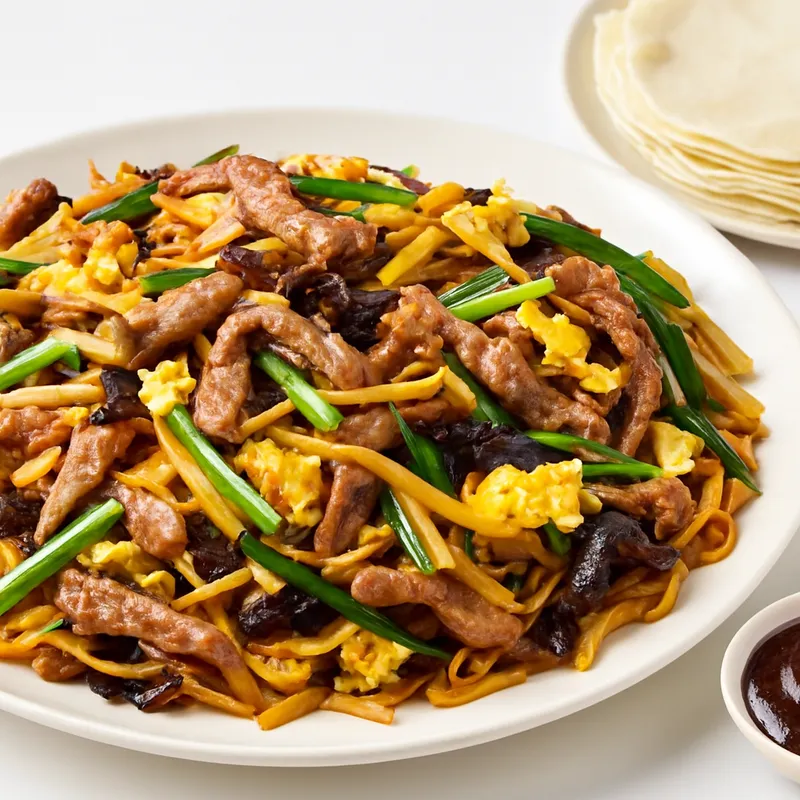
Pork stir-fry with wood-ear fungus, scrambled egg, daylily and scallion — eaten rolled in thin Mandarin pancakes.



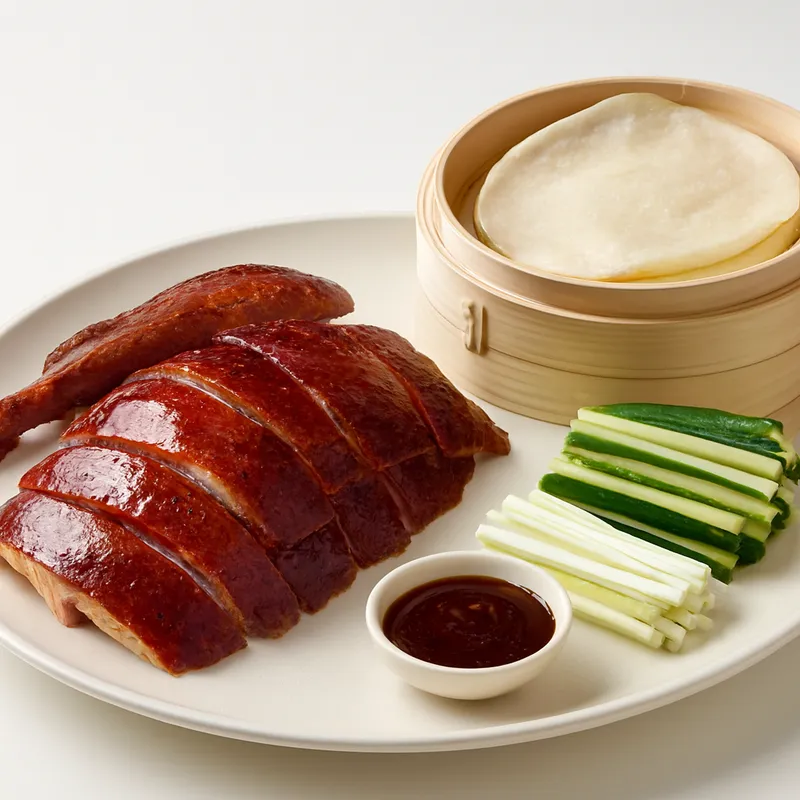
A Shandong dish (Lu cuisine) that originated on the Confucius Mansion menu in Qufu and later became Beijing home cooking. Its literary name 木樨 (mùxī, fragrant osmanthus) comes from the way the scattered golden scrambled egg resembles small osmanthus blossoms — recorded in the Qing-dynasty note Beidongyuan Bilu: 'in northern shops they fry pork with egg and call it muxi pork, taking the name from its broken yellow color.' A second reason is that the northern-dialect word for 'scrambled egg' was crude, so 木樨 served as a polite substitute. Over time the second character drifted to the simpler 须. The combination of wood-ear, daylily and pork is much older — a northern winter pantry dish, since all three keep dried — and is the same filling logic as a Peking-duck pancake, just with pork instead of duck.
Beijing home cooking; the name is 木樨, osmanthus, for how the egg looks scattered like the small yellow blooms scholars wrote about in autumn. Same pantry logic as Peking-duck pancakes — wood ear, daylily, scallion, sweet bean — but with pork. Egg goes in twice; second time as distinct curds, not blended.
Spread sweet bean sauce on a warm pancake, lay down scallion, spoon on the stir-fry, roll. The first bite goes through soft wheat, then bean-sauce sweetness, then a tumble of textures: crunchy wood-ear, slithery daylily, soft egg curd, lean pork shred. Northern home cooking — quiet, balanced, never spicy. If the egg has been cooked into the pork instead of folded in at the end, it's wrong.
The egg is cooked twice — once on its own as soft curds, once back in the wok at the very end — and it must come out in distinct yellow pieces, not blended into a sauce. That's the dish's whole point: the eponymous osmanthus-flower visual. Cornstarch on the pork keeps it tender through the high-heat fry, and the water added near the end is what makes the wood-ear release that slippery glaze instead of staying squeaky.
Variations
Beijing home version is the standard; the original Shandong/Confucius-Mansion version keeps wood-ear with bamboo-shoot slices (yulanpian) and adds sea cucumber for banquet form; American-Chinese moo shu uses iceberg lettuce instead of pancake; modern Beijing cha guan add bamboo shoot.
On the Palate
Where Mu Xu Pork sits in the Chinese flavor cloud
Ingredients
Serves 3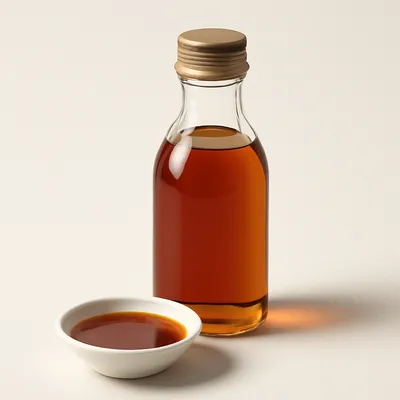




How it's made
6 steps · 20 min active + 15 min waiting
- 115 min
Soak 15g dried wood-ear fungus and 20g dried daylily flowers in warm water for 15 minutes. Trim hard stems off the wood-ear, knot the daylilies in the middle (helps them hold shape).
- 211 min
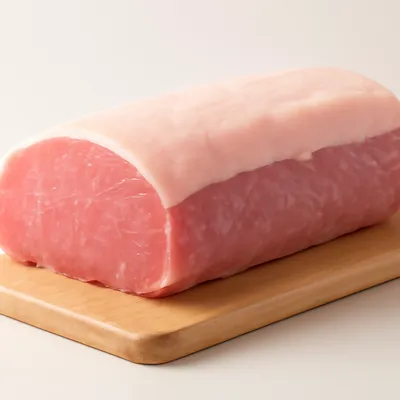
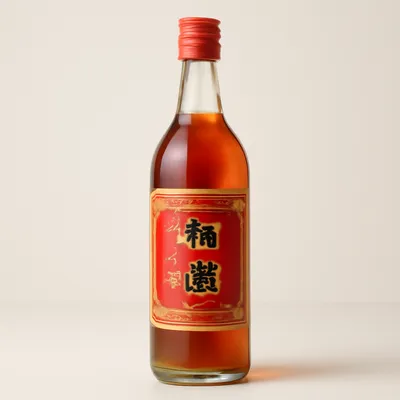
Slice 250g pork loin against the grain into matchsticks. Marinate with 1 tsp light soy, 1 tsp Shaoxing wine, 1 tsp cornstarch, a few drops of sesame oil for 10 minutes.
- 32 min
Beat 3 eggs with a pinch of salt. Heat 2 tbsp oil in a wok and scramble eggs in soft loose curds, 30 seconds. Tip out onto a plate before they fully set.
Watch outScramble the eggs in big soft curds and tip them out while still glossy and underset — they go back in later. Cook them hard now and they'll never show as the distinct yellow pieces the dish is named for.
- 43 min
Add another tbsp oil to the wok over high heat. Stir-fry pork 90 seconds until just opaque. Add ginger and scallion whites for 30 seconds.
Watch outDo not overcook the pork; it should remain tender and juicy.
- 53 min
Add wood-ear and daylily, toss 60 seconds. Season with 1 tbsp light soy, ½ tsp salt, ¼ tsp sugar and a small splash of water. Return egg, toss to combine — the egg should still look in pieces, not pulverised. Off heat, drizzle sesame oil.
Watch outAdd the splash of water so the wood-ear releases its slippery glaze, then fold the egg back in gently — keep it in visible pieces, don't stir it into a sauce. That yellow-flecked look is the whole point.
- 61 min
Serve with a stack of warm Mandarin pancakes (春饼), a small dish of sweet bean sauce, and slivered raw scallion. Each diner rolls their own.