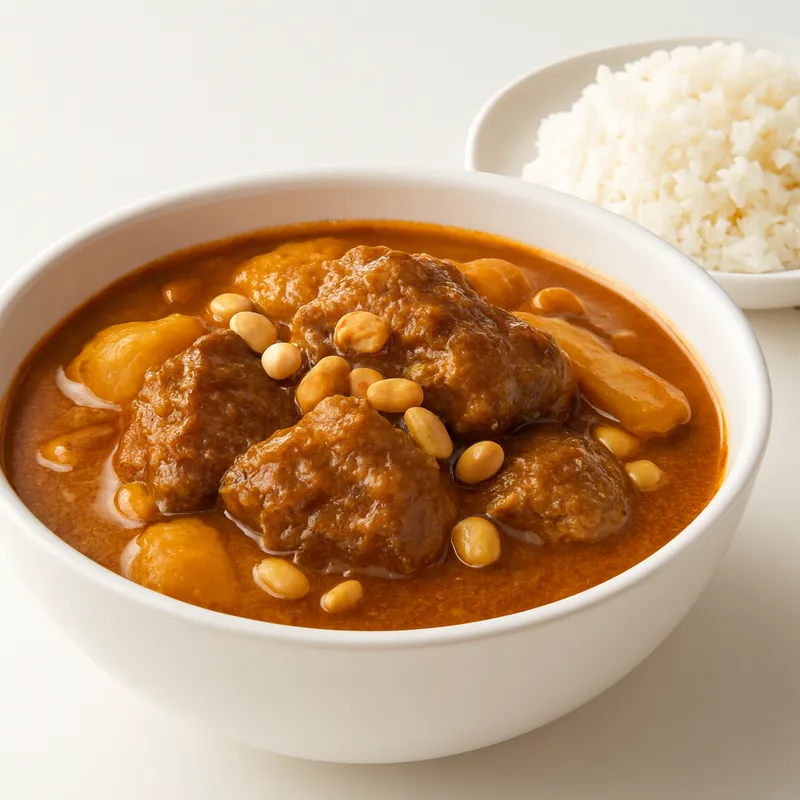
A dry, fiercely spicy stir-fry built on red curry paste fried hard in oil, then loaded with meat, fish, or game, fingerroot (krachai) cut in fine slivers, long beans, fresh peppercorns, and holy or sweet basil. Unlike a curry, it carries almost no liquid — the paste fries down into a clinging coat rather than a sauce. The name simply means "stir-fried spicy," and the heat is meant to be front and center.


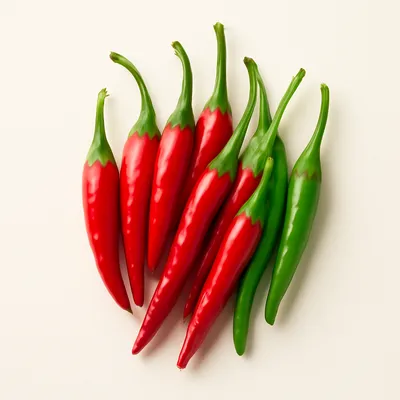


Pad ped is generic central-Thai cooking — the name ("stir-fried spicy") describes a method rather than a fixed recipe, and it appears wherever there is leftover curry paste and something to fry it with. It has no single inventor. Historically it was a common way to cook river fish, frog, and game such as wild boar and venison, the strong paste and fingerroot masking any muddy or gamey note; krachai (Boesenbergia rotunda, fingerroot) is the signature aromatic precisely because it pairs with fish and game. The dish spans home kitchens, rice shops, and the spicier end of jungle-curry country, and overlaps closely with pad cha and pad prik king as members of the same dry-stir-fry family.
It hits hot and aromatic at once — dried-chili burn from the paste, the medicinal-citrus pungency of fingerroot, and green peppercorns that pop with a fresh, resinous heat between the teeth. The meat or fish is well-seasoned to the surface, the long beans squeak, and the basil thrown in at the end smells of pepper and clove. There is no soup to cool it; this is a chili-forward plate eaten in small forkfuls over a lot of rice. Done right it is dry and glistening with red oil, not wet.
The load-bearing move is frying the paste: red curry paste is cooked in oil over medium-high heat until the raw garlic-shallot smell turns toasty and the oil splits out red around the edges, which both kills the raw note and creates flavored oil that carries everything else. Fingerroot is the defining aromatic — its sharp, slightly camphorous profile cuts fishiness and gaminess in a way galangal does not, which is why this dish reaches for it over the usual curry aromatics. Fresh green peppercorns add a clean heat distinct from chili and a faint numbing lift. Because almost no liquid goes in, the pan must stay hot and the cooking fast so the meat sears and the paste stays a coating; add water and it slumps into a curry instead.
Variations
Pad ped pla duk uses fried catfish; pad ped moo pa uses wild boar; squid, frog, and duck all appear, and a fully landlocked jungle-curry-style version skips coconut entirely. Cooks who like a slightly saucier result splash in a little stock or coconut milk, blurring the line toward choo chee; the vegetable mix flexes with krachai, long beans, young peppercorns, eggplant, and grachai shoots.
On the Palate
Where Pad Ped sits in the Thai flavor cloud
Ingredients
Serves 3


How it's made
6 steps · 20 min
- 114 min
Peel fingerroot and cut into fine slivers; trim long beans into short lengths; slice meat or clean fish into bite-size pieces.
- 23 min
Heat oil in a wok and fry the red curry paste over medium-high heat until fragrant and the oil splits out red.
Watch outFry the red curry paste until it smells toasty and red oil weeps out around the edges — that split oil means the raw note is gone and the flavor is set.
- 34 min
Add the meat or fish and stir-fry until seared and cooked through, seasoning with fish sauce, oyster sauce, and a little palm sugar.
- 43 min
Add the fingerroot, long beans, and fresh green peppercorns and stir-fry until just tender.
Watch outAdd the fingerroot and long beans and toss only until crisp-tender and just off raw — keep the dish dry so everything stays glossy, not stewed.
- 52 min
Add a splash of water only if it threatens to catch, keeping the dish dry, and taste for salt and heat.
- 61 min
Toss in basil and sliced chilies off the heat and serve over jasmine rice.