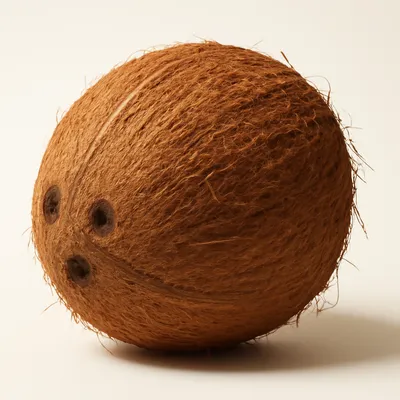
A Dutch-colonial coconut custard from Manado in North Sulawesi. A milk-and-egg custard thickened with flour or cornstarch is folded full of soft, ribbon-thin strips of young coconut and poured into ramekins, then enriched with raisins, almonds and a splash of rum. The two common styles diverge from there: one is baked until the top sets and lightly browns, the other is simply chilled until it firms into a soft, spoonable pudding. The name is straight Dutch — 'klapper' for coconut, 'taart' for tart — and the dish remains one of Manado's best-known sweets and edible souvenirs.




Klappertaart belongs to the Dutch-colonial heritage of Minahasa, the strongly Christian region around Manado that had long, close contact with the Netherlands. It is widely described as a local adaptation of a Dutch coconut tart, reworked with the young coconut that grows abundantly on the North Sulawesi coast; the Dutch name it still carries points plainly to that origin. As a folk dessert it is not tied to a single recorded date or inventor, and recipes have drifted between households and bakeries over generations. What is consistent is the regional identity — across Indonesia klappertaart is read as a Manado specialty, and the city's bakeries sell it boxed as a thing to bring home.
Cool and soft, somewhere between a custard and a loose pudding, with whole ribbons of young coconut suspended through it that are tender and faintly slippery rather than chewy. The base is rich with milk and egg yolk and gently sweet, lifted by the warm note of rum and a little nutmeg or cinnamon. Raisins give small bursts of concentrated sweetness and the almonds a quiet crunch against the smoothness. A baked one carries a thin, lightly browned skin on top; a chilled one is uniformly silky from spoon to bowl.
The set comes from two things working together: egg yolk proteins that coagulate with heat, and starch — flour or cornstarch — whose granules swell and gelatinize to trap the liquid. Cooking the custard gently and stirring constantly keeps the yolks from scrambling and the starch from forming lumps, giving a smooth body. Young coconut is chosen over mature flesh because it is soft and high in water, so it stays tender and folds in as ribbons rather than turning fibrous. The rum and the warm spices are aromatic seasonings that cut the richness, while a baked surface browns through the Maillard reaction between the egg and milk proteins and the sugar; a chilled version skips that and relies on cold to firm the starch-and-egg matrix.
Variations
The two great divisions are baked klappertaart, set firm with a browned top and often portioned in foil cups, and the no-bake 'klappertaart kocok' that is cooked on the stove and chilled to a softer, scoopable texture. Within those, recipes vary in richness and add-ins — extra egg yolks, cheese on top, more or less rum, a dusting of cinnamon. Bakeries sell it in single ramekins as well as larger tins, and commercial chilled versions travel as the canonical Manado souvenir.
On the Palate
Where Klappertaart sits in the Indonesian flavor cloud
Ingredients
Serves 8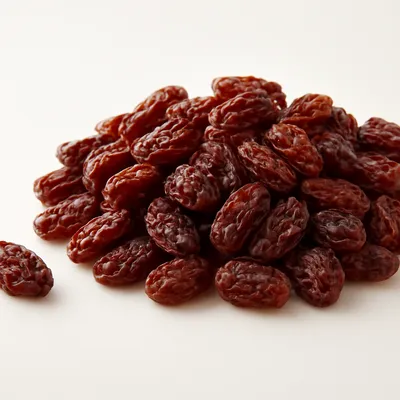

How it's made
8 steps · 40 min
- 120 min
Crack open young coconuts and scrape the soft flesh into thin ribbons, reserving some coconut water.
- 210 min
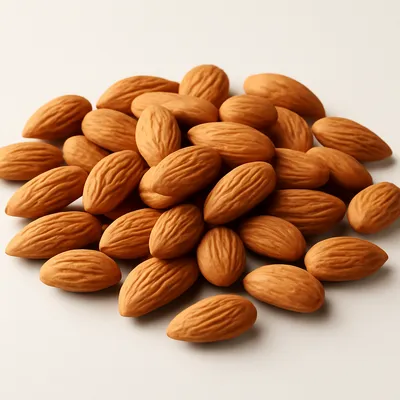
Soak the raisins, briefly toast the almonds, and butter the ramekins.
- 35 min
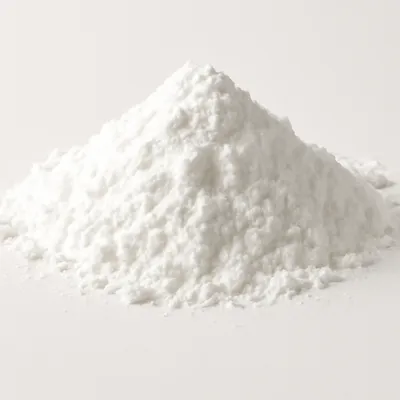
Whisk milk, sugar, egg yolks and flour or cornstarch into a smooth mixture.
- 412 min
Cook the mixture over low heat, stirring constantly, until it thickens into a custard.
Watch outCook the custard over low heat, stirring nonstop, until it thickens — stop stirring and the yolks scramble and the starch lumps.
- 53 min
Stir in the young coconut ribbons, a splash of rum and a pinch of nutmeg or cinnamon off the heat.
Watch outFold the young-coconut ribbons in off the heat — they should stay tender ribbons, so don't cook them down or they turn fibrous.
- 65 min
Spoon into the ramekins and scatter over the raisins and almonds.
- 730 min
For the baked style, bake until just set and lightly browned on top; for the no-bake style, skip the oven.
- 860 min
Cool, then chill until firm before serving.
Archive tool suggestions — not reviewed
These legacy suggestions have not been evidence-reviewed and are not presented as required tools.


