Binagol is a Waray sweet of mashed taro, coconut milk, condensed milk, egg yolk, and chopped nuts, packed and steamed inside a half coconut shell. The shell is filled, capped with banana leaf, and bound with twine, then steamed until the mixture sets into a dense, fudgy pudding. It comes from Eastern Visayas — the signature delicacy of Leyte, sold wrapped in its own organic packaging. The name says exactly what it is: rice and root made sweet, placed in a coconut shell.
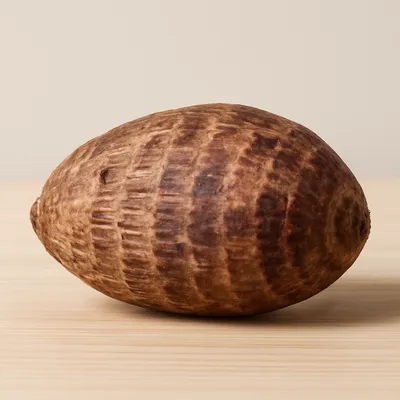




Binagol comes from the Waray people of Eastern Visayas, and is particularly associated with the town of Dagami in Leyte. Its name derives from the Visayan bagol, 'coconut shell', and means 'placed in a coconut shell' — the vessel that both cooks and serves it. Traditionally it is built on the corms of giant taro, known locally as talyan; ordinary taro (gabi, or gaway in Eastern Visayas) is used as well. The coconut-shell mold suits a region of abundant coconut and frequent storms, where sturdy natural packaging travels well.
Spooned from the shell, it is dense and fudgy, holding the spoon's shape. The taro reads earthy and faintly nutty, sweetened deep by condensed milk and rounded with coconut. Chopped nuts give a soft crunch through the smooth paste, and a slick of richness coats the tongue. Best eaten with a small spoon, straight from the shell.
Taro is dense with fine starch granules; mashed and heated with liquid, those starches gelatinize and bind the mixture into a sliceable, fudgy set rather than a loose puree. Egg yolk adds proteins and emulsifiers that firm it further and carry the fat smoothly through. Steaming inside the sealed coconut shell gives gentle, even, all-around heat — the mixture cooks through slowly without scorching against a hot pan wall, and a faint coconut note seeps in from the shell.
Variations
Giant taro (talyan) makes the most traditional version; common taro stands in where it is scarce. Nut choices range from peanuts to pili. Some recipes lean richer with extra egg yolk or evaporated milk; sweetness varies by maker. Cassava cousins exist, but the taro-in-coconut-shell form is the Leyte classic.
On the Palate
Where Binagol sits in the Filipino flavor cloud
Ingredients
Serves 6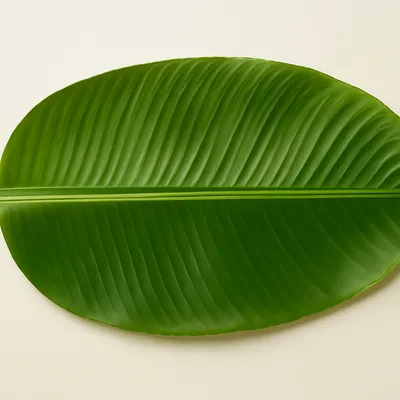
How it's made
8 steps · 50 min
- 120 min
Boil the taro corms until tender, then peel and mash to a smooth paste.
- 26 min
Beat in egg yolks, coconut milk, and condensed milk until evenly blended.
- 34 min
Fold in sugar to taste and most of the chopped nuts.
- 412 min
Cook the mixture in a pan over low heat, stirring, until thick and pulling from the sides.
Watch outCook the mash over low heat, stirring, until it's thick and pulls away from the sides of the pan — that's when the starch has set enough to hold a sliceable, fudgy shape after steaming.
- 55 min
Spoon the thickened mash into clean half coconut shells and scatter the remaining nuts on top.
- 64 min
Cap each shell with banana leaf and bind tightly with twine.
- 760 min
Steam the filled shells until the mixture is fully set.
Watch outSteam the filled shells until the mixture is fully set — the sealed coconut shell gives slow even heat, so give it time; underset and the center stays a loose paste.
- 85 min
Cool before unwrapping, and eat from the shell with a spoon.
Archive tool suggestions — not reviewed
These legacy suggestions have not been evidence-reviewed and are not presented as required tools.


