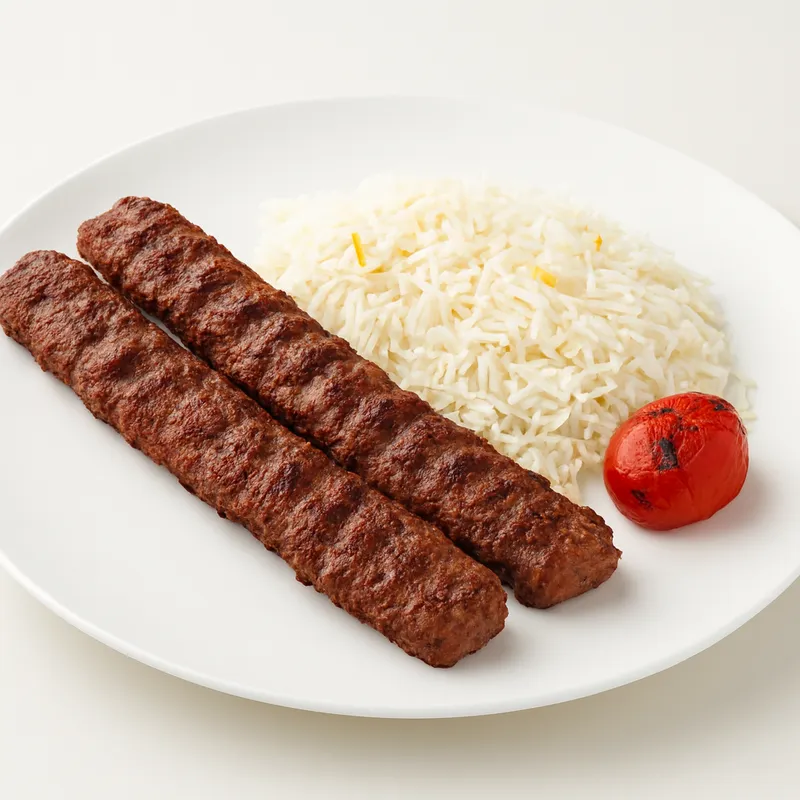
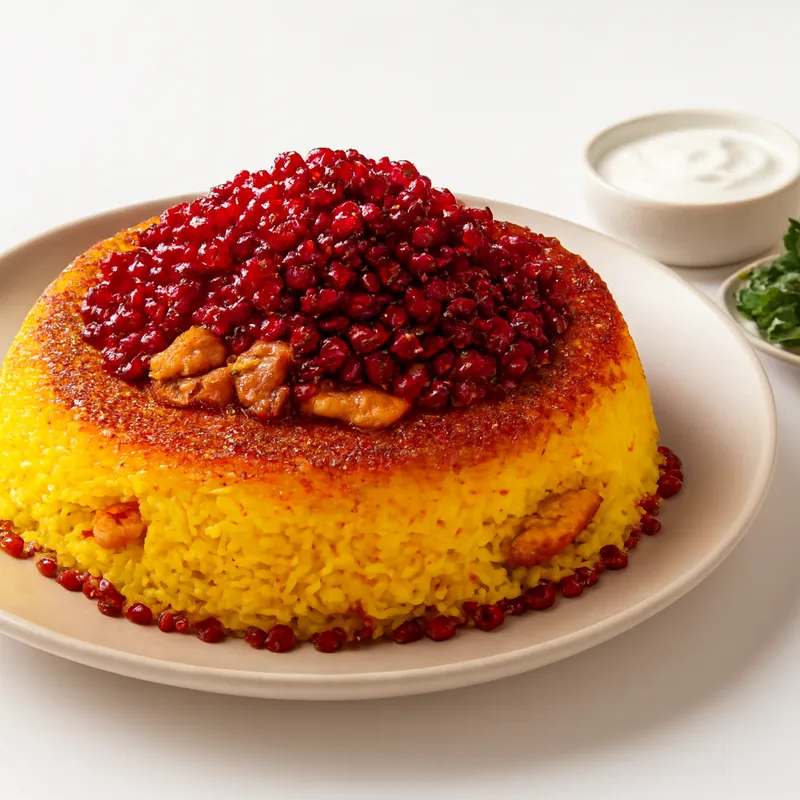
An Isfahan icon of finely minced mutton and lamb blended with sheep's lung, onion and tail fat, pressed into a small patty and pan-fried until crisp at the edges. It is served folded inside warm sangak flatbread, usually with a dusting of cinnamon and a side of fresh herbs. The name comes from beryan, 'roast', though the modern street version is fried rather than oven-roasted. One patty in bread is considered a full meal.


Beryani is bound up with Isfahan and traced to the Safavid era; seventeenth-century European travelers Jean-Baptiste Tavernier and Jean Chardin both described it in their journals. Tavernier recorded Isfahan cookshops where a whole skinned sheep was hung in a clay oven to roast while a pot of rice cooked on the oven floor in the dripping fat. The Encyclopaedia Iranica derives the name from beryan, 'roast', and notes that old Isfahani families have long either mixed sheep's lights (jegar-e safid) into the meat or grilled them separately; that lung-and-mutton mince is the dish's signature. The oven-roast method gave way over the twentieth century to the minced, pan-fried patty sold in the historic bazaar today.
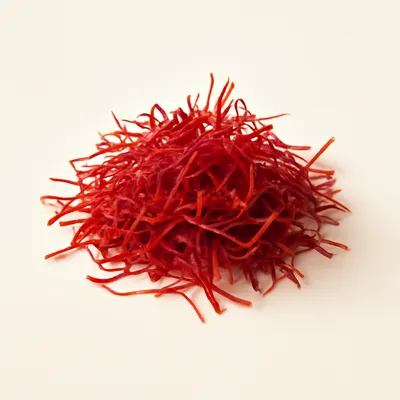
A coarse mince the color of cooked liver, fried until the underside takes on a lace of crisp brown. Folded into soft sangak still warm from the stone, the bread soaking up the rendered fat. The lung gives it a faint mineral, offal depth under the sweetness of long-cooked onion; cinnamon and a brew of saffron lift the top notes. Eaten by hand, torn off in pieces, with raw basil and a glass of doogh to cut the richness.
The mutton is boiled with onion, turmeric and salt until it falls apart; the lung is cooked separately so its spongy texture does not water down the meat. The two are then minced together with tail fat — the fat is what binds the lean mince into a patty that holds in the pan instead of crumbling. Cinnamon and bloomed saffron go in before forming. The patty is fried in shallow oil rather than deep, so one face crisps while the inside stays moist; a true beryani edge is brittle, not soft.
Variations
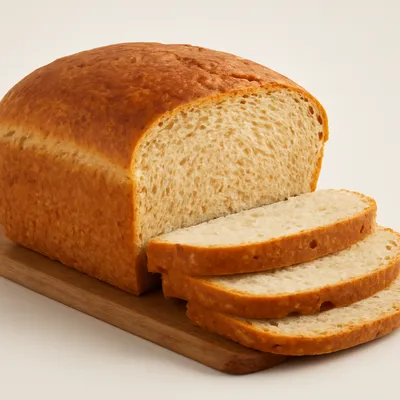
The classic is served on sangak; some shops use barbari or taftoon instead. Older Isfahani households grill the lung separately with tail fat and mince it apart from the meat, rather than blending everything. Garnishes vary from plain cinnamon to a scatter of dried mint or sliced raw onion. A few modern cooks reduce or omit the lung for milder palates, though purists consider it essential.
On the Palate
Where Beryani Esfahani sits in the Persian flavor cloud
Ingredients
Serves 4How it's made
8 steps · 40 min
- 160 min
Boil mutton with onion, turmeric and salt until very tender and falling apart.
Watch outBoil the mutton until it's very tender and falling apart; it has to shred easily to mince into a smooth patty later.
- 230 min
Cook the sheep's lung separately in salted water, then drain well.
- 312 min
Saute sliced onion in a little oil until deep golden and sweet.
- 415 min
Mince the mutton, lung, cooked onion and tail fat together to a coarse paste.
Watch outMince the meat with the tail fat; that fat is the binder that holds the lean mince into a patty instead of crumbling in the pan.
- 53 min
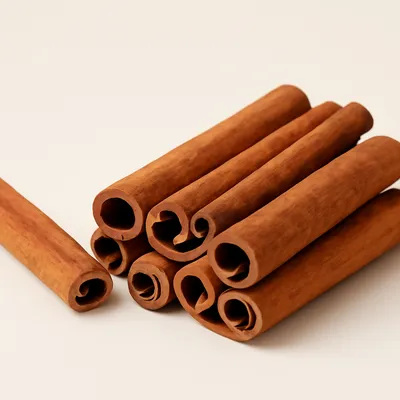
Mix in ground cinnamon, salt, pepper and brewed saffron.
- 68 min
Form the mixture into small flat patties, pressing firmly so they hold.
- 712 min
Shallow-fry the patties until the underside is crisp and browned.
Watch outShallow-fry, not deep, so one face crisps brittle while the inside stays moist; a true beryani edge should be brittle, not soft.
- 84 min
Warm sangak bread, fold a patty inside, and dust with cinnamon to serve.
Archive tool suggestions — not reviewed
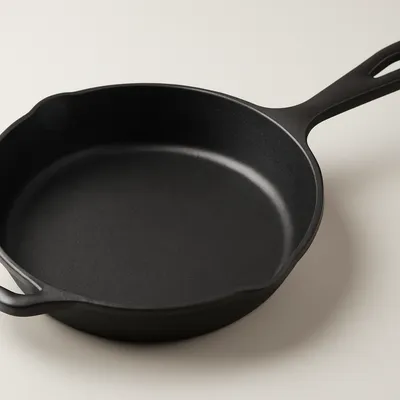
These legacy suggestions have not been evidence-reviewed and are not presented as required tools.