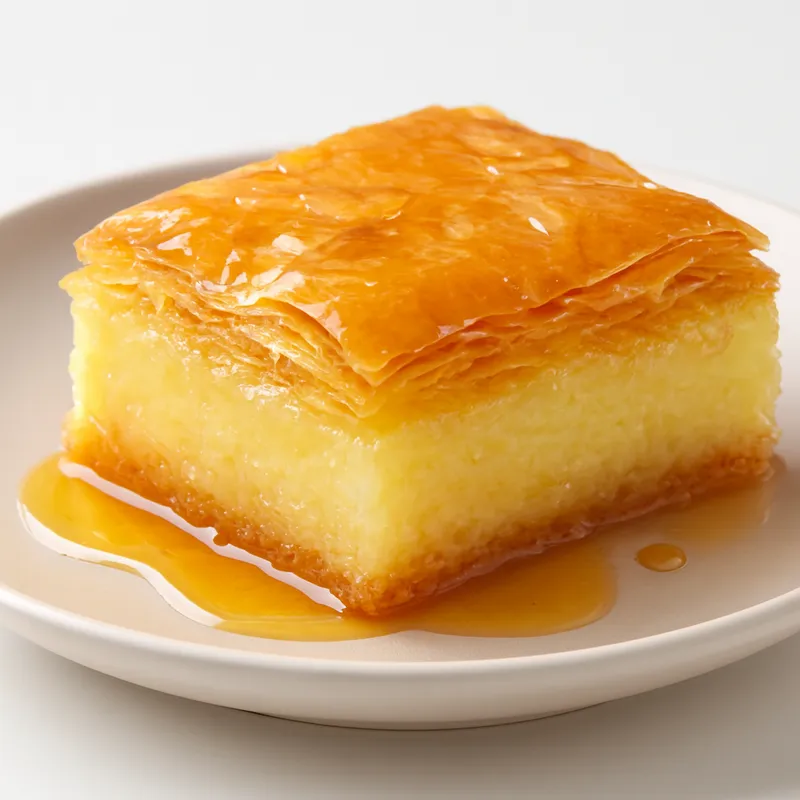



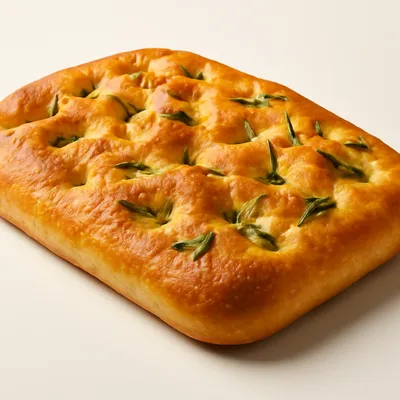
Already established in northern Greece, especially Serres and Thessaloniki, by the late 19th century (the Thessaloniki bougatsa-makers' guild was founded in 1917); Greek refugees from Constantinople and Asia Minor after 1922 popularized and spread it, especially the cream- and cheese-filled versions. the name traces back through Byzantine pogátsa to Latin focacia, the same root as Italian focaccia. Dedicated bougatsa shops in Thessaloniki still hand-stretch the phyllo on long tables — the dough is whipped through the air to translucency.
Brought to Thessaloniki by Greek refugees from Constantinople and Asia Minor after 1922. The name traces through Byzantine pogátsa to Latin focacia — same root as focaccia. Phyllo here is hand-stretched, not rolled: dough is whipped through the air across a long table until it covers the surface translucently. Supermarket phyllo cracks before it crisps.
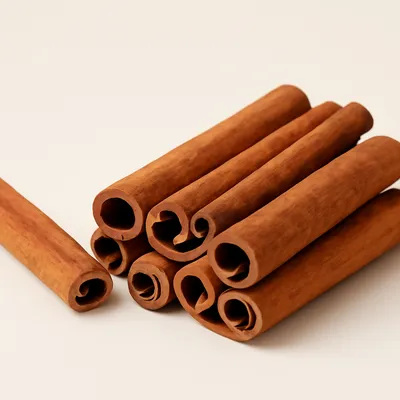
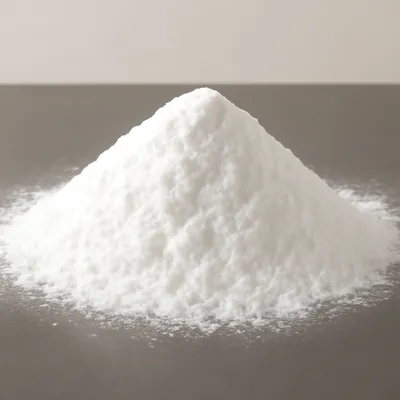
A square of paper-thin phyllo, baked until it shatters, hiding hot semolina custard or salty cheese inside. The sweet version is dusted with cinnamon and powdered sugar at the counter, after cutting; the savory version is plain. Eaten with thick coffee for breakfast in northern Greece, especially Thessaloniki, while the pastry is still steaming.
The phyllo here is hand-stretched, not rolled — flour, water, oil, and a long rest, then thrown across a table until it covers the whole surface translucently. Machine-rolled phyllo (the supermarket kind) is too dry for bougatsa; it cracks before it crisps. The semolina filling is poured in hot so it sets in the oven, not before.
Variations
Sweet bougatsa (semolina custard, dusted with cinnamon and powdered sugar at the counter); savory bougatsa with feta and mizithra; bougatsa me kima with spiced minced meat; Bantis in Thessaloniki and Iordanis in Chania are the canonical hand-stretch shops.
On the Palate
Where Bougatsa sits in the Greek flavor cloud
Pour the semolina custard in while it is still hot so it sets in the oven rather than seizing beforehand, and layer generously buttered phyllo so it shatters crisp instead of drying out and cracking.
Ingredients



How it's made
5 steps · 1 hour 20 min
- 15 min
Preheat oven to 180°C (350°F).
- 23 min
In a pot, heat milk and sugar, then whisk in semolina until thick.
Watch outThe custard is ready when the whisk leaves a trail and it mounds thickly off the spoon.
- 33 min
Remove from heat and stir in beaten eggs and vanilla.
- 45 min
Layer phyllo sheets in a baking dish, brushing with melted butter.
Watch outEvery sheet should glisten with butter; dry patches are where it will crack and stay pale.
- 525 min
Pour custard over phyllo, cover with more sheets, and bake until golden.
Watch outBake until the top is deep gold and crackly and the custard no longer sloshes underneath.
Archive tool suggestions — not reviewed
These legacy suggestions have not been evidence-reviewed and are not presented as required tools.