The backbone of Beijing home cooking — chicken breast diced and stir-fried in sweet bean paste over high heat until the sauce clings dark and glossy to every cube. No peanuts, no chili: this is not Kung Pao. The flavor architecture is built on the Maillard alchemy of fermented paste meeting flame, producing sweet-savory depth that coats the mouth cleanly.




Sauce-Blasted Chicken traces to the Shandong (鲁菜) technique of 酱爆 — cooking meat in fermented paste over fierce heat — which Shandong chefs carried to Beijing's court and official-household kitchens during the Qing dynasty. The dish is historically linked to Ding Baozhen (1821–1886), Qing official who served as Shandong Governor and reportedly enjoyed the local sauce-blasted chicken there. When Ding transferred to Sichuan as Governor-General in 1876, cooks adapted the recipe with chili and Sichuan pepper and named the result after his honorific title 'Gongbao' (宫保), producing what the world now knows as Kung Pao Chicken. Beijing's original version, without chili or peanuts, survived as a distinct household classic and remains one of the city's most representative everyday dishes.
Each chicken cube arrives glazed in a thin, burnished coat of sauce — sweet and savory in one breath, with a faint fermented undertone from the bean paste. The meat stays tender under the sauce skin; a waft of caramelized sweetness lingers after the chew. No heat, no crunch — just clean, direct flavor.
Sauce-blasting unfolds in two chemical stages. Stage one — 'frying the sauce' (炒酱) at 150–170°C: maltose and glucose in the sweet bean paste caramelize while the paste's proteins and residual sugars trigger the Maillard reaction at reduced moisture, generating pyrazines and furans that give the sauce its complex fragrance. Oil visually separating from the paste signals sufficient aromatic development. Stage two: chicken cubes enter the wok where continued high heat drives further Maillard browning on the meat surface, fusing the sauce film to the protein and locking interior moisture, giving each piece its glossy coat and juicy interior.
Variations
The standard Beijing version uses sweet bean paste alone; some cooks blend it 7:3 with dry yellow soybean paste for added salinity. A splash of Zhenjiang vinegar is occasionally added for brightness. Kung Pao Chicken, by contrast, adds dried chilies, Sichuan peppercorns, peanuts, and vinegar — an entirely different flavor register.
On the Palate
Where Soy-Sauce-Blasted Chicken Dices sits in the Chinese flavor cloud
Ingredients
Serves 3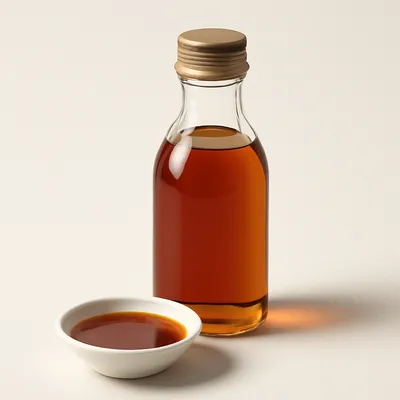

How it's made
7 steps · 10 min
- 110 min
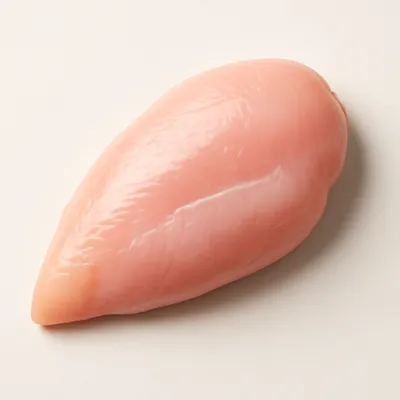
Dice chicken breast into 1.5cm cubes; mix thoroughly with egg white, cornstarch, light soy sauce, and white pepper; rest 10 minutes.
- 23 min
Combine sweet bean paste with a small splash of water to loosen it; if using, blend with a portion of yellow soybean paste at 7:3 ratio.
- 34 min
Heat wok with generous oil over medium-low heat; slide in chicken cubes and gently stir until just cooked through and opaque, about 3 minutes; remove and drain.
Watch outSlip the chicken through warm oil just until opaque, then drain — cooking it hard here dries the dice before the sauce even goes on.
- 41 min
Pour off excess oil, leaving about 2 tablespoons; heat the wok over medium heat.
- 53 min
Add ginger julienne and scallion whites; stir 15 seconds, then add the sauce mixture — stir-fry continuously until the paste darkens slightly and oil visibly separates from it, about 2 minutes.
Watch outFry the sweet bean paste until it darkens and the oil visibly separates out — that oil breaking free is the signal the sauce is fragrant, not raw.
- 62 min
Return chicken to wok; raise heat to high and toss vigorously until every piece is coated and sauce clings without pooling, about 1 minute.
Watch outReturn the chicken and toss high and fast until the sauce clings with no pooling — about a minute; longer and it dries and clumps.
- 72 min
Drizzle sesame oil, scatter scallion greens, and plate; serve alongside sliced cucumber if desired.


