A quintessential Northeastern home-and-restaurant stir-fry, so common that Dongbei people half-jokingly call it their 'national dish.' Sheets of gandoufu — the Northeast's thin, low-moisture pressed tofu, the same product known as qianzhang or baiye further south — are stacked, cut into strips or diamonds, and quick-fried over a roaring flame with pointed hot green peppers, garlic, and scallion in a light savory glaze. Soy sauce and a thread of starch slurry tie it together; the wok's high heat lends the smoky breath the Chinese call wok-hei. It is cheap, fast, and ubiquitous, eaten as a main over rice.
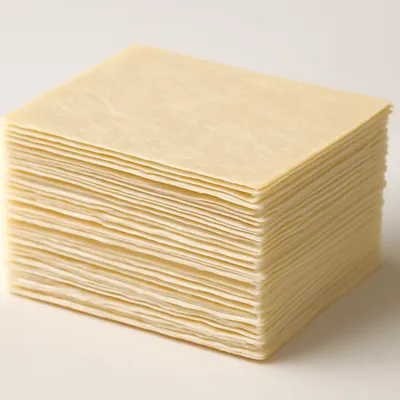




This is plain folk cooking rather than a dish with a founder or a date, and its story is really the story of gandoufu. Across the Northeast, what the south calls qianzhang or baiye — bean curd pressed in cloth into paper-thin sheets — is universally known as 'dry tofu,' and the name 'qianzhang' (literally 'a thousand leaves') reflects the way the curd is folded through many layers of cloth and pressed until it emerges as one thin sheet. Soybeans and the cold-country habit of pressing tofu firm gave Dongbei an exceptionally dense, chewy sheet, and pairing it with the region's stir-fried green peppers produced a dish so universal it became a benchmark of home cooking. Popular tales tie its invention to a couple by the Songhua River, but these are folk legend, not record.
The tofu sheets stay supple and faintly chewy, carrying a clean roasted-bean savor that the peppers and garlic light up. Cut into strips, they soak up just enough glaze to gloss the surface without going soft, so each bite has a gentle resistance rather than the wobble of fresh tofu. The pointed green peppers snap in crisp and grassy, with a low warming heat, and the garlic and scallion ride over the top in a wave of fragrance. Eaten straight from a screaming wok, the whole plate smells of smoke and fried soy.
Everything rests on the sheet and the flame. Because gandoufu is pressed so firm and low in moisture, it holds its shape under fierce heat and turns chewy rather than collapsing — the opposite of soft tofu. Most cooks blanch the strips in boiling water for under a minute first, which rinses away the raw-bean smell and, just as importantly, keeps the sheet from drying hard and brittle in the wok. The stir-fry then runs hot and fast so the pan never cools: peppers and aromatics fry until just blistered, the tofu goes in to take on color and a trace of Maillard char along its edges, and a thin cornstarch slurry is swirled in at the end. The starch gelatinizes into a glossy film that clings to every strip and binds the soy seasoning to the surface, finishing the dish in a glaze rather than a sauce.
Variations
Cooks differ on the pepper: milder pointed peppers for everyday eating, fiery xian or luosi peppers for those who want bite. Some add a few slivers of pork or a spoon of soybean paste for a richer, browner finish, while purists keep it lean and clean. Dried tofu also appears shredded and cold-dressed, or knotted and braised, but the hot-pepper stir-fry is its most beloved form across the Northeast.
On the Palate
Where Dried Tofu with Hot Green Peppers sits in the Chinese flavor cloud
Ingredients
Serves 3

How it's made
8 steps · 15 min
- 14 min
Stack the dried tofu sheets and cut into strips or diamonds about 4–5 cm across.
- 22 min
Blanch the strips in boiling water for under a minute, then drain — this rinses off the raw-bean smell and keeps them from drying hard in the wok.
Watch outBlanch the strips under a minute, no more — this rinses the raw-bean smell and keeps the sheet from drying hard and brittle in the wok.
- 33 min
Cut the hot green peppers into rough strips or chunks; slice garlic and scallion.
- 42 min
Heat the wok until just smoking, add oil, and stir-fry the garlic and scallion until fragrant, then add the peppers and toss until blistered and bright.
Watch outGet the wok just smoking hot and keep it fierce — the peppers should blister and brighten fast; a cooling pan turns everything soggy.
- 52 min
Add the dried tofu and stir-fry over high heat so it takes on color and a trace of char at the edges.
Watch outFry the tofu hot enough to take on color and a trace of char at the edges — that Maillard edge is the flavor, not a limp reheat.
- 61 min
Season with soy sauce and salt, splash in a little water or stock, and toss to coat.
- 71 min
When the liquid has reduced to a thread, swirl in a thin cornstarch slurry and toss until a glossy glaze clings to every strip.
Watch outAdd the slurry only once the liquid's down to a thread, then toss to a glossy coat clinging to every strip — too soon and it goes gluey.
- 81 min
Finish with a few drops of sesame oil and serve hot over rice.


