Gonghui Town's defining street snack from Hezhou, Guangxi — beef intestines and offal slow-cooked in a broth soured with fermented glutinous rice water (米酸) and enriched with yellow skin fruit paste (黄皮果酱). The sour, savory, mildly sweet tangle of offal is Hezhou's most recognisable street food.





Gonghui Town (公会镇) in Hezhou's Pinggui District developed this dish from the market stalls of local butchers who needed buyers for beef intestines and organ meats too low in value to sell fresh. The key innovation was using 米酸 — the mildly sour liquid drawn off from fermenting glutinous rice — as a broth base. Its lactic acidity stripped gamey odour from offal without harsh chemical treatment, and the addition of yellow skin fruit paste (黄皮果酱) introduced a fragrant tropical sourness unique to Guangxi. In 2013, 吴玉赦's version of 公会牛肠酸 won the title of 贺州十大金牌小吃 (Ten Signature Snacks of Hezhou).
Tender segments of beef intestine yield without chew, carrying deep bovine richness into a broth that is bracingly sour from the rice ferment and tropically fragrant from the yellow skin fruit; pickled ginger cuts through with a warm, lingering heat, and the overall effect is complex — sour, savoury, sweet, and spicy in a single mouthful.
Fermented glutinous rice water (米酸) is rich in lactic acid produced by Lactobacillus species during spontaneous fermentation, lowering broth pH to approximately 4.0–4.5. This acidic environment accelerates hydrolysis of the collagen triple helix in intestine walls: at a simmer of 85–90°C, collagen fibres gradually unwind into soluble gelatin, producing the characteristic soft, slightly gelatinous texture of fully cooked offal. Yellow skin fruit (黄皮果) contributes citric and malic acids that amplify sourness further, while its volatile monoterpene compounds add a floral, aromatic dimension that distinguishes Hezhou's version from other regional offal soups.
Variations
Vendors vary the offal mix — some use intestines only, others add stomach, lung, or tripe. A drier stir-fried version popular in urban Hezhou uses the same sour sauce without liquid broth. Some stalls serve the broth over rice noodles (米粉) as a full meal.
On the Palate
Where Hezhou Gonghui Fermented Beef Intestine sits in the Chinese flavor cloud
Ingredients
Serves 4

How it's made
6 steps · 30 min
- 110 min
Wash 500g beef intestines and 200g beef stomach thoroughly with flour and white vinegar, rubbing well inside and out. Blanch in boiling water with 3 ginger slices and 1 tbsp rice wine for 5 minutes. Drain, rinse, and cut into 3–4cm segments.
Watch outRub the offal hard with flour and vinegar inside and out until it no longer smells — this is where the funk gets scrubbed off.
- 25 min
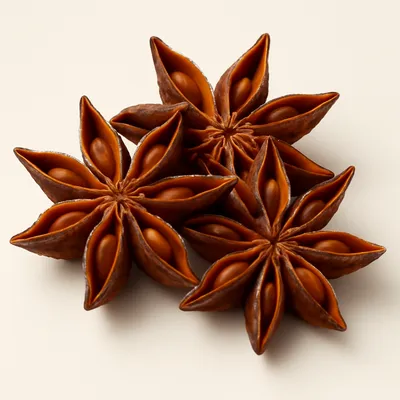
Combine 500ml fermented glutinous rice water (米酸) with 500ml water in a pot. Add 2 tbsp yellow skin fruit paste (黄皮果酱), 3 slices dried tangerine peel, and 1 star anise. Bring to a gentle simmer over medium-low heat.
Watch outKeep the sour broth at a gentle shiver, never a hard boil — too violent and the sourness turns sharp instead of round.
- 330 min
Add the blanched beef offal to the sour broth. Add 60g pickled ginger slices and 80g pickled daikon strips. Simmer over low heat for 30 minutes until the offal is tender and yielding.
Watch outSimmer low until the offal gives softly when pressed — rush it on high and it stays rubbery.
- 45 min
While the offal simmers, dry-toast 2 dried chilies, ½ tsp white peppercorns, and ½ tsp fennel seeds in a small pan until fragrant. Grind coarsely and stir into 1 tbsp cooking oil to form a spice paste.
Watch outToast the spices only until fragrant — pull them the moment they smell nutty, a shade too far and they turn bitter.
- 55 min
Stir the spice paste into the broth. Taste and adjust sourness with rice vinegar and saltiness with salt. Simmer for a further 5 minutes to meld the flavours.
- 63 min
Ladle into bowls — optionally over steamed rice noodles. Garnish with sliced fresh chili and cilantro. Serve piping hot.
Archive tool suggestions — not reviewed
These legacy suggestions have not been evidence-reviewed and are not presented as required tools.



