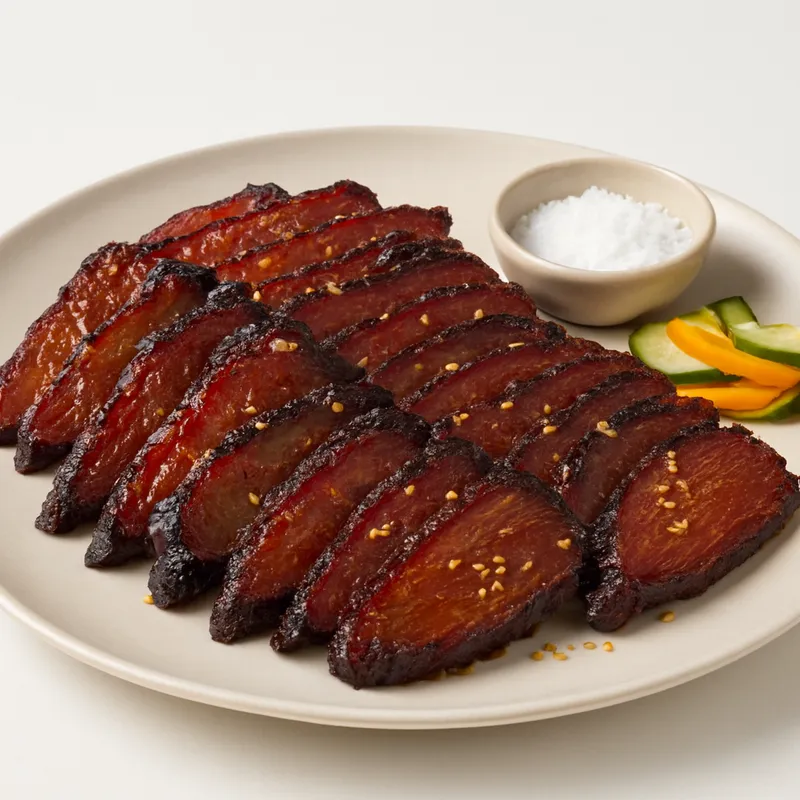
Savory, sun-dried beef with a hint of sweetness and spice, capturing the rustic flavors of Hawaiian ranches.
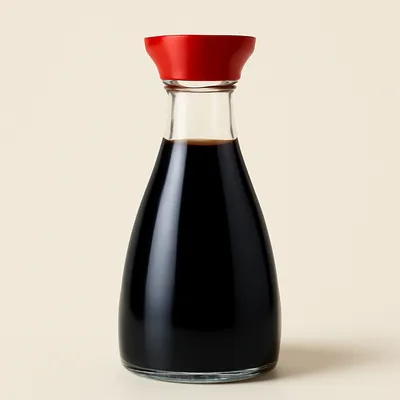




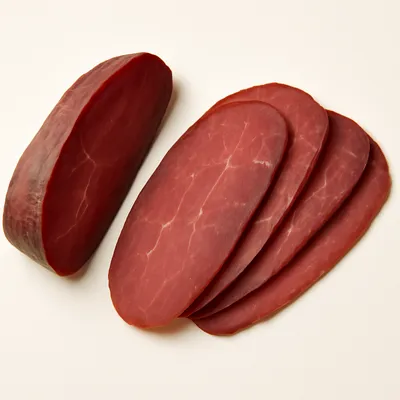
A 19th-century paniolo (Hawaiian cowboy) preservation method. The cattle themselves arrived as a gift from British captain George Vancouver to Kamehameha I in 1793; placed under a royal kapu, the herds went feral and multiplied across Hawaii Island. In 1832 Kamehameha III recruited Mexican vaqueros from California to manage the wild cattle and teach Native Hawaiians to ranch — their Spanish (espanol) gave the paniolo their name. Cowhands cut leftover beef into strips and air-dried it in open sheds and sun to preserve it without refrigeration and to carry on long cattle drives. Ranches at Parker on Hawaii Island and Ulupalakua on Maui were early strongholds. The shoyu-and-sugar marinade is a later addition from the Japanese and Chinese plantation era; pipi is the Hawaiian rendering of the English beef.
19th-century paniolo (Hawaiian cowboy) preservation — Mexican vaqueros brought to the Big Island in 1832 by Kamehameha III taught Native Hawaiians the Spanish carne seca technique; 'pipi' renders the English 'beef.' The pre-eat pan-flash isn't optional — it caramelizes the marinade sugars and reactivates set fat.
Strips of beef brisket or flank, marinated in shoyu, sugar, garlic, and Hawaiian salt, then air-dried (traditionally in the sun, now in low ovens or dehydrators) until pliable but chewy — drier than American jerky but not snap-dry. Often finished with a quick sear or fry before eating. Sliced thin against the grain. Pulls apart with a tooth, doesn't shatter.
The pre-eat sear isn't optional — it caramelizes the surface sugars in the marinade and reactivates the fat that has set during drying. Eaten cold straight off the line, pipi kaula reads as tough; pan-flashed, it goes glossy and savory. Cut against the grain matters more than with fresh steak because the long-fiber drying makes the with-grain direction nearly inedible. Look for a deep mahogany color; pale strips were under-marinated.
Variations
Parker Ranch ranch-style (Big Island, the original paniolo); Ulupalakua-style on Maui (sweeter, more pineapple); Fort Street Bar & Grill's downtown Honolulu version; modern dehydrator pipi kaula for home cooks; Nahuku General Store still air-dries the old way.
On the Palate
Where Pipi Kaula sits in the Hawaiian flavor cloud
Ingredients


How it's made
5 steps · 6 hours
- 1273 min
Slice beef into strips and marinate with soy sauce, brown sugar, garlic, and chili pepper water.
Watch outCut the beef into even strips and coat well in the marinade — uneven or under-coated pieces dry pale and flavorless instead of deep mahogany.
- 223 min
Let the beef absorb flavors for several hours.
- 323 min
Hang strips to dry in a sunny, breezy area until firm.
Watch outHang until the strips are firm and leathery but still bend — bone-dry means they've gone past chewy to hard.
- 423 min
Alternatively, dry in a low oven until chewy.
- 518 min
Cut into bite-sized pieces and serve as a pupu.
Watch outFlash-sear the strips just before eating to glaze the surface and wake the fat — and always slice against the grain, or the dried fibers chew like rope.
Archive tool suggestions — not reviewed
These legacy suggestions have not been evidence-reviewed and are not presented as required tools.