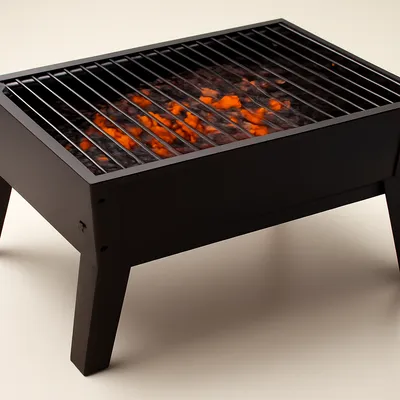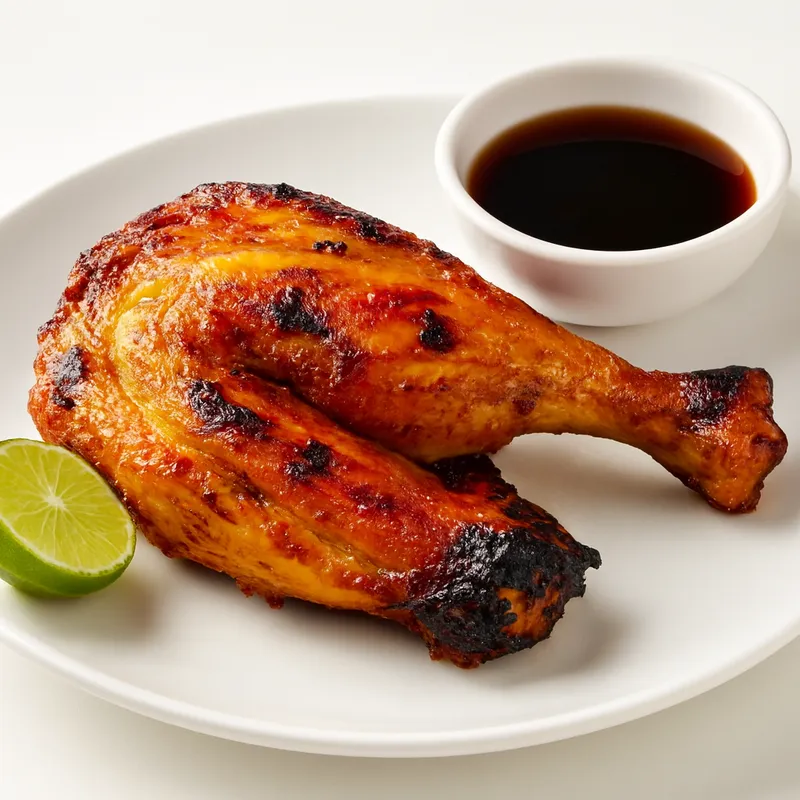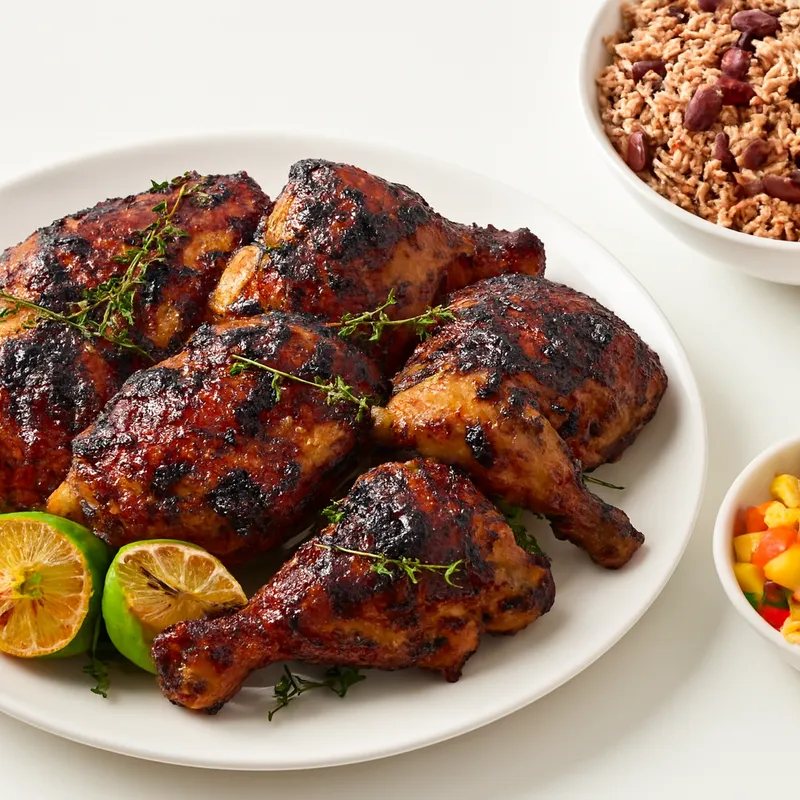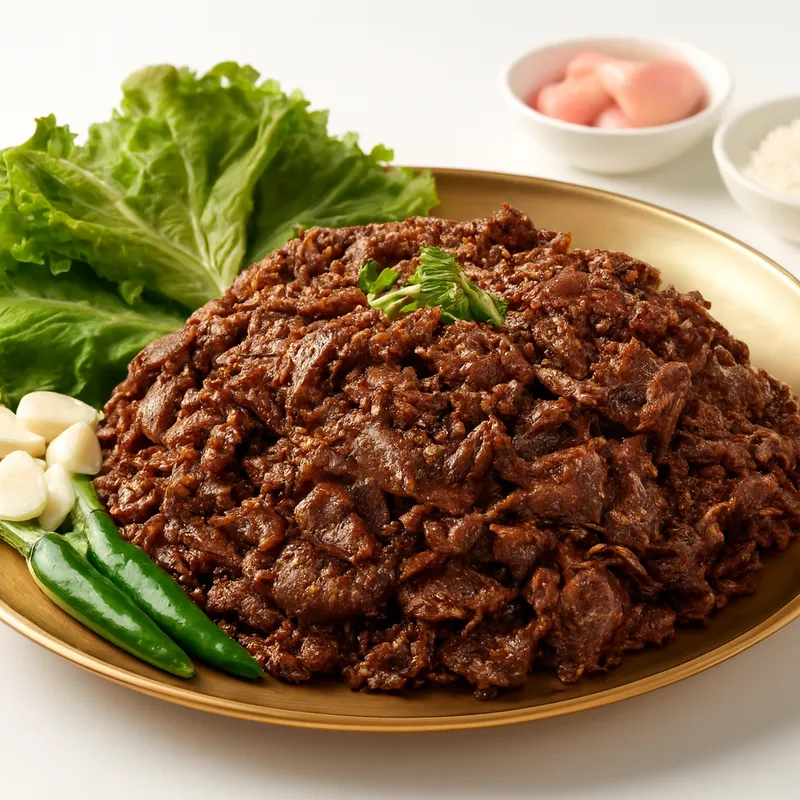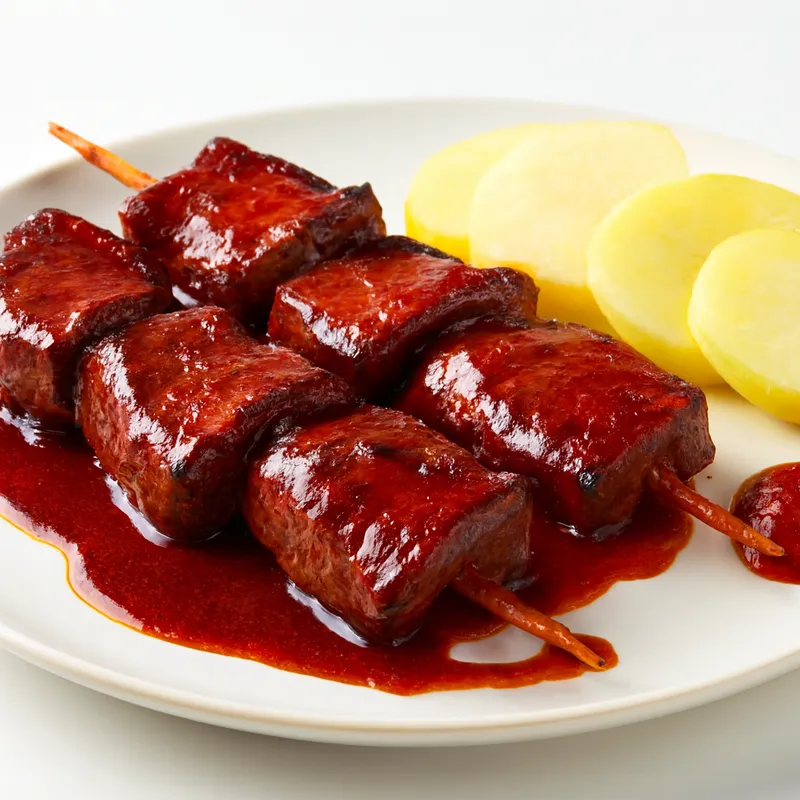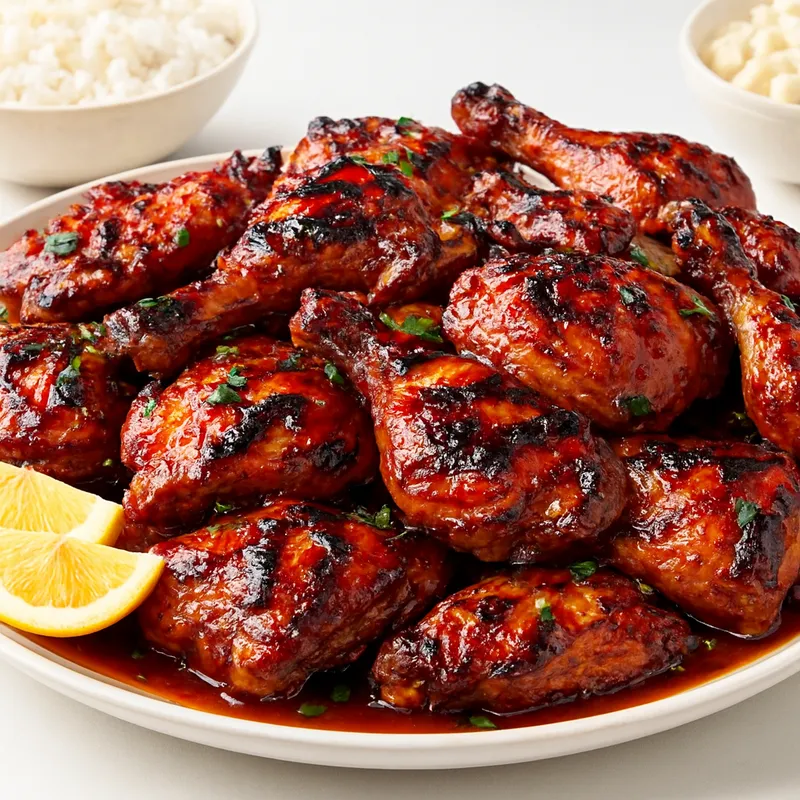
A Hawaiian barbecue chicken dish: whole or half birds clamped between two wire grill racks, grilled over coals, and basted again and again with a sweet-savory sauce of shoyu, ginger, garlic, brown sugar, and pineapple juice until the skin lacquers a glossy mahogany. "Huli" is Hawaiian for "turn" — the racks are flipped repeatedly as the chicken cooks, and the name says so.





Generally traced to 1955 on Oʻahu. In 1954, Ernest Morgado and a chicken farmer, Mike Asagi, founded the Pacific Poultry Company in ʻEwa; the following year Morgado grilled chickens marinated in a teriyaki-like sauce — his mother's recipe — over coals for a farm-bureau gathering. The birds were cooked between two wire racks, and when one side was done the whole rack had to be flipped; onlookers shouted "huli" (Hawaiian for "turn"), and the shout became the name. Morgado later trademarked "huli-huli" (reportedly with the Territory of Hawaiʻi around 1958 and federally circa 1965–1967); others kept making it anyway, mostly avoiding the name. It became a beloved fundraiser dish — churches, schools, softball teams, and hula hālau set up roadside charcoal grills to sell it, raising untold sums for charity over the decades — and from 1986 Morgado bottled and sold the sauce commercially.
Invented 1955 by Ernest Morgado on Oahu, grilling marinated halves between two wire-mesh racks. 'Huli' means turn — the cook would shout it and a row of fundraisers all flipped at once. Pineapple bromelain limits the marinade to four hours before the meat goes mushy.
Half a chicken, skin lacquered mahogany, cooked over open kiawe-wood charcoal and turned every few minutes. The marinade reads sweet-soy-and-pineapple but caramelizes dark on the grill, almost like a glazed ham. Sold from roadside stands in Hawaiʻi, served with two scoops of white rice and a scoop of macaroni salad — the standard plate-lunch geometry.
Pineapple juice in the marinade contains bromelain — a protease that tenderizes the meat but turns it mushy if left more than four hours. The two-mesh "flipper" rack is mechanical: it lets a single cook tend twenty halves at once and prevents the sugary glaze from sticking and tearing. Without the rack the skin breaks every flip.
Variations
Morgado's original (pineapple-shoyu-ginger, kiawe-grilled); Mike's Huli Huli (Haleiwa roadside, North Shore standard); Ray's Kiawe Broiled Chicken; modern teriyaki-leaning versions skip pineapple entirely (less authentic).
On the Palate
Where Huli Huli Chicken sits in the Hawaiian flavor cloud
Ingredients

How it's made
3 steps · 17 min active + 2 hours waiting
- 15 min
In a mixing bowl, combine soy sauce, brown sugar, minced ginger, and crushed garlic to create a fragrant marinade. Stir until the sugar dissolves completely, and the marinade is glossy and aromatic.
- 20 min
Place the chicken pieces in a shallow dish and pour the marinade over them, ensuring each piece is well-coated. Cover and refrigerate for at least 2 hours to allow the flavors to penetrate the meat.
- 312 min
Preheat a grill to medium-high heat. Once hot, place the marinated chicken on the grill, skin-side down. Grill for about 6 minutes on each side, basting with the remaining marinade, until the chicken is charred and cooked through with a caramelized crust.
Watch outEnsure the grill is not too hot to avoid burning the sugar in the marinade. Adjust the heat as necessary.
Archive tool suggestions — not reviewed
These legacy suggestions have not been evidence-reviewed and are not presented as required tools.