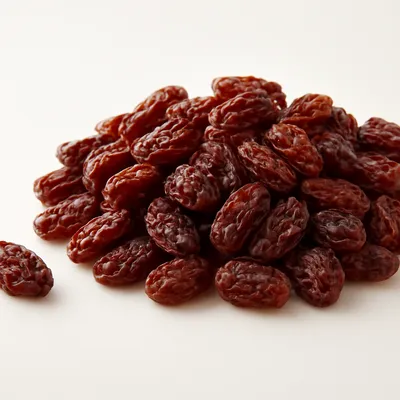
The torcolo di San Costanzo is Perugia's ring-shaped festival cake, baked for the feast of San Costanzo, the city's patron, on 29 January. A simple leavened bread dough is enriched with sugar, oil and lard and studded with candied citron, raisins, pine nuts and aniseed, then shaped into a crown and scored with five diagonal cuts, one for each of the five gates of the historic centre. Egg-glazed and baked to a deep gold, it is sold throughout the old city on the saint's day and eaten in thick slices with a sweet wine.





San Costanzo is honoured as a patron saint of Perugia, an early bishop and martyr whose feast falls on 29 January. The cake baked in his name is documented as a civic sweet from the 16th century, when the city's wealthy confraternities bought it in quantity to distribute to the poor and bakers competed for trade by offering slices to passers-by. Its crown is scored with five diagonal cuts for the five medieval gates of the walled centre—Porta Eburnea, Porta Sant'Angelo, Porta San Pietro, Porta Sole and Porta Susanna—and the ring itself is read as the wreath of flowers laid on the saint's reassembled body after his beheading, though a darker tradition sees in it his severed neck. The recipe is today formally deposited with the Perugia chamber of commerce, and on 29 January the torcolo is sold throughout the historic centre.
A soft, faintly cakey crumb, enriched but not heavy, scented with warm aniseed; sweet bursts of raisin and candied citron, the resinous crunch of pine nuts, and a chewy, deep-gold crust brushed to a shine.
This is an enriched yeast bread, and its texture is governed by the tension between leavening and enrichment. Saccharomyces cerevisiae ferments the dough's sugars to carbon dioxide, which the gluten network traps as it expands; but the high sugar load osmotically stresses the yeast and slows it, which is why the dough is given a long first rise and a further three-hour proof once shaped. The fats, olive oil and lard, coat the gluten strands and shorten them, limiting network development so the crumb bakes up tender and cake-like rather than chewy and bread-like. An egg-yolk wash paints the surface with protein and emulsifying lipids that brown through the Maillard reaction into a glossy, deep-gold crust. In the oven at 180 °C the loaf takes a final burst of oven spring, its starches gelatinise and set the crumb, and the aniseed's anethole perfumes the whole. The ring shape gives an even, quick bake with no dense, underbaked centre.
Variations
Some bakers replace part of the sugar with honey, or add a splash of alchermes or anise liqueur to deepen the perfume. Modern versions may push the crumb toward panettone with more fat and egg, though purists keep it close to a plain enriched bread. It is the January counterpart to Perugia's Christmas sweets, torciglione and pinoccate, and is traditionally eaten with a glass of Vernaccia or vin santo.
On the Palate
Where Torcolo di San Costanzo sits in the Italian flavor cloud
Ingredients
Serves 8


How it's made
8 steps · 30 min
- 120 min
Dissolve the fresh yeast and a spoonful of the sugar in warm water; mix into the flour and knead to a smooth, elastic dough.
- 290 min
Cover and leave to rise at room temperature until doubled, about 90 minutes.
Watch outThe heavily sugared dough is slow — give it the full rise to truly doubled; underproofed here bakes dense, since the sugar already stresses the yeast.
- 315 min
Meanwhile soak the raisins in warm water until plump, then drain and pat dry.
- 415 min
Knock back the dough and work in the sugar, olive oil, lard, candied citron, raisins, pine nuts and aniseed until evenly distributed.
- 5180 min
Roll the dough into a thick rope and join the ends into a ring on a lined tray; cover and leave to prove for about 3 hours.
- 65 min
Brush the risen ring with beaten egg yolk and score five diagonal cuts around the crown, one for each gate of the city.
- 745 min
Bake at 180 °C for about 45 minutes, until deep gold and hollow-sounding when tapped underneath.
Watch outTap the underside — deep gold with a hollow sound means done; the enriched crumb browns fast up top while the center may still be doughy.
- 815 min
Cool on a rack; serve in thick slices, ideally with a glass of Vernaccia or vin santo.
Archive tool suggestions — not reviewed
These legacy suggestions have not been evidence-reviewed and are not presented as required tools.


