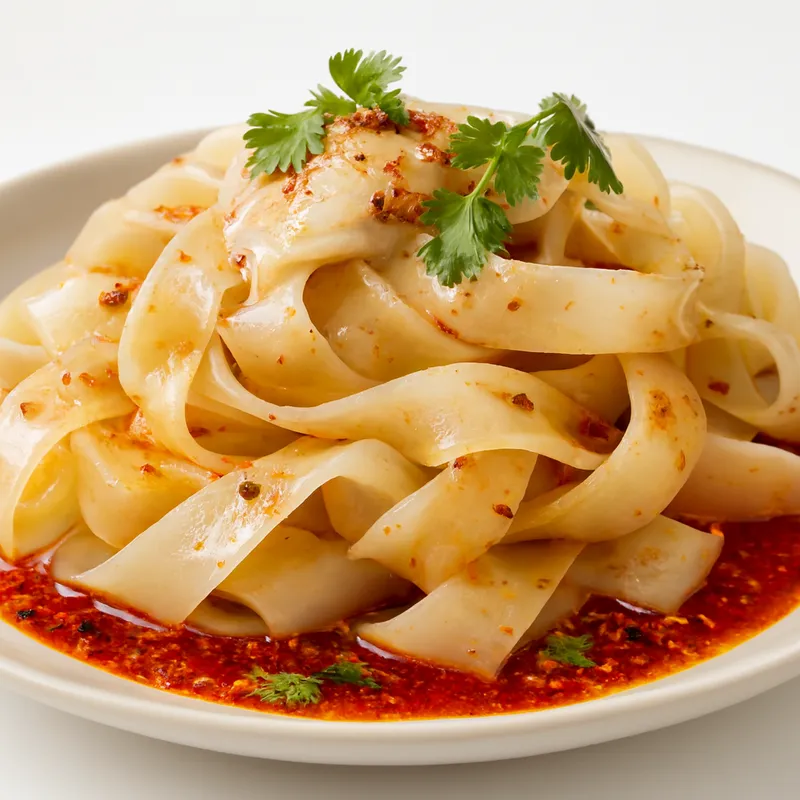
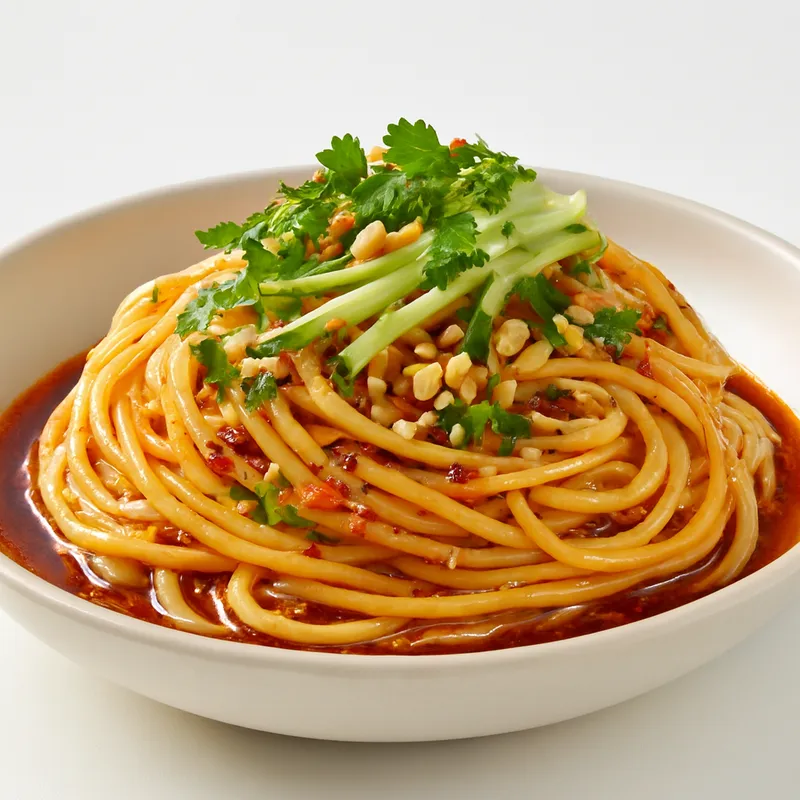
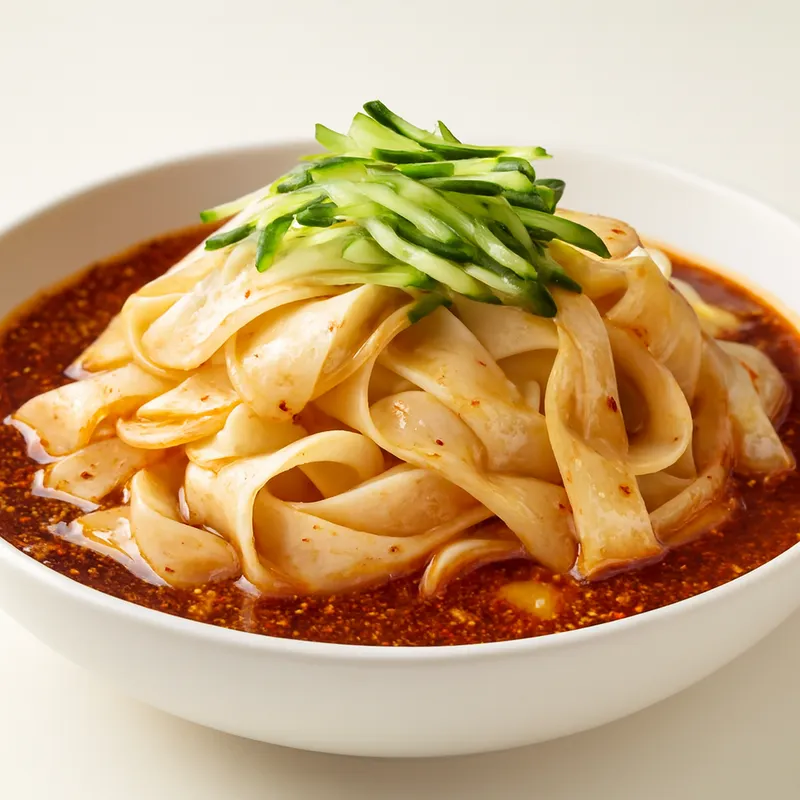
Silky rice rolls are filled with savory pork, crunchy wood ear, and fresh bean sprouts, drizzled with a tangy soy-vinegar sauce.





From Mengzi in southern Yunnan — the same county that gave the region crossing-bridge noodles. The 卷粉 (juǎnfěn) form likely arrived in the late 19th century, when the Yunnan-Vietnam railway (built 1904-1910) brought cross-border traffic and Cantonese rice-roll technique up the line. Mengzi's version is denser and more savory than Cantonese 肠粉 — wood ear and pickled mustard greens are local additions absent in Guangzhou.
Late-19th-century arrival on the Yunnan-Vietnam railway (built 1904-1910) — Cantonese 肠粉 technique came up the line, then absorbed local wood ear and pickled mustard greens. Batter is rice flour plus a small share of tapioca or wheat starch; pure rice flour shreds when rolled.
Sheets of rice batter steamed paper-thin on cloth, scraped off and rolled around minced pork and wood-ear fungus, then dressed with a peanut-fermented-tofu sauce and topped with bean sprouts, garlic chives, and celery. Cut into bite lengths, drizzled with a thin sauce of soy, black vinegar, garlic water, chili oil. The wrapper should be silky and just-set; if it's gummy, the batter was too thick or the steam wasn't fierce enough. Eaten for breakfast.
The batter is rice flour and a small amount of tapioca or wheat starch — the wheat or tapioca gives the wrapper its tear-resistance, otherwise it shreds when rolled. Steam temperature must be above 100°C the whole time; lifting the lid drops it and the sheet sets uneven. The cloth (cotton or linen) absorbs surface water as the batter sets, which is why Mengzi sheets are matte and rollable rather than slick like glass-noodle skins.
Variations
Mengzi original packs minced pork, wood ear, sour pickle; Hekou border-town versions add Vietnamese rice paddy herb (rau om); Gejiu tin-mining-town stalls run a heavier sauce with more chili; Guangzhou's 肠粉 cousin stays slicker, sweeter, and lighter on filling.
On the Palate
Where Mengzi Rice Roll sits in the Chinese flavor cloud
Ingredients




How it's made
5 steps · 1 hour
- 110 min
Prepare rice flour batter and steam into thin sheets.
Watch outKeep the steam at a hard boil and don't lift the lid mid-batch — a temperature drop sets the sheet unevenly and it tears when you roll it.
- 25 min
Fill sheets with cooked pork, wood ear, and bean sprouts.
- 35 min
Roll the filled sheets into tight cylinders.
Watch outRoll while the sheet is still warm and supple; once it cools it stiffens and cracks along the fold.
- 42 min
Drizzle with a mixture of soy sauce, vinegar, and chili oil.
- 515 min
Serve warm as a filling breakfast.