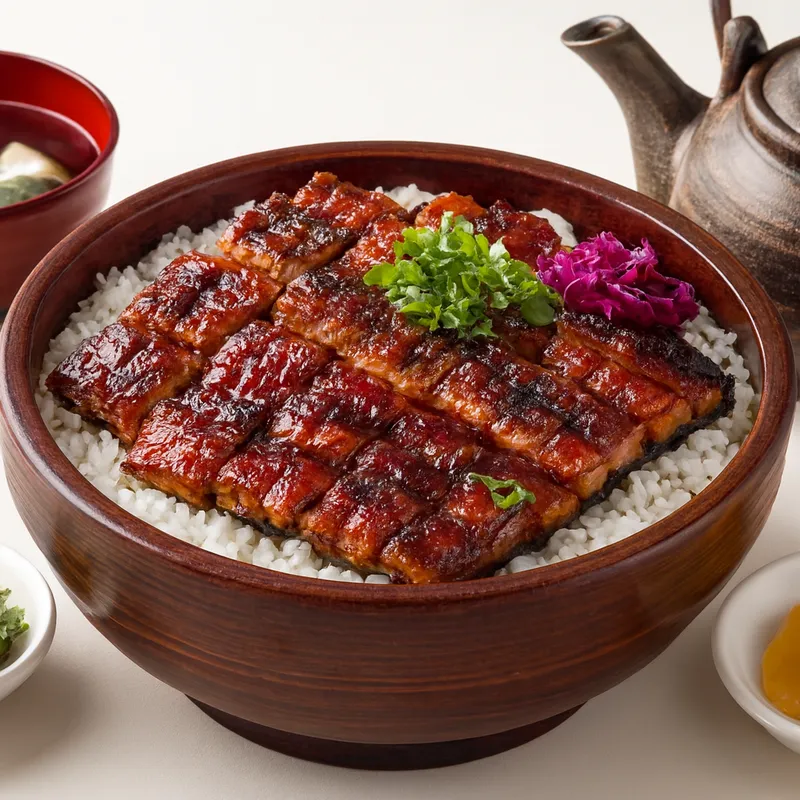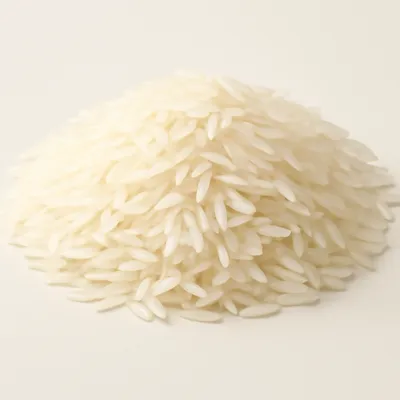



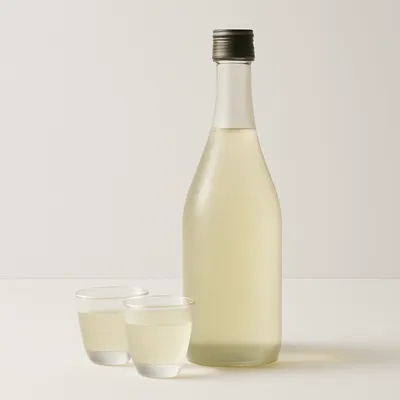

Eel grilling dates to the Edo period (17th century), but unadon — eel-over-rice in a single bowl — emerged in the Bunka era (1804–1818), credited to Ōkubo Imasuke, a financial backer of the Nakamura-za kabuki theater in Edo (Tokyo), who had his eel delivery sandwiched between rice to keep it warm; the idea caught on and grilled-eel shops began serving the eel and rice together. Earlier eel was eaten as standalone kabayaki on a plate. The midsummer 「土用の丑の日」(Doyo no Ushi) eel-eating tradition was a marketing campaign by 18th-century scholar Hiraga Gennai for a struggling eel shop.
Edo-era street eel went into a single bowl around 1810 at Imasuke, a kabuki-district shop selling fast meals between acts. The tare on a generations-old grill carries a microbial signature you can't restart from scratch.
A lacquered bowl of rice with a wide fillet of grilled freshwater eel (unagi) laid across the top, glazed in tare (a soy-mirin-sugar reduction the shop has been refilling for decades), dusted with sansho pepper. The eel is split open, brushed with tare repeatedly between grills, and the flesh should fall apart under chopsticks. Sansho gives a citrus-numbing tingle that cuts the fat — without it, the dish reads cloying.
Kanto-style unagi (Tokyo) is split along the back, steamed, then grilled — the steaming melts subcutaneous fat and gives that pillowy texture. Kansai-style (Osaka) splits the belly and grills without steaming, yielding a denser, crisper eel. The split direction is cultural: Edo samurai associated belly-cutting with seppuku and considered it bad luck. The tare on a generation-old grill carries a microbial signature impossible to start from scratch.
Variations
Kanto splits along the back, steams, then grills (pillowy); Kansai splits the belly and grills only (denser, crisp); Nagoya's hitsumabushi cuts the eel into a wooden tub and serves three ways.
On the Palate
Where Unadon sits in the Japanese flavor cloud
Ingredients
How it's made
5 steps · 45 min
- 18 min
Fillet and grill the eel until cooked through.
Watch outGrill the eel skin-side first until the fat renders and the surface blisters golden with light char marks — pale, ungrilled skin stays flabby and fishy.
- 215 min
Combine soy sauce, mirin, sugar, and sake to make a sauce, and simmer until thickened.
Watch outSimmer the tare until it coats the back of a spoon and leaves a slow trail — too thin and it slides off the eel, too far and it turns sticky-bitter.
- 38 min
Brush the sauce over the grilled eel and grill again for a few minutes.
Watch outBrush and re-grill in quick passes until the glaze sets glossy and just starts to caramelize at the edges — that lacquer sheen is the signal, don't let it blacken.
- 42 min
Serve the eel over a bowl of steamed rice.
- 52 min
Sprinkle with sansho pepper before serving.
Archive tool suggestions — not reviewed
These legacy suggestions have not been evidence-reviewed and are not presented as required tools.