Jeonggwa is the Joseon court tradition of candying roots, fruits, and rhizomes in honey — the family includes chestnut (yul-jeonggwa), lotus root (yeonggeun-jeonggwa), ginger (saenggang-jeonggwa), bellflower root (doraji-jeonggwa), and susam-jeonggwa using fresh white ginseng. The dishes were daseik (tea snacks) at palace ceremonies and yangban scholar gatherings, prized for both flavour and the medicinal symbolism of the ingredients. Susam jeonggwa was the most prestigious of the family because fresh ginseng — harvested only in autumn — could not be stored long.
Joseon-court daseik built on autumn-harvest fresh ginseng poached in honey under 95°C — sugar syrup would seize the root; honey's 0.6 water activity draws moisture without crystallising.
A 6cm amber root, glossy with honey, sitting on a celadon plate next to a cup of green tea. Bite breaks cleanly — the texture is between candied ginger and dried apricot, yielding but not soft. The honey has soaked into the fibres so the sweetness comes from inside the root, not the surface; underneath it is the bitter-medicinal hum of ginseng saponin, cleaner and grassier than the red dried version. Chewy at the rootlet ends, melting at the crown. One root per cup of tea is the rhythm.
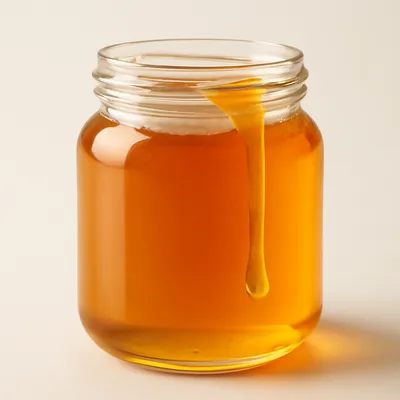
Honey is what makes this dish, not sugar. Honey's water activity is low enough (around 0.6) that it draws moisture out of the ginseng over the 40-minute poach without crystallising; sugar syrup at this concentration would seize and turn the roots fibrous. Temperature must stay under 95°C — boiling honey caramelises and the saponins (the active compounds responsible for ginseng's character) start to break down. Blanching first removes the harshest bitter edge while keeping enough saponin for the medicinal afternote.
Variations
The jeonggwa family runs deep — yul-jeonggwa (chestnut), yeonggeun-jeonggwa (lotus root), saenggang-jeonggwa (ginger), doraji-jeonggwa (bellflower root); susam is the prestige version because fresh ginseng won't keep.
On the Palate
Where Susam Jeonggwa sits in the Korean flavor cloud
Ingredients
Serves 6



How it's made
6 steps · 40 min active + 1 hour waiting
- 18 min
Choose 6 fresh 4-year susam roots, about 15g each — firm, ivory, with intact rootlets. Scrub gently with a soft brush under cold water; trim off any blackened tips. Do not peel — the skin holds the saponins.
- 25 min
Blanch the ginseng in boiling water for 3 minutes to soften the bitter edge. Lift out, drain, and pat dry. The roots should bend slightly without snapping.
Watch outBlanch just three minutes — the roots should bend without snapping; boil them longer and the saponins wash out with the bitterness you wanted to keep.
- 35 min
In a heavy small pot, combine the blanched roots with 200g honey and 100ml water. Bring to the barest simmer over low heat — never a rolling boil. Skim any foam that rises.
Watch outKeep it at the barest simmer, never a rolling boil — once honey boils it caramelises and the ginseng's active compounds break down.
- 440 min
Hold at 85-90°C for 40 minutes, turning the roots every 10 minutes. The honey reduces and clarifies; the ginseng turns from opaque ivory to a translucent amber. Add 1 tablespoon water if the syrup darkens too fast.
Watch outWatch the color turn: opaque ivory to translucent amber is done; if the syrup darkens too fast splash in a spoon of water to hold the heat down.
- 560 min
Test by lifting a root: it should be glossy, pliable, no longer fibrous when pinched. Off heat. Let cool in the syrup for 1 hour — the roots continue to absorb.
- 62 min
Lift onto a wire rack to drain 10 minutes, then arrange on a small ceramic plate. Strain the syrup over the top in a thin gloss. Serve at room temperature with a small fork and hot green tea.
Archive tool suggestions — not reviewed
These legacy suggestions have not been evidence-reviewed and are not presented as required tools.