




Banh pia is rooted in the Teochew Chinese-Vietnamese community of Soc Trang in the Mekong delta — 「pia」 is from the Teochew word for cake. Teochew migrants brought the lamination technique (similar to Chinese suzhou-style mooncakes); Vietnamese pantry brought durian and salted egg yolk into the filling. The Tan Hue Vien factory in Soc Trang, founded in the 1950s, industrialised it and made it nationally available; today good banh pia still comes from the same district. Eaten as a dessert, with strong tea, or as a tet gift.
Soc Trang invention out of the Mekong-delta Teochew-Chinese-Vietnamese community — "pia" is Teochew for cake. The 1950s Tan Hue Vien factory made it national; good banh pia still ships from that district. Lard, not butter, holds the twenty-plus pinwheel layers — its crystal structure stays solid when butter would weep.
Cut one in half and the side shows a tight pinwheel of pale layers — twenty-plus thin sheets wound around the centre. Top crust is shiny and faintly cracked from the egg wash. The filling is unmistakable: durian's heady alcoholic-onion-cream nose hits first, mung bean rounds it into something denser, the salted egg yolk in the middle is the savoury anchor that keeps the whole thing from being too sweet. Pastry shatters slightly under tooth, then yields to dense filling. One banh pia is enough for two people — it's rich.
The pinwheel layering depends on the two-roll method: roll-and-roll-up once gives long parallel layers; turn 90° and roll-up again gives concentric spirals visible on the cut. Lard, not butter, is structural — its crystal structure stays solid at warmer dough temperatures and produces flakier, drier layers (butter would weep). The durian-mung balance is non-trivial: too much durian and the filling ferments-tastes off after two days; too little and the cake reads as a plain mooncake.
Variations
Durian-mung-with-salted-egg-yolk (the canonical); pure mung bean (mild starter version); taro filling; modern Tan Hue Vien lines now run a vegan version without the yolk and a coffee-cream version aimed at the Saigon café market — both miss the savory anchor.
On the Palate
Where Banh Pia sits in the Vietnamese flavor cloud
Ingredients
Serves 8


How it's made
6 steps · 2 hours active + 2 hours waiting
- 140 min
Make water dough: combine 200g flour, 60g lard, 30g sugar, 80ml water. Knead 8 minutes to a smooth supple dough. Rest 30 minutes covered.
- 235 min
Make oil dough: rub 150g flour into 75g lard until like coarse sand, then press together into a dough. Wrap, rest 30 minutes.
- 325 min
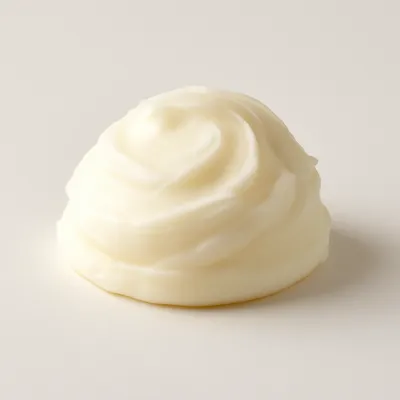
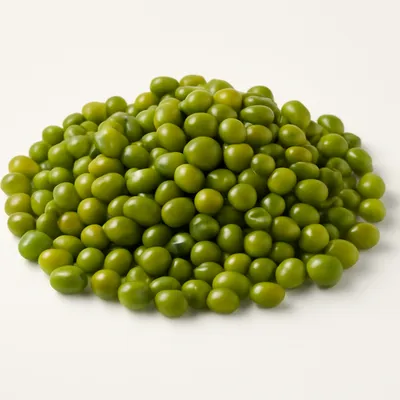
Make filling: mash 200g cooked mung-bean paste with 60g sugar, 1 tbsp coconut oil, pinch salt. Fold in 60g fresh durian flesh until just streaked — don't blend smooth. Form 8 balls (~40g each), each pressed around a half salted egg yolk.
Watch outFold the durian in just until it streaks the mung paste — blend it smooth and the filling goes off-tasting after a couple days.
- 430 min
Divide each dough into 8. Flatten a water-dough ball; wrap an oil-dough ball inside; pinch sealed. Roll into a 12cm oval; roll up like a swiss roll. Turn 90°, roll out again into a 12cm oval; roll up again. This is the two-roll lamination — gives the pinwheel layering.
Watch outRoll up, turn 90°, roll up again — this second roll crosses the layers into the concentric spiral you'll see on the cut.
- 515 min
Stand each rolled cylinder on end; press flat into a 10cm disc — the spiral now faces up. Place a filling ball in the centre; pull edges up around it; pinch shut. Place seam-down on a baking tray, flatten gently to 6cm wide.
- 635 min
Brush tops with egg yolk wash. Stamp with red food colouring (traditional). Bake at 180°C for 20 minutes; pull, brush again, bake 8 more minutes — tops are pale gold and the spiral pattern shows on the side. Cool fully — texture sets as it cools.
Watch outPull them pale gold, not browned — with the spiral clearly banded on the side; the texture only sets once fully cooled.
Archive tool suggestions — not reviewed
These legacy suggestions have not been evidence-reviewed and are not presented as required tools.


