


Espinacas con garbanzos is documented in Sevilla's convent cookbooks from at least the 17th century — meatless Lenten food that worked the year round. The cumin-and-pimentón combination is Mozarabic, surviving from al-Andalus (the Moorish kingdom that ruled Sevilla until 1248); chickpeas had been a Spanish staple since Carthaginian times and passed through Moorish kitchens before becoming a Catholic convent ingredient. Today every tapas bar in Sevilla's Triana and Santa Cruz neighbourhoods serves a version, usually scooped onto fried bread.
Documented in Sevilla's convent cookbooks since the 17th century — Mozarabic cumin-and-pimentón pairing surviving from al-Andalus (which ruled Sevilla until 1248). The majado does triple duty: fried bread thickens, mortar-pounded spice distributes evenly, pimentón stays cold so it doesn't scorch.
A muddy-green tangle the colour of moss, chickpeas peeking through, served warm with the texture of a thick stew rather than a wet braise. First taste is cumin and toasted garlic; the sherry vinegar arrives on the finish, sharp enough to lift but not pickle. The bread-thickened sauce clings to bread you tear and dip. If the spinach tastes raw and watery, the cook didn't squeeze; if the cumin is dusty, it wasn't toasted in the bread.
The majado is the load-bearing technique. Frying the bread first, then pounding it with toasted cumin and pimentón, accomplishes three things at once: it thickens the sauce, distributes the spices evenly, and adds the round nuttiness of cooked bread. Pimentón goes in cold (in the mortar) — never directly into hot oil, where it scorches in seconds. The sherry vinegar split (during cooking + at the end) gives both depth and brightness; one or the other alone falls flat.
Variations
Triana bars scoop it onto fried bread (montadito); Santa Cruz versions go saucier; Cordoban variation adds raisins; Granadina cooks finish with a pinch of saffron — each Andaluz capital tweaks the spice ratio.
On the Palate
Where Espinacas con Garbanzos sits in the Spanish flavor cloud
Ingredients
Serves 4

How it's made
6 steps · 20 min active + 5 min waiting
- 15 min
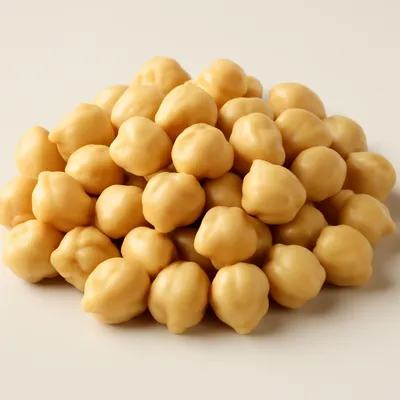
Drain 400g cooked chickpeas (or jarred Spanish ones — they're better than canned). Reserve 100ml of their cooking liquid. Wash 500g fresh spinach and shake dry.
Watch outJarred Spanish chickpeas (garbanzos en bote) keep their skin and bite — canned ones go to mush in the pan.
- 25 min
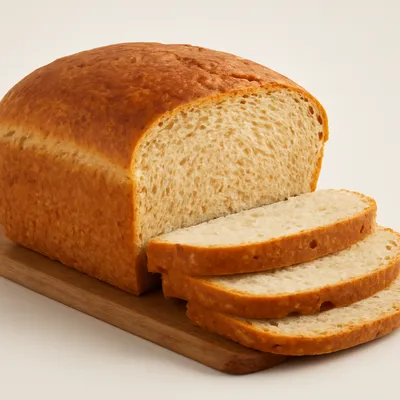
In a wide pan, heat 60ml olive oil over medium. Fry 1 thick slice of stale country bread until deep gold on both sides — about 3 minutes. Lift out. Drop in 4 whole peeled garlic cloves and toast until just golden, 1 minute.
Watch outToasted bread is the thickener — do not skip it. Burnt garlic turns the dish bitter; pull it the second it colours.
- 34 min
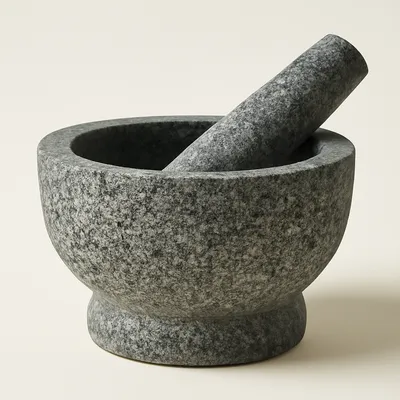
Pound the fried bread, garlic, 1 tsp cumin seeds, 1 tsp sweet pimentón, and a pinch of salt in a mortar with 30ml sherry vinegar to a coarse paste — the majado.
Watch outStop at coarse paste — fully smooth and the dish loses its rustic backbone.
- 46 min
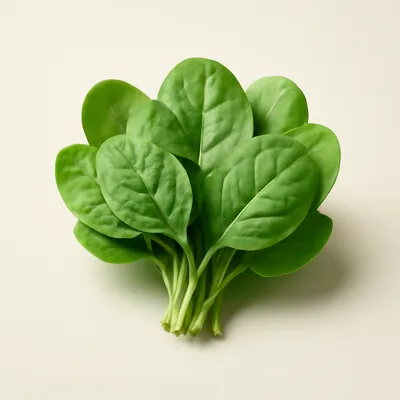
Wilt the spinach in the same pan in two batches, 2 minutes each. Squeeze out excess water with a wooden spoon and chop roughly.
- 58 min
Return spinach to the pan with the chickpeas, the majado, and the 100ml chickpea liquid. Simmer 8 minutes until the sauce thickens and clings. Off heat, stir in another splash (10ml) sherry vinegar and check salt.
Watch outThe sauce should be glossy and just-coating, not soupy — keep simmering if it's still loose.
- 61 min
Serve warm in shallow bowls with extra bread on the side, and a final drizzle of raw olive oil on top.
Archive tool suggestions — not reviewed
These legacy suggestions have not been evidence-reviewed and are not presented as required tools.