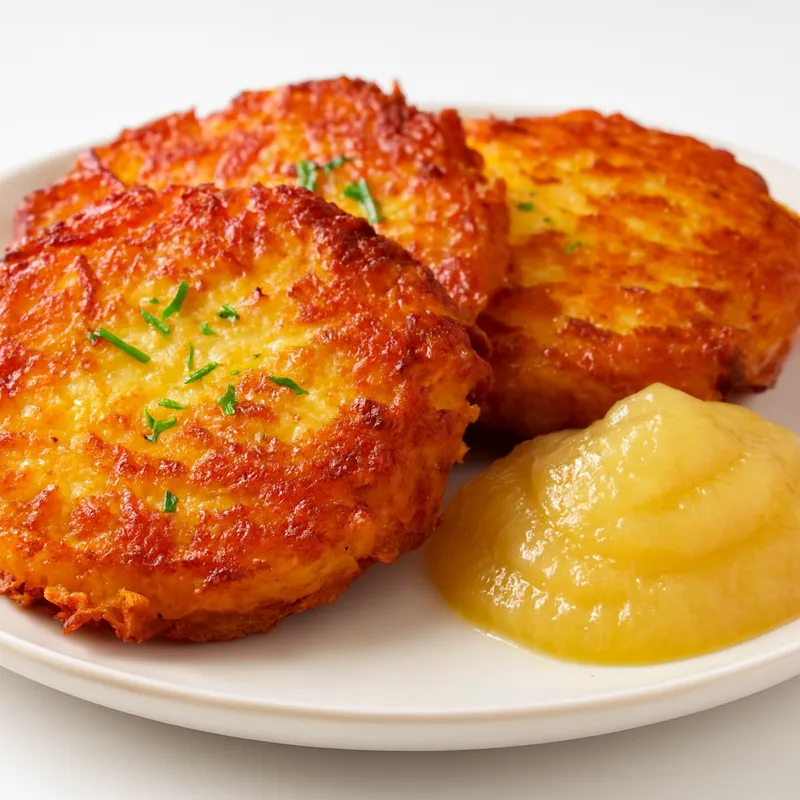
Dresdner Eierschecke is the iconic cake of Dresden — found in every Dresden Konditorei (cake shop), every Saxon coffee table, and every Eastern German bakery. The cake known today took its modern form around 1925, when the egg-cream layer began to be spread thickly; related Saxon cakes are older. The name 'Eierschecke' comes from 'Schecke,' a 14th-century three-part garment (a waisted tunic, hip belt and lower skirt) whose tripartite form mirrors the cake's three layers; an alternative etymology derives it from Middle High German for 'striped/mottled.' The three-layer structure is distinctive — a yeast-dough base provides foundation, a middle quark layer gives tang, and the top layer of egg yolk, butter and folded-in beaten egg whites provides richness. Each layer must be baked precisely so all three set distinctly. The dish is the canonical Dresden Sunday cake — served with strong coffee, often after a Sunday lunch at home or as a Kaffeeklatsch (coffee-and-cake gathering) item.
A wedge of Dresdner Eierschecke is structural cake architecture: a 1.5cm tan-yellow shortbread base on bottom, a 2.5cm white-cream quark middle layer (visible quark texture, with raisins peeking through), and a 1cm golden-speckled egg-cream custard on top. The first bite gets all three textures at once — buttery-yeasty bread base, tangy-creamy quark middle, light-fluffy custard top. The lemon zest in each layer ties everything together. The custard topping puffs slightly during baking but settles into a denser texture as it cools. Sundays in Dresden mean coffee + Eierschecke + family — this cake is the city's identity in pastry form. One slice with strong coffee is sufficient afternoon.
Three layers requiring three different cooking states is the technical challenge: the bread base needs starch gelatinization; the quark middle needs only mild heating (high heat curdles quark); the custard top needs precise egg coagulation. The 175°C bake temperature is the compromise — high enough to brown the top and finish the bread, low enough to set the egg custard without curdling the quark. The 60-min cook is longer than most cakes because of the layer thickness and the need to thoroughly cook the bread base. Cornstarch in the quark layer is essential — without it, the quark layer is too loose and bleeds into the custard.
Variations
Dresden canonical (3 distinct layers with quark middle); Saxon Erzgebirge version uses a fruit jam layer instead of quark; modern bakeries make a 'Eierschecke Royal' with chocolate shortbread base; commercial Eierschecke from Dresden bakeries (Konditorei Kreutzkamm is the most famous) is canonical reference; supermarket frozen Eierschecke exists but lacks layer distinction; the dish is impossible to make in less than 4 hours — the dough rise + multiple component preparations require time; leftover Eierschecke is excellent next-day breakfast — actually some say it's better cold.
On the Palate
Where Dresdner Eierschecke sits in the German flavor cloud
Ingredients
Serves 12








How it's made
9 steps · 1 hour 30 min active + 2 hours 30 min waiting
- 180 min
Make yeasted shortbread base: dissolve 15g fresh yeast (or 5g instant) in 100ml warm milk + 1 tsp sugar. Wait 8 min until foamy. In a bowl, combine 300g all-purpose flour + 50g sugar + 1/2 tsp salt + zest of 1/2 lemon. Make a well; add the yeast mixture + 1 egg + 80g softened butter. Knead 8 min until smooth and elastic. Cover; rise in warm spot 60 min until doubled.
Watch outKnead until the dough turns smooth and springs back — pull a corner and it should stretch thin without tearing.
- 28 min
Make quark filling: in a bowl, whisk 500g quark (Magerquark or full-fat) + 100g sugar + 2 egg yolks + 1 tbsp vanilla sugar + zest of 1/2 lemon + 30g cornstarch + 50g raisins (optional but traditional). Cover; set aside.
- 317 min
Make egg-cream custard topping: in a small saucepan, combine 250ml whole milk + 100g sugar + 1 tsp vanilla extract; heat to just below simmering. In a bowl, whisk 4 egg yolks + 30g cornstarch + 30g flour into smooth paste. Slowly stream the hot milk into the egg paste, whisking constantly. Return mixture to the saucepan; cook over low heat, stirring constantly, 6 min until thickened to a custard. Remove from heat; whisk in 60g butter until smooth. Cool to lukewarm.
Watch outStream the hot milk in slowly while whisking, or the yolks scramble; cook only until it coats the spoon.
- 47 min
Whip 200ml heavy cream + 50g sugar to soft peaks. Fold the whipped cream into the cooled custard. (This makes the topping airy.)
- 511 min
Assemble: butter a 26cm springform pan. Roll out the risen dough into a 28cm circle (slightly larger than the pan); press into the pan with the dough coming 3cm up the sides (forming a slight rim).
- 64 min
Spread the quark filling evenly over the dough; smooth the surface.
- 74 min
Pour the egg-cream-and-whipped-cream custard topping over the quark layer; smooth to cover completely.
- 865 min
Bake at 175°C / 350°F for 55-65 min until the top is golden-brown with darker speckles (the 'eier-schecke' look). The custard should be just-set (test by gently shaking — center should jiggle slightly but not be liquid). If browning too fast, cover loosely with foil for last 15 min.
Watch outThe top should be golden with darker freckles and the center should wobble like set jelly, not slosh like liquid.
- 9122 min
Cool completely in the pan (about 2 hours) before releasing the springform. The layers will set further as it cools. Slice into 12 wedges and serve with strong black coffee. Keeps refrigerated 3 days.
Archive tool suggestions — not reviewed
These legacy suggestions have not been evidence-reviewed and are not presented as required tools.

Hand-held wire loop tool for beating eggs, whipping cream, emulsifying dressings, and incorporating air into batters. Balloon whisks (large round head) for whipping cream and meringues; French whisks (narrow tear-drop) for sauces in pots; flat whisks (gravy) for pan sauces. Stainless steel is universal; silicone-coated for non-stick pans.

Round metal pot, 14-26 cm diameter, with vertical walls and a long handle, designed for sauces, soups, oatmeal, rice, boiled vegetables. The vertical walls minimize evaporation (vs. a sauté pan). Sizes: 1 qt for melting butter, 2-3 qt for sauces, 4 qt for soups. Stainless-steel-clad aluminum or copper is best for conduction; cast-iron is too thick for delicate sauces.