





Hannah Glasse's 1747 cookbook records a precursor called "pigeon in a hole" (made with pigeon); the name "toad in the hole" is first recorded in 1762, then describing a piece of beef baked in a large pudding. By the 19th century the sausage version dominated as a working-class dish — cheap protein extended by flour-and-egg batter. Theories on the name abound (sausages "poking out like toads," a corruption of an older term); none are confirmed, so take your pick.
Sausages baked into a Yorkshire pudding batter — first recorded 1762, originally with leftover pigeon or beef. The hot fat must smoke before the batter hits the tin or the rise dies.
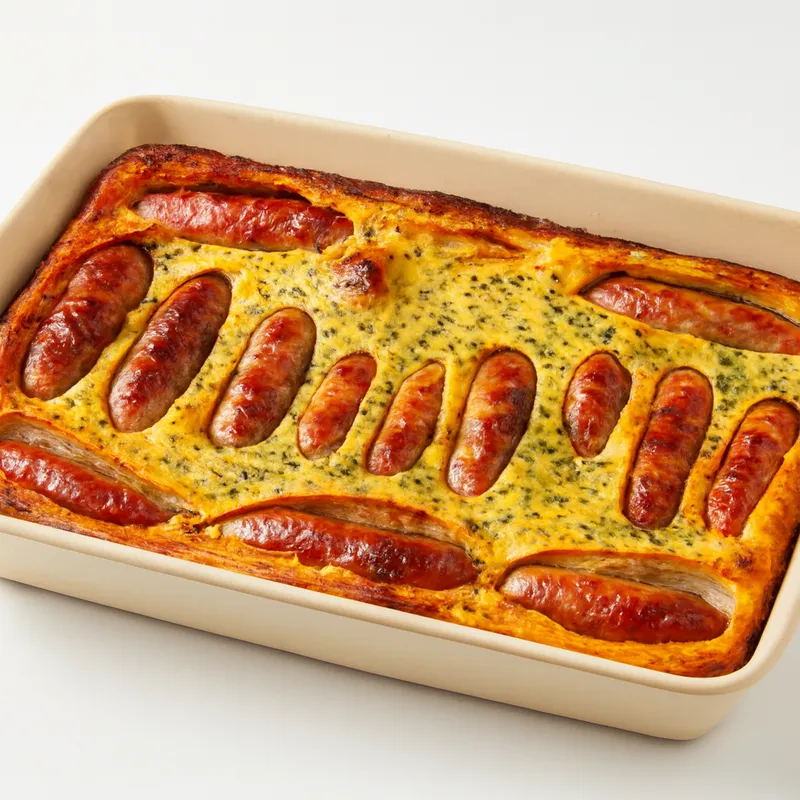
Plump pork sausages half-buried in a deep, golden Yorkshire pudding that has risen in waves around them, crisp at the edges, custardy where it touches the meat. Onion gravy poured over at the table soaks the lower half. Eaten with a fork and spoon. The batter has to puff up the sides of the dish — flat batter means cold pan or wet sausages.
The technique is identical to Yorkshire pudding: the pan and fat (beef dripping or sausage fat) must be ripping hot — 220 °C — before the cold batter goes in, so the outside sets in a thermal shock and steam from the moisture inside blows the structure up. Pricking the sausages first is a mistake: they leak fat into the batter and weigh it down. Sear them whole, then pour batter around.
Variations
Lincolnshire-sausage version is the most traditional; Cumberland-coil variant uses one long sausage spiraled in the tin; vegetarian Linda McCartney sausage version is now standard pub-menu fare.
On the Palate
Where Toad in the Hole sits in the British flavor cloud
The rise is pure thermal shock: get the pan and fat ripping hot at 220°C before the cold batter goes in, so the outside sets instantly and steam blows the pudding up around the sausages.
Ingredients
How it's made
4 steps · 45 min
- 15 min
Preheat your oven to 220°C (425°F). In a large mixing bowl, whisk together the flour, eggs, and milk until you have a smooth batter. It should be the consistency of heavy cream.
Watch outThe batter should pour like heavy cream — runny enough to coat but not watery, or it won't set into a shell.
- 28 min
Heat a tablespoon of oil in a roasting pan over medium heat. Add the sausages, turning them occasionally until they are browned and sizzling, about halfway cooked.
Watch outBrown the sausages only halfway and keep the skins whole — they finish cooking inside the batter.
- 32 min
Pour the batter over the sausages in the hot pan, ensuring they are evenly spaced. Immediately transfer to the preheated oven.
- 430 min
Bake for 25-30 minutes until the batter is puffed and golden brown, with a crispy edge. The sausages should be cooked through and nestled in the batter.
Watch outDone is deep golden and dramatically puffed with crisp edges; a pale, flat batter means the fat wasn't hot enough.
Archive tool suggestions — not reviewed
These legacy suggestions have not been evidence-reviewed and are not presented as required tools.