
The canonical vegetable showcase of Sichuan's dry-frying (干煸) technique: green beans cooked over sustained medium-high heat until their skins wrinkle and blister, then tossed with minced pork, preserved mustard greens, dried chilies and Sichuan pepper. Savory and lightly hot, with a dry, concentrated fragrance — the texture, not a sauce, is the point.

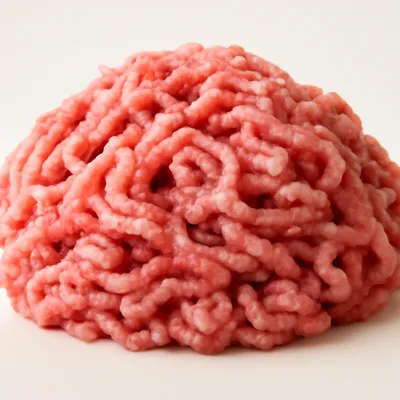



The dish has no recorded inventor; its identity rests on the technique. 干煸 (dry-frying) is one of Sichuan cuisine's signature dry-heat methods — ingredients are cut into strips or segments, left un-starched, and cooked over medium to medium-high heat with little or no oil while being stirred continuously, driving off their internal moisture until the surface dries, wrinkles and turns fragrant. Green beans are its classic vegetable subject, alongside dry-fried eel and dry-fried beef. The standard Sichuan additions are minced pork and Yibin yacai (宜宾芽菜) — preserved mustard-stem pickle from Yibin, one of Sichuan's four great pickles, whose sweet "Xufu yacai" style dates to the early 1920s; the finely chopped "crumbled yacai" (碎米芽菜) is the form used here and in twice-cooked-style steamed pork.
The beans arrive shrunken and wrinkled, their skins puckered and freckled with dark tiger-stripe blisters — dull green, not the bright green of a blanched bean. They give a faint crunch at first, then turn chewy-tender inside, never watery or squeaky. Clinging to them are bits of crisp minced pork and salty, fragrant yacai, with the singed warmth of dried chili and the tingle of Sichuan pepper. The dish is dry to the eye: no pooled liquid, no glaze — just a concentrated, toasty savor that reads as 干香, dry-fragrant.
Dry-frying is controlled dehydration. Green beans are roughly 90 percent water; held over sustained medium-high heat and kept moving, that water boils off through the skin faster than the bean collapses, so the surface contracts and puckers into wrinkles while dark blistered spots — the "tiger skin" — form where the skin scorches and browns through the Maillard reaction. As the moisture leaves, flavor concentrates and the texture turns chewy rather than crisp-watery. The purist method uses little oil and a longer time in the pan, 7-10 minutes of patient stir-frying; the common restaurant shortcut is 过油 — a flash deep-fry at about 150-180°C (六成油温) for two to three minutes — which blisters the skins quickly before the beans are dry-fried with the aromatics. Either way the beans must be cooked fully through, which matters beyond taste: raw and undercooked green beans contain saponins (皂苷) in the pod, which irritate the gut lining, and lectins / phytohaemagglutinin (植物血凝素) in the seed, which clump red blood cells; both break down only with thorough heat, and underdone beans can cause nausea, vomiting and abdominal pain within minutes to a few hours. The wrinkled, fully-dehydrated skin is therefore also the visual proof the beans are safe.
Variations
A meat-free version (素干煸) simply drops the pork, leaning on yacai, chili and Sichuan pepper for savor — common as a Buddhist or fasting-day dish. Cooks who want it lighter blanch or boil the beans first and then stir-fry off the moisture, though purists hold that true 干煸 must be done in the pan, not pre-boiled. Seasoning ranges from the classic savory-mild to a fully numbing-hot (麻辣) treatment with extra chili and pepper. Some kitchens swap in long beans (豇角) for haricots, which wrinkle the same way; preserved mustard greens (芽菜) may be replaced by chopped zhacai or dried shrimp where yacai is unavailable.
On the Palate
Where Dry-Fried Green Beans sits in the Chinese flavor cloud
Ingredients
Serves 4


How it's made
7 steps · 10 min
- 110 min
Snap off the ends of the green beans, pull away the tough side strings, and break them into segments about 5 cm long; rinse and dry them thoroughly so they will fry rather than steam.
Watch outDry the beans completely before they hit the pan — any surface water steams instead of frying and you'll never get the wrinkled, blistered tiger-skin.
- 210 min
Dry-fry method: heat a wok with a little oil to about 六成 (150-180°C, just beginning to smoke), add the beans with a pinch of salt, and stir-fry over medium-high heat for 7-10 minutes until the skins wrinkle, blister with dark spots, and look dry and slightly white; remove and set aside. (Shortcut: deep-fry the beans at 150-180°C for 2-3 minutes to blister them, then drain.)
Watch outKeep the beans moving over medium-high until the skins pucker into wrinkles and go dry, dull and spotted with dark blisters — that shriveled, slightly white look is doneness, not the bright plump raw color.
- 33 min
In the same wok with a little oil over medium heat, fry the minced pork until it loses its moisture and turns dry and golden; splash in the rice wine to drive off any raw smell.
- 42 min
Add ginger, garlic, dried chili segments and Sichuan peppercorns; stir until fragrant and the chilies turn deep red but not burnt.
Watch outFry the dried chilies and peppercorns just until fragrant and the chilies deepen to red-brown — pull back the second they darken, because scorched chili turns the whole wok acrid.
- 51 min
Add the crumbled Yibin yacai and stir-fry briefly until fragrant.
- 61 min
Return the beans to the wok, raise the heat, and toss everything together; season with soy sauce, a little sugar and salt to taste.
- 71 min
Stir-fry hard for another minute so the beans are coated and dry — no liquid should pool in the pan — then turn out onto a plate and serve hot.


