
A Dongbei restaurant staple of bite-sized pork chunks (usually pork loin or hind-leg meat), battered in potato starch, deep-fried crisp, and then quick-tossed (熘) in a savory sauce with green pepper, onion, and carrot. Unlike its sweet-and-sour sibling Guo Bao Rou, the pork here is cut into thick segments rather than pounded into thin slices, and the sauce is salty-savory (咸鲜) — soy, garlic, and stock thickened with a little starch — not tart. The result is crisp-edged, tender-centered chunks coated in a light glossy glaze rather than a syrupy crust.



Sauce-glazed fried pork segments belong to the everyday restaurant cooking of the Dongbei (Northeast China) provinces, where it is one of the most-ordered home-style dishes; the exact inventor and date are unrecorded. It sits in the same lineage as Guo Bao Rou — both descend from the 熘 / 焦熘 (quick-glazing of deep-fried meat) technique of the broader Lu (Shandong) school that shaped Northeastern restaurant cooking — but it is the savory member of that family: where Guo Bao Rou was reworked into a sweet-and-sour dish, 溜肉段 keeps the salty-savory glaze of the parent style. A popular folk tale traces it (and Guo Bao Rou) back to a Manchu dish called 黄金肉, but this is legend rather than documented history. What is consistent across sources is the dish's defining contrast with Guo Bao Rou: thick segments not pounded slices, savory not sweet-sour.
Each segment is about the size of a thumb joint — a crisp golden shell giving way to a juicy, tender core that still has some chew, never the wafer-thin snap of Guo Bao Rou. The first taste is clean and savory: soy salt, a hum of garlic, the sweetness of onion and the grassy crunch of green pepper, all carried in a light glaze that clings without pooling. Done well, the shell stays crisp under the thin sauce for a few minutes and the pork inside is moist. Done badly, the chunks are tossed too long or the sauce is too thin and watery, so the crust goes soggy and limp, or the pork is fried hard and dry and chews like rope.
The crisp shell comes from a potato-starch batter and a two-stage fry, the same physics as Guo Bao Rou but built for thicker pieces. Potato starch fries into a hard, glassy crust that holds up better than wheat flour or cornstarch alone. A first fry at moderate heat (about 六成热, roughly 150-170°C) cooks the pork through and sets the shell; a short rest lets internal steam escape; a hotter second fry (about 八成热, near 190°C) drives off surface moisture and blisters the crust crisp. The savory glaze is the key difference from the sweet-sour dish: a soy-and-stock sauce is thickened with a thin starch slurry into a glossy 芡 that coats the chunks, and the fried pork is tossed in it off or just at the edge of the heat for only a few seconds. Toss too long, or thicken too heavily, and the glaze pulls moisture back into the crust and it collapses; the savory version is slightly more forgiving than the sugar-heavy Guo Bao Rou, but the same rule holds — speed keeps it crisp.
Variations
The closest kin is Guo Bao Rou, the sweet-and-sour, pounded-thin sibling from Harbin; the two are the standard pair people use to explain Dongbei fried-pork cooking. Within 溜肉段 itself, an 老式 (old-style) version keeps the sauce purely savory with soy, garlic, and stock, while many restaurants now add a little sugar or oyster sauce for roundness; vegetable additions vary among green pepper, onion, carrot, wood-ear, and sometimes cucumber. A close relative is 焦熘肉段, fried a touch harder for a more brittle shell. The same batter-and-fry idea appears across Dongbei in dishes such as 熘肉片 (with sliced rather than chunked pork) and the sweet 拔丝 desserts that share the twice-fried, quick-glazed method.
On the Palate
Where Sauce-Glazed Fried Pork Segments sits in the Chinese flavor cloud
Ingredients
Serves 3

How it's made
7 steps · 25 min active + 5 min waiting
- 18 min
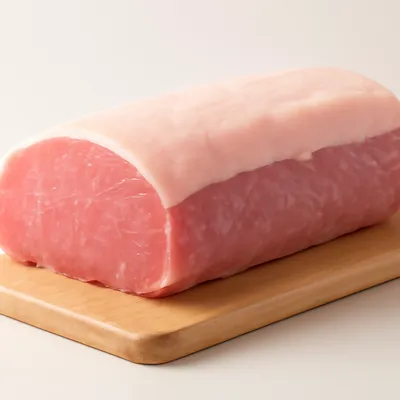
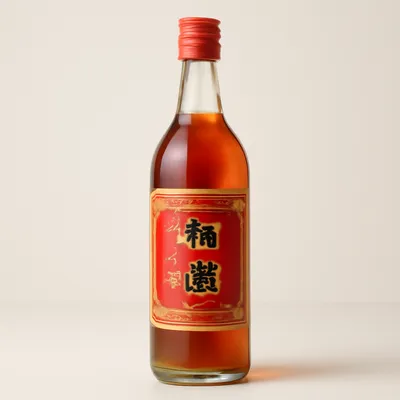
Cut pork loin or hind-leg meat into thumb-sized segments about 3 cm long and marinate briefly with a little salt, light soy sauce, and Shaoxing wine.
- 24 min
Make a thick batter from potato starch and water (let the wet starch settle and pour off the clear water on top, or use just enough water for a clinging paste) and coat the pork segments evenly.
- 36 min
Heat oil to about 150-170°C (六成热) and fry the segments in batches until pale gold and cooked through; lift out and let them rest a few minutes.
Watch outFirst fry at about 150-170 degrees to cook through and set the shell, then rest — the potato-starch batter needs this stage before the crisping fry.
- 43 min
Raise the oil to about 190°C (八成热) and fry the segments a second time until the shell is deep gold and crisp; drain.
Watch outSecond fry hotter, near 190 degrees, until deep gold — this blast drives off surface moisture and blisters the crust to a glassy crunch.
- 51 min
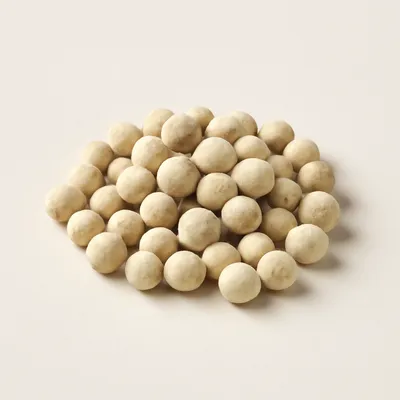
Mix a savory sauce of light soy sauce, a little dark soy for color, stock or water, white pepper, and a thin potato-starch slurry.
- 62 min
In a hot wok with a little oil, fry minced garlic, sliced onion, green pepper, and carrot until just fragrant and crisp-tender.
- 71 min
Pour in the sauce, bring to a quick boil so it thickens to a glossy glaze, add the fried pork, and toss for only a few seconds to coat; serve at once.
Watch outPour in the sauce, let it thicken to a glossy glaze, then toss the pork just a few seconds — linger and the crisp shell drinks the sauce and goes soft.


