
A flaky, layered griddle flatbread from Urbino in the Marche, set apart from the plainer crescia and the piadina by a richer dough of flour, eggs and black pepper that is laminated with lard. The dough is rolled thin, smeared with lard and coiled on itself so that, when flattened and cooked on a hot clay or iron griddle, it bakes up in distinct golden, blistered, crisp leaves. It is eaten warm, either plain or folded around cured meats, local Casciotta cheese and sautéed wild greens. It is recognised as a traditional food product of the Marche.
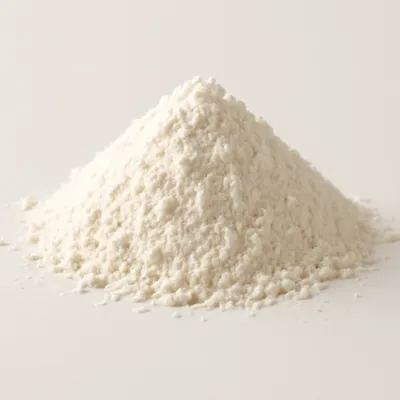


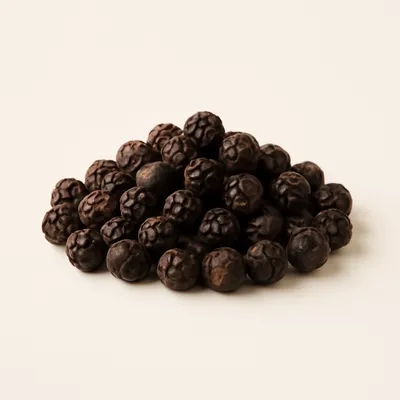


The crescia sfogliata is a traditional Marchigiana flatbread long associated with Urbino and the Renaissance court of the Dukes of Montefeltro, though the link to the court and the dating to the 15th century are traditional accounts rather than documented record; the egg-and-pepper richness, pepper being a costly imported spice, suggests an origin above mere peasant fare. Its name joins crescere, to rise or grow, with sfogliata, leafed or layered, from the leaves of dough the lard creates. A concrete early mention survives in a 1903 letter of the poet Giovanni Pascoli, who had studied in Urbino and recalled the local crescia. A persistent tale that a baker shaped its golden disc after the sun glimpsed between the ducal palace's towers is a charming legend.
It shatters in thin, crisp flakes, the laminated leaves pulling apart in shards rather than a single chew, with a savoury richness from lard and egg and a clear bite of black pepper. The surface is blistered and golden, faintly smoky from the griddle; the inside stays a touch tender. Folded hot around prosciutto and a soft local cheese, the warmth softens the layers just enough. Made well it is light and flaky; rolled without proper lamination it turns flat and bready and loses the point.
The flakiness is a rustic lamination, closer to a coiled scallion pancake than to block-folded puff pastry. Lard is smeared between thin sheets of dough, then the sheet is coiled into a spiral; the fat films keep the dough layers from fusing, and on the hot griddle the trapped moisture flashes to steam and pushes the leaves apart, lifting them into crisp sheets. Lard suits this better than butter: it is plastic enough to smear into continuous films and, unlike butter, holds almost no water, so it lubricates cleanly and fries the layer surfaces crisp. The eggs add fat, protein and emulsifiers that enrich and tenderise, and the dough browns by Maillard and yolk against the clay or iron, blistering where steam pockets form.
Variations
The wider crescia family shifts across the region: at Urbino the laminated, egg-and-pepper sfogliata; at nearby Urbania the crostolo, where maize flour replaces wheat; around Macerata and Ascoli Piceno a thicker, focaccia-like crescia with oil and rosemary; and into Umbria the tall torta al testo cooked between iron discs. It must not be confused with the leavened Easter cheese bread also called crescia — crescia di Pasqua or pizza al formaggio — a tall, yeast-risen, cheese-rich loaf baked in a mould, a different dish that merely shares the crescere root.
On the Palate
Where Crescia Sfogliata di Urbino sits in the Italian flavor cloud
Ingredients
Serves 6How it's made
8 steps · 40 min active + 50 min waiting
- 112 min
Make a firm dough of flour, eggs, a little water, salt, plenty of black pepper and a small amount of lard, and knead until smooth.
- 230 min
Rest the dough, covered, for about thirty minutes.
- 310 min
Divide and roll each piece out into a very thin sheet.
- 48 min
Smear the sheet generously with soft lard, then roll it up into a tight rope and coil the rope into a spiral.
Watch outSmear the sheet with soft lard before coiling — the fat films keep the layers from fusing so they lift into flakes on the griddle.
- 58 min
Let the coils rest briefly, then gently flatten each into a thin round disc.
- 68 min
Heat a clay or cast-iron griddle until very hot and dry.
- 712 min
Cook each disc, turning, until golden, blistered and crisp in flaky layers.
Watch outCook on a screaming-hot dry griddle until blistered and crisp in flaky layers — the trapped steam is what pushes the leaves apart.
- 82 min
Serve warm, plain or folded around cured meats, cheese and sautéed wild greens.
Archive tool suggestions — not reviewed
These legacy suggestions have not been evidence-reviewed and are not presented as required tools.


