
Kinpira gobo is a soy-glazed side dish of burdock root (gobo) and carrot cut into fine matchsticks, stir-fried in sesame oil and then simmered down in soy sauce, mirin and sugar until the liquid clings to the strands. A pinch of dried chili gives it a faint heat, and toasted sesame seeds finish it. "Kinpira" is not a single recipe but a cooking style — the same sweet-soy sauté-and-simmer treatment is applied to lotus root, taro stem and other firm vegetables. It is a fixture of the home table and one of the most common items packed into a Japanese bento box, valued because it keeps for several days.
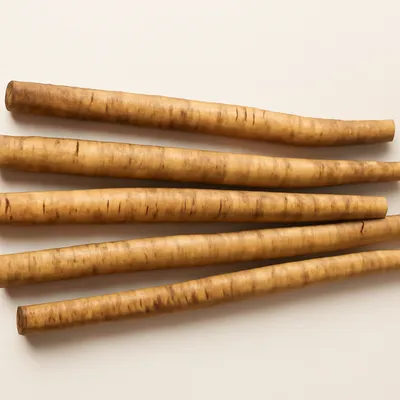




The name "kinpira" (金平) is said to come from Sakata no Kinpira, son of the legendary strongman Sakata no Kintoki (Kintaro) and the hero of kinpira-jōruri, a sub-genre of puppet ballad theatre that flourished in Edo around the mid-17th century (roughly 1657–1673). Kinpira was celebrated for his superhuman strength and bravery, and the firm, fibrous chew of burdock together with the bite of chili was likened to those qualities, giving the dish its name. The naming is a popular etymology rather than a documented invention story, but it is recorded consistently across Japanese reference works. Burdock itself was brought to Japan from China, where it was used medicinally, and appears in Heian-period texts such as the Honzō Wamyō; Japan is often noted as nearly the only country to have developed it into a common food vegetable, which makes a burdock dish a distinctly Japanese creation.
The burdock stays firm and faintly woody, with a sinewy snap that resists the teeth; the carrot is softer and a touch sweet. The glaze is salty-sweet and slightly sticky, edged with the dry heat of chili, and toasted sesame adds a nutty top note. Burdock carries a clean, earthy, almost mineral aroma that sets the dish apart.
Cut burdock browns fast: slicing ruptures the cells so that chlorogenic acid (the dominant polyphenol, concentrated in and just under the skin) meets polyphenol oxidase, a copper-containing enzyme, in the presence of air, producing quinones that polymerize into brown pigment. A short soak in water leaches out the soluble polyphenols and slows this, though long soaking also washes away flavor and nutrients, so it is kept brief. Stir-frying in oil first coats and seals the matchsticks, carrying heat evenly and taming burdock's fibrous toughness, while the open cut faces let the seasoning penetrate. As the soy, mirin and sugar simmer down, water evaporates and the sugars concentrate into a glossy glaze that clings to each strand; chili and toasted sesame, added late, keep their aroma rather than scorching.
Variations
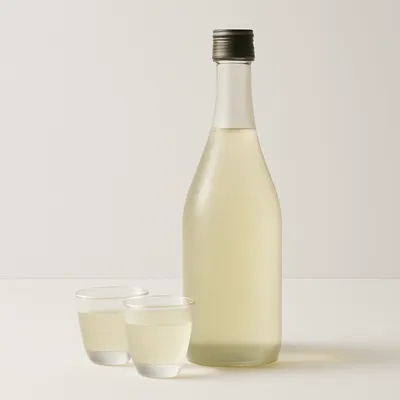
The same kinpira method is applied to other firm vegetables: kinpira renkon uses lotus root for a crunchier, lacier result, and carrot, taro stem (zuiki) and even potato or radish peel are done kinpira-style. Carrot is the usual partner for burdock, but some cooks use burdock alone. Heat and sweetness vary by household; a heavier hand with chili or a splash of sake is common, and some finish with a few drops of extra sesame oil.
On the Palate
Where Kinpira Gobo sits in the Japanese flavor cloud
Ingredients
Serves 4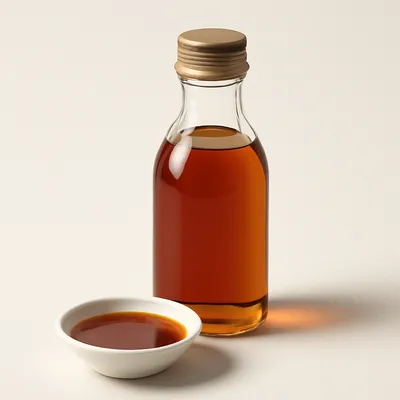


How it's made
7 steps · 15 min
- 14 min
Scrub the burdock skin lightly with the back of a knife or a brush — much of the flavor sits just under the skin, so do not peel it deep. Shave or julienne it into thin matchsticks.
- 25 min
Drop the cut burdock into a bowl of water for a few minutes to draw out astringency and slow browning, then drain well. Cut the carrot into matchsticks of the same size.
Watch outKeep the burdock soak brief — a few minutes leaches out the astringency and slows browning, but long soaking washes away the flavor too.
- 32 min
Heat sesame oil in a frying pan over medium-high heat. Add the drained burdock and stir-fry until the surfaces are coated and it smells nutty, about 2 minutes.
- 42 min
Add the carrot and stir-fry until it begins to soften, about 1–2 minutes more.
- 51 min
Add the dried chili, then pour in the soy sauce, mirin, sake and sugar. Stir to coat everything evenly.
- 66 min
Lower the heat slightly and simmer, stirring often, until the liquid has nearly evaporated and forms a glaze that clings to the vegetables, about 5–7 minutes.
Watch outSimmer until the liquid has nearly evaporated into a glaze that clings to the vegetables — stop while it still coats, before it dries out and scorches.
- 71 min
Turn off the heat and toss through the toasted sesame seeds. Serve warm or at room temperature; it keeps several days refrigerated.
Archive tool suggestions — not reviewed
These legacy suggestions have not been evidence-reviewed and are not presented as required tools.



