
Zerde is the golden, saffron-perfumed sweet that crowns Turkish celebration tables. Unlike its milky cousin sütlaç, it is built on water: rice is simmered soft, sweetened, then set with a little starch and stained a luminous yellow by saffron bloomed in warm water. Rosewater is folded in off the heat for perfume, and the cooled pudding is poured into shallow bowls and studded with pine nuts, pomegranate seeds, currants and sometimes walnuts. The result is fragrant, lightly jellied and translucent rather than creamy, prized as much for its festive color as its delicate floral taste.


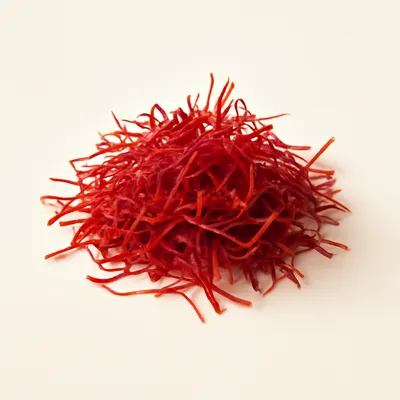


Zerde takes its name from the Persian zard, meaning yellow, and the saffron that gives it that hue. Persian-rooted, it is generally said to have entered Anatolian kitchens with the Seljuks and to have reached its height in the Ottoman period, when saffron and rosewater were costly luxuries. Court feast records from the reign of Suleiman the Magnificent list zerde among the sweets served at celebrations such as royal circumcision festivities and his daughter's wedding, and the orientalist James Redhouse logged it in his 1890 Ottoman Turkish dictionary as boiled rice colored with saffron and sweetened. To this day it remains a sweet of occasion across Turkey, served at weddings, at births and on the Muharram and Aşure tables, its golden color reading as a signal of festivity.
The first taste is floral and gently sweet, the saffron lending a faint honeyed, hay-like warmth behind the rosewater perfume. The body is soft and just-set, somewhere between a loose pudding and a fragile jelly, sliding cool off the spoon rather than coating it. Soft rice grains carry the syrup, while pine nuts add buttery crunch, currants a chewy tang and pomegranate seeds little bursts of sharp juice. It eats light and refreshing, never as rich as a milk pudding.
Saffron is the engine of both color and scent. Its pigment crocin is water-soluble, so blooming the threads in warm water draws out a deep golden tint that disperses evenly through the pudding; the aroma compound safranal rides along with it. Because the base is water rather than milk, thickening relies on starch alone: as the rice simmers it releases amylose, and a little added starch gelatinises to trap the water in a soft, translucent set that firms further as it cools and the starch retrogrades. Rosewater is stirred in only after the pot leaves the heat, since its volatile aromatics would simply boil away if cooked.
Variations
Garnishes shift by household and region — pine nuts, currants and pomegranate are near-universal, while walnuts, blanched almonds, pistachios, dried apricot or a dusting of cinnamon turn up too. Some cooks reinforce the color with a pinch of turmeric when saffron is scarce, and the set ranges from barely-thickened and pourable to a firmer, sliceable jelly. As a fixture of the Muharram season it often shares the table with aşure, the two read as the sweet pair of the period, yet zerde stays distinct: a clear, saffron-rice dessert rather than aşure's dense mix of grains, legumes and dried fruit.
On the Palate
Where Zerde sits in the Turkish flavor cloud
Ingredients
Serves 6


How it's made
6 steps · 40 min
- 110 min
Bloom a generous pinch of saffron threads in a few tablespoons of warm water and set aside to steep and release color.
Watch outBloom the saffron in warm water first — that draws out the golden color and aroma evenly; thrown in dry, the threads color the pudding in patches.
- 230 min
Rinse short-grain rice, then simmer it gently in plenty of water until very soft and the grains begin to break down.
- 315 min
Stir in sugar and the bloomed saffron with its water, and simmer until the liquid turns golden and slightly thickened.
- 48 min
Slacken a little starch (rice starch or cornstarch) in cold water, stir it into the pot, and cook briefly until the pudding just thickens to a soft, pourable set.
Watch outAdd the slackened starch and cook only until it just thickens to a soft, pourable set — it firms further as it cools, so stop while it still flows.
- 53 min
Take the pot off the heat and gently stir in rosewater, then ladle the zerde into shallow bowls.
- 6180 min
Cool, then chill until set, and serve garnished with pine nuts, pomegranate seeds, currants and a few walnuts.
Archive tool suggestions — not reviewed
These legacy suggestions have not been evidence-reviewed and are not presented as required tools.



