
A dark, intensely aromatic goat-mutton curry from the Chettinad region of Tamil Nadu, built on a freshly dry-roasted masala in which black pepper, star anise and kalpasi (black stone-flower lichen) lead over chili. Bone-in mutton is braised slowly until the meat slips from the bone and the gravy reduces to a thick, oil-slicked coat the color of dark wood. Roasted coconut and small shallots give the masala body and a faint sweetness beneath the heat; curry leaves and a final crack of pepper finish it. It is eaten with parotta, idiyappam or hot rice, the pepper carrying the dish as much as the chili.
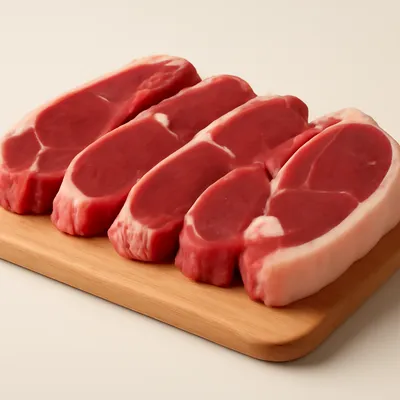
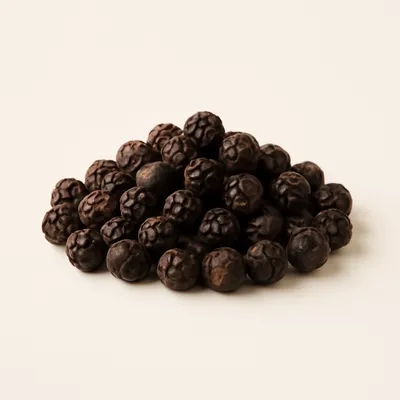
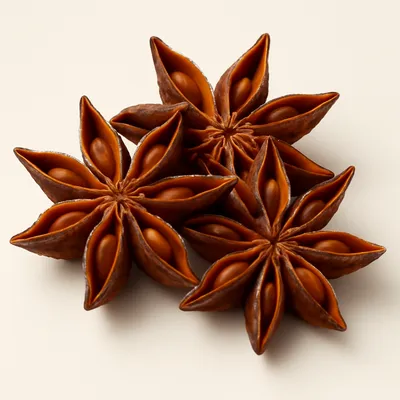


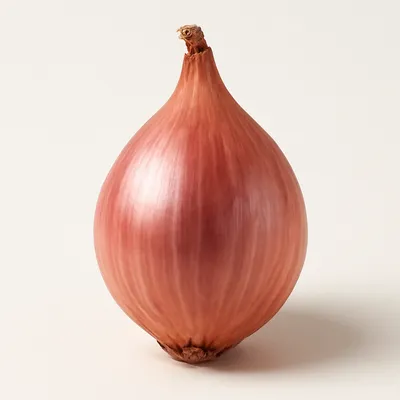
The dish belongs to the spice-heavy cooking of the Chettinad region in Tamil Nadu, home of the Nattukottai Chettiars (Nakarattars), a Tamil mercantile and banking community whose 19th- and early-20th-century trade and money-lending networks across Burma, Ceylon, Malaya and beyond brought star anise, pepper and other spices into a famously dense regional cuisine. Goat mutton is the festive and special-occasion meat of Chettiar households, and a pepper-and-stone-flower mutton kuzhambu is a fixture of their feast cooking; no single inventor or date is recorded for the preparation itself. The signature kalpasi is the lichen Parmotrema perlatum, gathered from temperate forests of the Western Ghats and the Himalaya and traded into the region rather than grown locally — its inclusion is a marker of how far the Chettiar spice pantry reached. The curry is best understood as a documented community technique rather than a court or restaurant creation.
The mutton comes out dark and glistening, half-submerged in a thick gravy that smells of toasted pepper and star anise before it smells of chili. First bite is the prickling, woody heat of black pepper at the front of the mouth, then the resinous sweetness of star anise and the earthy, mossy depth of kalpasi behind it; the chili sits lower than in most South Indian curries. The meat is fall-apart tender from the long braise, the bone marrow loosening into the gravy. Heat builds slowly and settles warm rather than sharp — a pepper-burn that hums after each mouthful.
Two techniques define the curry. First, each whole spice is dry-roasted to its own toast point before grinding — peppercorns kept light, coriander taken darker, kalpasi barely warmed, star anise just bloomed — because a blanket roast scorches the delicate volatiles while leaving the dense seeds raw; the roasted coconut added to the masala is what darkens the gravy and gives it body without milk. Second, the mutton is browned, then slow-braised with the ground masala and a little water (or pressure-cooked) until collagen converts to gelatin and the meat turns tender, after which the lid comes off and the heat is raised so the moisture boils away and the masala bhuna-fries onto the meat in the rendered fat. The coarse pepper stirred in off the heat at the end is never cooked hard, so its piperine-rich aroma stays sharp rather than dulling into the sauce.
Variations
Karaikudi-town versions are the darkest and most pepper-forward; coastal Chettinad cooks loosen the gravy with coconut milk for a milder, soupier kuzhambu. A drier reduction served as a side is closer to Aattu Kari Varuval, while a tamarind-sharpened form overlaps with Mutton Kara Kuzhambu. Some households add roasted poppy seed or cashew to thicken; the same masala carries equally onto bone-in chicken or, in vegetarian Chettiar kitchens, onto jackfruit or mushroom.
On the Palate
Where Chettinad Mutton Curry sits in the Indian flavor cloud
Ingredients
Serves 5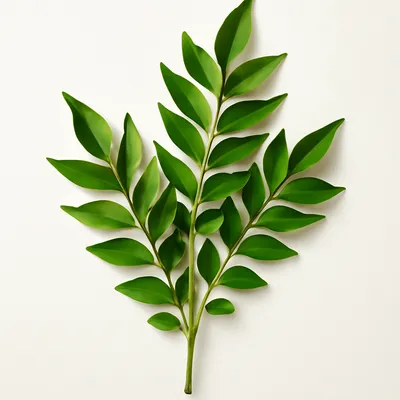


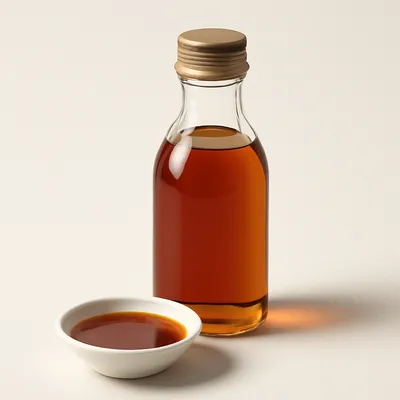
How it's made
10 steps · 40 min
- 135 min
Wash 900 g bone-in goat mutton and drain; marinate 30 minutes with a little turmeric, salt and ginger-garlic paste.
- 28 min
Dry-roast the masala spices separately to their own toast points: peppercorns light, coriander and fennel darker, dried red chilies, kalpasi and star anise just till fragrant; cool.
Watch outRoast each spice to its own toast point — peppercorns light, coriander darker, kalpasi barely warmed; a blanket roast scorches the delicate ones while the dense seeds stay raw.
- 36 min
In the same dry pan, roast the grated coconut over low heat until pale gold and nutty; cool with the spices.
Watch outRoast the coconut to pale gold and nutty — this is what darkens the gravy and gives it body without any milk; burn it and the whole sauce turns bitter.
- 45 min
Grind the roasted spices and coconut with a few shallots to a coarse, dark masala paste, adding a little water.
- 55 min
Heat sesame oil in a heavy pan; crackle a pinch of fennel, add sliced shallots and curry leaves and fry until soft and browned.
- 68 min
Add the marinated mutton and sear over high heat until the pieces are browned on all sides.
- 76 min
Stir in the ground masala and fry until the raw smell goes and oil beads at the edges (bhuna).
Watch outFry the masala until the raw smell goes and oil beads at the edges (bhuna) — undercook it and the gravy tastes raw and pasty.
- 855 min
Add hot water to barely cover, cover, and braise gently (or pressure-cook) until the meat is fall-apart tender.
- 915 min
Uncover and raise the heat, reducing until the gravy thickens and oil rises to the surface.
- 1012 min
Crack in fresh coarse black pepper off the heat, scatter torn curry leaves, rest 10 minutes, and serve.
Archive tool suggestions — not reviewed
These legacy suggestions have not been evidence-reviewed and are not presented as required tools.


