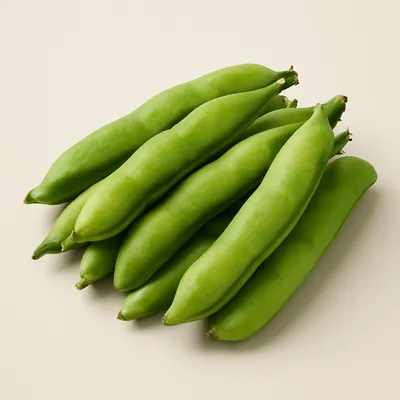
Kapchi de Habas is a meatless highland stew from the southern Peruvian Andes, built on fresh fava beans, diced potato, milk and crumbled fresh cheese. Onion and ají amarillo are sweated to a base, the favas and potatoes are simmered in milk until creamy, and beaten eggs are stirred through at the end to bind it. Huacatay, the pungent Andean black mint, gives the dish its signature green-herbal aroma. It is mild, soft and comforting — a frugal dish that turns a handful of garden ingredients into a full meal.





The dish belongs to the peasant kitchens of Cusco, Apurímac and Ayacucho. Its name comes from the Quechua 'q'apchi', meaning food made with chopped or crumbled ingredients — a reference to the diced potato, broken favas and crumbled cheese stirred together. Kapchi is tied to the Andean agricultural calendar: it is cooked above all in the highland summer, roughly January to March, when fresh broad beans come in. A close cousin, kapchi de setas, swaps the favas for the wild mushrooms that flush in the same rainy months.
A bowlful is pale and creamy, flecked green with huacatay and gold with ají amarillo. The favas are tender and faintly grassy, the potato soft, the fresh cheese melting into soft salty pockets, and the egg-thickened milk binds everything into a gentle porridge-like body. The huacatay carries through every spoonful — peppery, herbal, slightly resinous, the taste that marks it as Andean. It is warm, filling and quiet on the palate, eaten with rice on the side.
The body comes from cooking the favas and potatoes directly in milk rather than water — the potato starch and the milk thicken together into a creamy suspension, while the fresh cheese melts only partway, leaving soft curds. Milk is added after the aromatic base rather than boiled hard from the start, so it stays smooth instead of splitting. Beaten egg is the final binder, swirled in off a strong boil so it sets in fine threads through the stew rather than scrambling into lumps. Huacatay is added late, since prolonged heat dulls its volatile oils.
Variations
The fava version is the summer canon; kapchi de setas (with wild mushrooms) is the rainy-season equivalent and is sometimes the better-known of the two. Some cooks make it looser as a soup, others tighter as a stew to plate with rice. A heartier, soupier sibling thickened with toasted barley, chupe de habas, is common in the same region; ricotta or other soft fresh cheese stands in where queso fresco is hard to find.
On the Palate
Where Kapchi de Habas sits in the Peruvian flavor cloud
Ingredients
Serves 4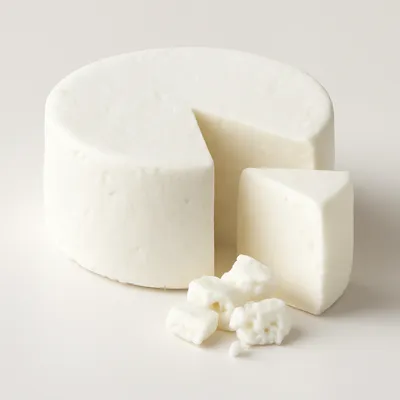


How it's made
8 steps · 30 min active + 15 min waiting
- 112 min
Shell fresh fava beans; if mature, blanch briefly and slip off the tough outer skins. Peel and dice the potatoes.
- 25 min
Sweat finely chopped onion and garlic in oil until soft, then stir in ají amarillo paste and cook out its raw edge.
- 38 min
Add the diced potato and a little water; simmer until the potato is half-tender.
- 412 min
Add the fava beans and pour in the milk; simmer gently, stirring, until potatoes and favas are fully soft and the liquid is creamy.
Watch outAdd the milk after the aromatic base and simmer gently, stirring — the potato starch and milk thicken into a creamy suspension together; a hard boil from the start splits the milk into curds.
- 52 min
Crumble in the fresh cheese and let it melt only partway into the stew.
- 62 min
Off a hard boil, stir in the beaten eggs in a slow stream so they set in fine threads.
Watch outOff a hard boil, stream the beaten egg in slowly so it sets in fine threads — pour it into a rolling boil and it clumps into scrambled lumps instead.
- 72 min
Add chopped huacatay, season with salt, and simmer one minute more.
- 81 min
Serve hot with white rice on the side.
Archive tool suggestions — not reviewed
These legacy suggestions have not been evidence-reviewed and are not presented as required tools.

