



A braai bread with deep roots in South African open-fire cooking. The method of baking bread directly on coals predates European settlement — the Dictionary of South African English and other sources trace it to the indigenous Khoikhoi, for whom it was long-established practice. Voortrekker wagon parties on the 19th-century Great Trek (the 1830s–40s Boer migration inland from the Cape), needing bread but unable to carry an oven, adopted the same approach: ferment the dough, then grill it on the grid over the fire. It became an Afrikaner staple this way. The name is literal: rooster (grid) + koek (cake). It survived as a braai standard because it tastes of smoke in a way oven bread can't.
Voortrekker bread from the 1830s–40s migration inland — wagon parties had no oven, so yeasted dough went on the open-fire grid. Afrikaans for 'grid cake.' The dough runs slightly wetter than table-bread or the inside dries before the crust sets.
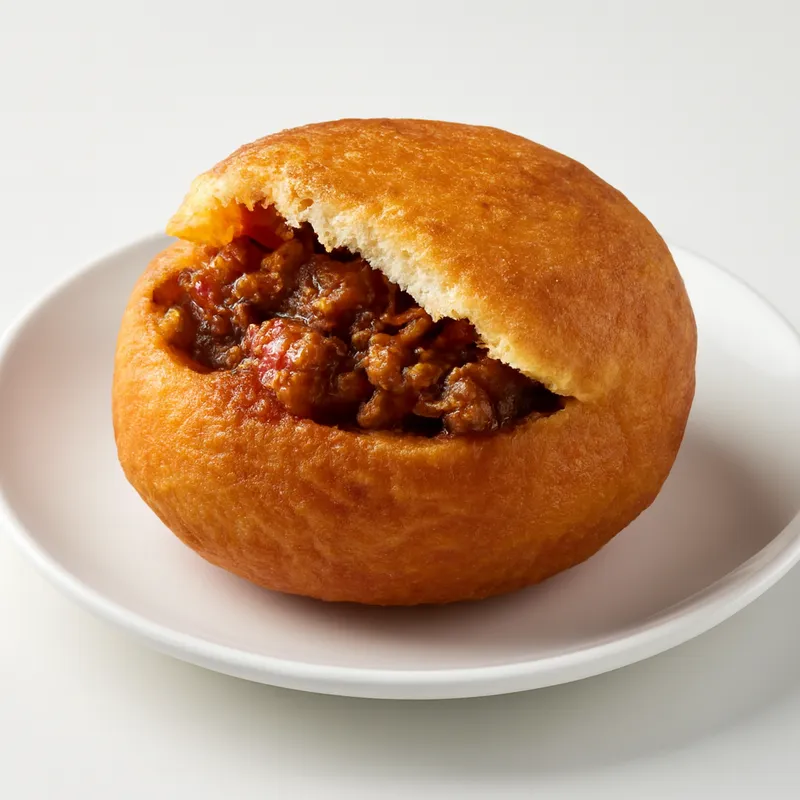
Hand-shaped bread rolls grilled directly on the braai grid until the outside is dark, lightly charred, almost crusty, and the inside is pillow-soft. Yeast dough, no enrichment beyond a little oil and sugar. Torn open hot, smeared with butter, cheese, apricot jam, or a slice of cold boerewors. The smoke from the coals gets baked into the crust — that's the whole point.
The grid does what an oven cannot: direct radiant char on the crust while the dough is still rising. The dough must be a little wetter than table-bread dough — too dry and the inside dries before the crust sets. Most cooks rest the shaped rolls a second time on the grid edge (warm, not hot) for ten minutes before moving them over coals; this is what gives the airy crumb.
Variations
Karoo farm kitchens use a sourdough leaven; coastal Cape farms add a hint of buttermilk; modern braai restaurants stuff fillings inside before grilling; Stellenbosch wine-farm kitchens serve roosterkoek with apricot jam and farm cheddar.
On the Palate
Where Roosterkoek sits in the South African flavor cloud
Ingredients


How it's made
5 steps · 2 hours
- 113 min
Mix flour, yeast, sugar, and salt in a bowl.
- 230 min
Knead with butter, milk, and egg to form a dough.
Watch outKnead the dough a touch wetter and softer than a table loaf — too dry and the inside bakes out before the crust chars on the grid; you want it just tacky, not stiff.
- 321 min
Allow dough to rise until doubled in size.
Watch outLet it rise until doubled and springy — press a finger in and the dent should ease back slowly; under-risen dough grills up dense and heavy.
- 421 min
Divide into rolls and flatten slightly.
- 534 min
Grill on a braai until golden brown.
Watch outGrill over the coals until the crust is deep-brown with a few char spots and it sounds hollow when tapped — keep them at the cooler edge if the outside colors before the inside sets.
Archive tool suggestions — not reviewed
These legacy suggestions have not been evidence-reviewed and are not presented as required tools.