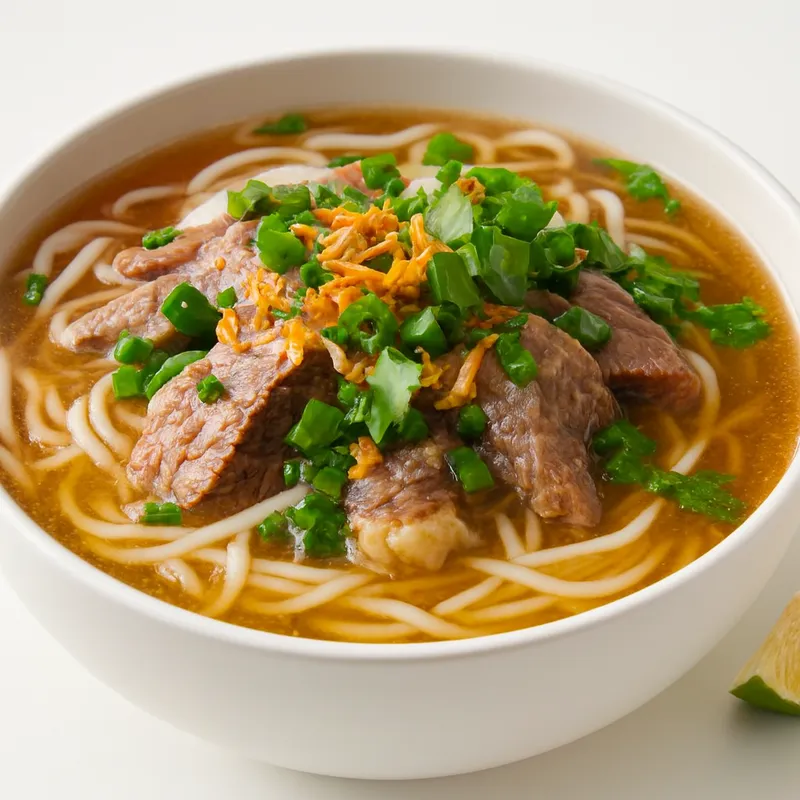
Cambodian caramelized pork-belly stew — pork slow-braised in palm-sugar caramel with fish sauce, garlic, black pepper, and coconut water until the meat falls apart in a glossy mahogany glaze.





Khor sach chrouk (khor/kaw names the cooking method itself — braising meat in caramelized sugar — while sach chrouk means 'pork meat') is the universal Khmer everyday-stew — every Cambodian household makes it for weekday family lunches and Sunday dinners. The dish is the Cambodian cousin to Vietnamese thit kho and Chinese hong shao rou, but distinguished by palm sugar (rather than refined sugar), the use of coconut water for braising liquid, and Khmer kreoung lemongrass paste in some regional variations. Often served with hard-boiled eggs braised in the same liquid (khor sach chrouk pong tea).
Spoon khor sach chrouk over hot jasmine rice: dark-mahogany chunks of pork-belly with the skin gelatinous-sticky, the fat layer melted and translucent, the lean meat tender enough to break with a spoon. The sauce coats every grain of rice with sweet-salty palm-caramel and pepper. A wedge of cucumber on the side cuts the richness. The dish is what Cambodian grandmothers cook when family visits — abundant, warming, deeply seasoned.
Palm sugar's caramelization at 170-180°C is fundamentally different from refined sugar — palm sugar contains trace minerals and amino acids that develop deeper Maillard browning and earthier-molasses notes. Coconut water (not milk) provides natural electrolytes that enhance flavor perception without adding fat — substituting plain water gives a flatter result. The 1.5-hour braise converts pork-belly collagen to gelatin, which thickens the sauce naturally without needing flour or cornstarch.
Variations
Phnom Penh urban version uses regular brown sugar (refined) and tap water; Battambang rural version uses palm sugar and coconut water (the canonical); Khmer-Krom version adds star anise and cinnamon (Vietnamese influence); modern Cambodian-American restaurants serve a slightly drier version on top of fried rice.
On the Palate
Where Khor Sach Chrouk sits in the Cambodian flavor cloud
Take the palm sugar caramel to deep mahogany, not black — that controlled bitterness is the backbone of the braise; pull it a shade early rather than let it burn.
Ingredients
Serves 6

How it's made
5 steps · 30 min active + 1 hour 30 min waiting
- 110 min
Cut 1kg pork belly (skin on) into 4cm chunks. Blanch in boiling water 5 min; drain.
- 26 min
Make caramel: in a heavy pot, melt 4 tbsp palm sugar (or dark brown sugar) over medium-high heat until it turns deep mahogany (not black), 4 min. Working carefully (sugar is hot), add the pork belly + 3 tbsp fish sauce + 4 minced garlic cloves + 1 tbsp ground black pepper + 1 tsp salt; the caramel will harden then re-melt.
Watch outThe caramel is ready the instant it turns deep reddish-brown and smells nutty; a second longer and it scorches.
- 35 min
Stir to coat the pork evenly. Cook 5 min, browning the pork in the spiced caramel.
Watch outThe caramel will seize hard around the cold pork, then re-melt as it heats — keep stirring, this is normal.
- 495 min
Pour in 500ml coconut water (not coconut milk) + 250ml water. Bring to a simmer; cover and braise on low 1.5 hours, until the pork is fork-tender and the sauce is reduced to a glossy mahogany glaze.
Watch outIt's done when the liquid has cooked down to a thick glossy glaze clinging to each piece of pork.
- 54 min
Optional: add 6 hard-boiled eggs (peeled) in the last 20 minutes to absorb the caramel sauce. Serve over jasmine rice with sliced cucumber and chili-lime dipping sauce on the side.
Archive tool suggestions — not reviewed
These legacy suggestions have not been evidence-reviewed and are not presented as required tools.