
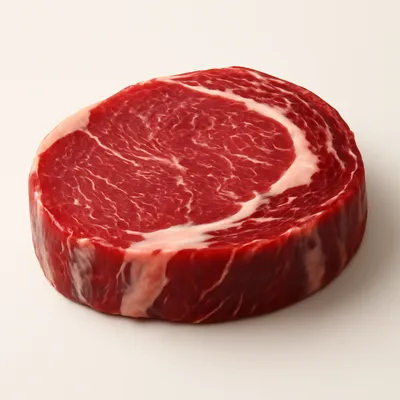



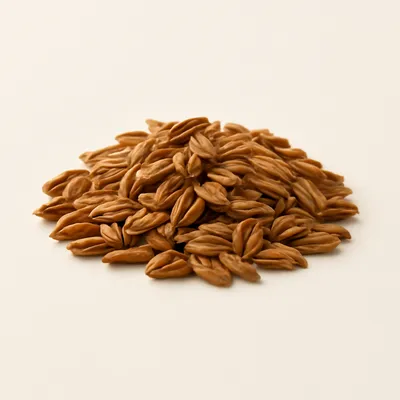
Pastırma — the Turkish ancestor of American pastrami (the dish migrated west along the spice route, was adapted by Jewish communities in Romania (Romanian pastramă), and reached NYC during the late-19th-century wave of Eastern-European Jewish immigration) — has documented production in Central Anatolia since the 11th century, when Seljuk Turk military commanders cured beef as portable rations. Kayseri (Kayseri province in Central Anatolia) is the world capital of pastırma production. The defining feature is the çemen — a thick aromatic paste of ground fenugreek (helba), garlic, sweet and hot paprika, cumin, and water — slathered on the cured beef during aging. The çemen creates pastırma's signature appearance (deep red exterior, dense ruby interior) and flavor (intensely savory, smoky-without-being-smoked, complex). Eaten as a meze, in eggs (pastırmalı yumurta), or stuffed into a sandwich.
A paper-thin slice of pastırma is structural geology in miniature: a thick coral-red çemen crust around a deep ruby-red center. The bite is firm-toothsome but yielding (3-6 weeks of aging concentrates and tenderizes), intensely savory, garlic-paprika-fenugreek-perfumed, with the cured-beef depth that no quick-method can match. Spread on a slice of warm bread with a smear of butter and a slice of mature cheese (kaşar) — this is the canonical Anatolian breakfast pairing. Or fry alongside eggs for pastırmalı yumurta. The flavor is so concentrated that 5 slices is enough for a meal.
Pastırma's complex flavor comes from three independent processes: (1) salt cure denatures proteins and pulls out water through osmosis over 5 days, concentrating flavor and inhibiting bacteria; (2) pressing under weight further removes moisture and shapes the meat flat (preserves more surface area for çemen); (3) çemen's fenugreek develops complex umami and 'maple-curry-meaty' notes during 3-6 week aging, the signature maple aroma coming chiefly from sotolon (fenugreek lactone / caramel furanone). Curing salt is non-negotiable for safety during ambient-temp aging — nitrate slowly converts to nitrite, preventing Clostridium botulinum.
Variations
Kayseri canonical with fenugreek-based çemen and 3-6 week aging; Erzurum variant uses more hot paprika; modern producers experiment with shorter aging (suffers in flavor depth); commercial sliced pastırma in vacuum packs is generally industrial-quality and far from canonical; eye-of-round is the most common cut; tenderloin (more expensive) gives the most tender result; a 'sade' (plain) pastırma exists without çemen coating but is uncommon (the çemen is the dish's identity).
On the Palate
Where Pastırma sits in the Turkish flavor cloud
The çemen crust makes the pastırma — a thick fenugreek-garlic-paprika paste slathered on and aged for weeks develops the signature maple-savory aroma from sotolon, so coat every surface with no gaps.
Ingredients
Serves 20

How it's made
7 steps · 1 hour active + 20 days 23 hours waiting
- 18 min
Procure 1.5kg beef tenderloin OR eye-of-round (whole muscle, fat-trimmed). The meat must be very fresh and very cold. Wash and pat completely dry.
- 27200 min
Dry salt cure: in a non-reactive container, layer the meat with 200g coarse sea salt + 3g curing salt #2 (sodium nitrate, for safety during long aging). Cover completely. Refrigerate 5 days, turning daily. The salt will draw out water (which you should pour off daily).
Watch outOver 5 days of salting, pour off the water the salt draws out each day and turn the meat so it cures evenly.
- 32880 min
After 5 days, rinse meat under cold water; soak in fresh cold water 30 min to remove excess salt. Pat dry. Wrap meat in cheesecloth; press between two boards weighted with 5kg of weight, in cool place (10-15°C), for 2-3 days. This presses out remaining moisture and shapes the meat flat.
- 432 min
Make çemen: in a bowl, combine 200g ground fenugreek seed + 100g sweet paprika + 20g hot paprika + 8 minced garlic cloves + 1 tsp ground cumin + 1 tsp salt + ~200ml cold water (add gradually) until the mixture is a thick, spreadable paste — should be the consistency of thick mustard. Rest 30 min for fenugreek to bloom.
Watch outThe çemen should mix to a thick, spreadable paste like heavy mustard; rest it 30 minutes so the fenugreek blooms.
- 55 min
Coat pressed meat completely in a 3-5mm layer of çemen. The entire surface should be covered with no gaps. Wrap in cheesecloth.
- 625920 min
Hang the çemen-coated meat in a cool (8-15°C), well-ventilated, low-humidity space for 3-6 weeks (more for thicker cuts). White Penicillium mold may develop on the outside — this is beneficial and traditional. Pastırma is ready when the meat is firm but still yields slightly to thumb pressure; cross-section should be deep ruby red.
Watch outThe pastırma is ready when it feels firm but still yields slightly to thumb pressure and the cut face is deep ruby; white mold outside is welcome.
- 75 min
To serve: peel off the cheesecloth. The çemen coating stays on (it's the flavor crust). With a very sharp knife, slice the pastırma paper-thin (1mm). Arrange overlapping slices on a plate. Serve as meze with bread, raki, or use 4-5 slices to make pastırmalı yumurta (fry pastırma slices 30 sec; crack eggs on top; cook 2 min until whites are set). Pastırma keeps refrigerated 3 weeks; vacuum-seal for longer.
Archive tool suggestions — not reviewed
These legacy suggestions have not been evidence-reviewed and are not presented as required tools.


