
Afghan milk pudding — whole milk thickened with cornstarch (or finely ground rice) and sugar into a custard-like cream, perfumed with ground cardamom and rose water, set in shallow bowls and topped with chopped pistachios and almonds (and sometimes a dusting of cardamom). Distinguished from the whole-grain rice pudding sheer birinj by its completely smooth, no-grain texture: the rice is powdered first, or replaced with cornstarch, so it never cooks whole.
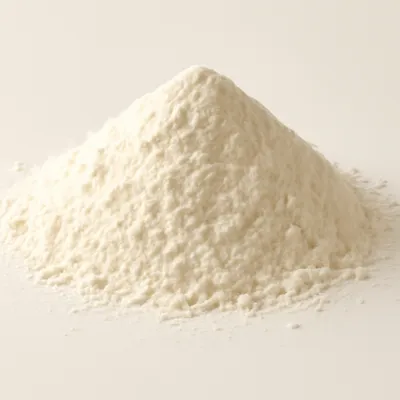


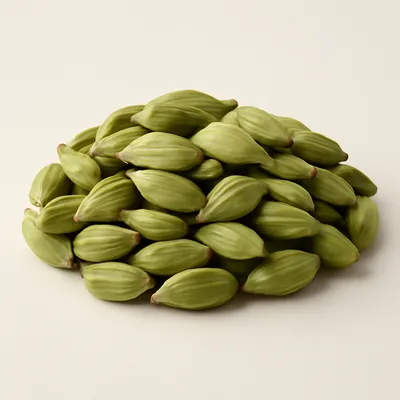
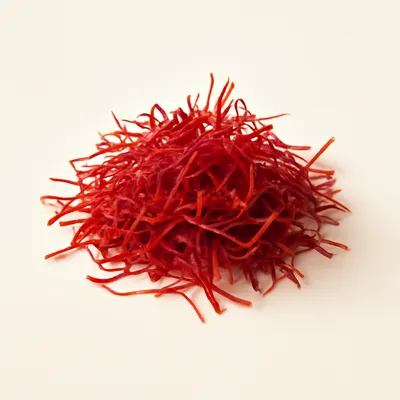

A dessert that travels across Persia, Afghanistan, and the Indian subcontinent: Afghanistan and Iran share near-identical names for it, while in India it becomes a close cognate. It began as the Persian milk-and-ground-rice pudding whose very name means 'rice pudding'; the Mughals carried it into India, where it became a royal-table sweet. The Afghan line is denser and more cardamom-forward than the Iranian, and less heavy on cream than the Indian. Made at Eid, weddings, and as a comfort dish for children. Traditionally set in shallow clay bowls that absorb excess moisture and firm the set.
The first spoonful is unlike the whole-grain rice pudding sheer birinj — completely smooth, no rice-grain texture at all. Cool against the lips, dense and creamy on the palate. Cardamom's warm aroma and rose water lead, with an earthy-floral note of saffron when it is used. The toppings provide all the texture: crisp almond, soft pistachio, dusty cardamom. Each spoonful is a small, refined bite — the dessert of celebration.
Cornstarch and ground rice both gelatinize at a lower temperature than whole-grain rice and produce a completely smooth set — no graininess — which is what separates firni from a whole-rice pudding. The starch slurry must be cold and whisked into hot milk gradually or it will lump (cold liquid added to hot hydrates the starch granules slowly, without clumping). When saffron is used, it is bloomed in warm milk to release its water-bound color and flavor compounds. After the pudding thickens it is poured into bowls and refrigerated, where it continues to firm at low temperatures.
Variations
Kabul classical (cardamom + rose water + pistachio + almond, sometimes with saffron and a dusting of cardamom); the Indian cognate is sweeter and often uses condensed milk; a festive Afghan version pours over a layer of crushed walnuts at the bottom of the bowl so each spoonful reveals walnuts as it digs deeper. Some cooks use finely ground rice instead of cornstarch for a more rice-creamy body; a modern vegan adaptation uses oat or other plant milk.
On the Palate
Where Firni sits in the Afghan flavor cloud
Ingredients
Serves 6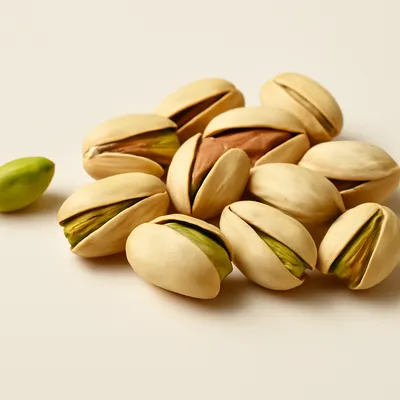

How it's made
7 steps · 25 min active + 20 min waiting
- 13 min
In a small bowl whisk 1/2 cup rice flour with 1/2 cup cold milk until smooth (no lumps). Set aside.
Watch outWhisk the rice flour into the cold milk until dead smooth first — any lumps here become permanent lumps in the pudding.
- 210 min
Soak a generous pinch of saffron threads in 2 tbsp warm milk for 10 minutes — the liquid will turn deep gold.
- 37 min
In a heavy non-stick pot bring 1 liter whole milk to a gentle simmer over medium heat. Reduce to low.
- 410 min
Whisk the rice-flour slurry one more time, then pour it slowly into the simmering milk while whisking vigorously. Continue whisking 8-10 minutes until the mixture thickens to coat the back of a spoon.
Watch outPour the slurry in a thin stream while whisking hard, and keep the whisk moving the whole time — it's ready when a line drawn on the spoon back holds.
- 55 min
Stir in 1/2 cup sugar, 1 tsp ground cardamom, the saffron milk, and 1/2 tsp rose water. Cook 2 minutes more to dissolve sugar.
- 665 min
Pour into 6 small bowls or one shallow platter. Cool 10 minutes at room temperature, then chill in the refrigerator at least 1 hour until set.
Watch outLadle it out while still pourable — it firms up a lot as it chills, so if it's already stiff in the pot it'll set rubbery.
- 72 min
Just before serving, top each portion with 1 tbsp slivered almonds + 1 tbsp chopped pistachios + a pinch of ground cinnamon. Optionally drizzle with date syrup.
Archive tool suggestions — not reviewed
These legacy suggestions have not been evidence-reviewed and are not presented as required tools.

Hand-held wire loop tool for beating eggs, whipping cream, emulsifying dressings, and incorporating air into batters. Balloon whisks (large round head) for whipping cream and meringues; French whisks (narrow tear-drop) for sauces in pots; flat whisks (gravy) for pan sauces. Stainless steel is universal; silicone-coated for non-stick pans.

Round metal pot, 14-26 cm diameter, with vertical walls and a long handle, designed for sauces, soups, oatmeal, rice, boiled vegetables. The vertical walls minimize evaporation (vs. a sauté pan). Sizes: 1 qt for melting butter, 2-3 qt for sauces, 4 qt for soups. Stainless-steel-clad aluminum or copper is best for conduction; cast-iron is too thick for delicate sauces.


