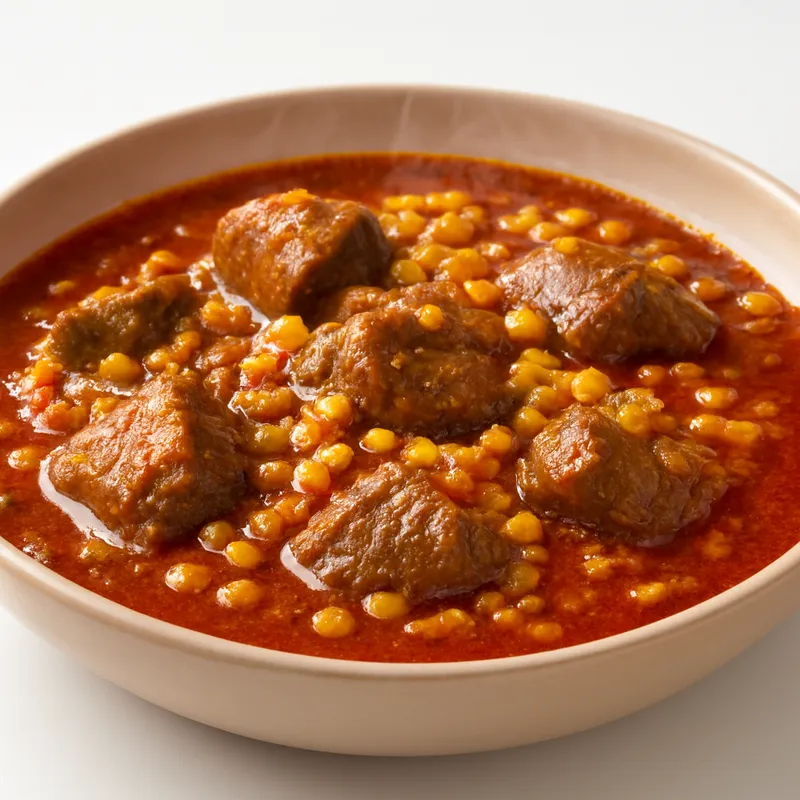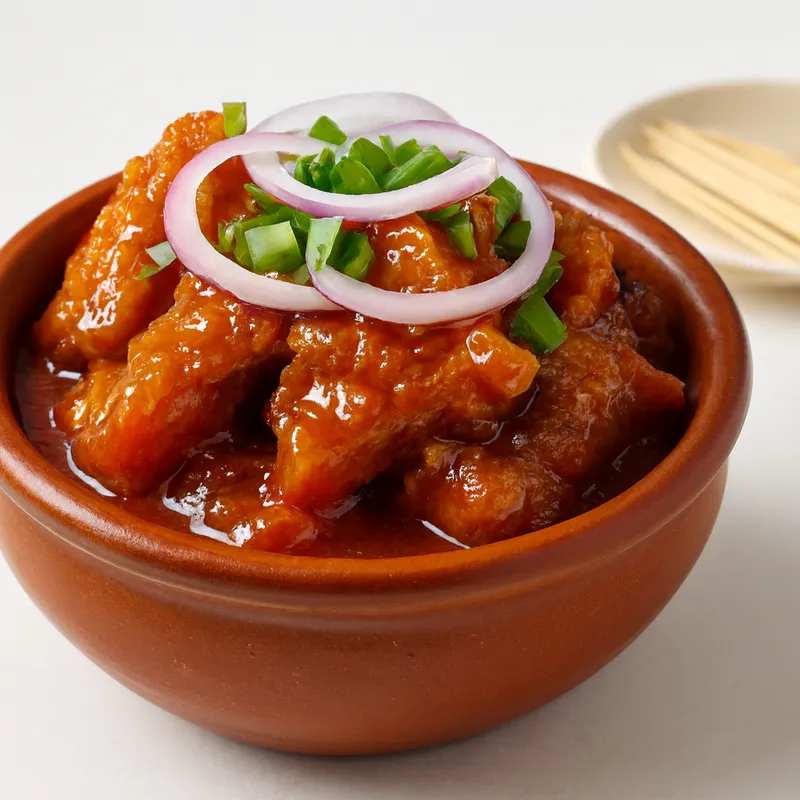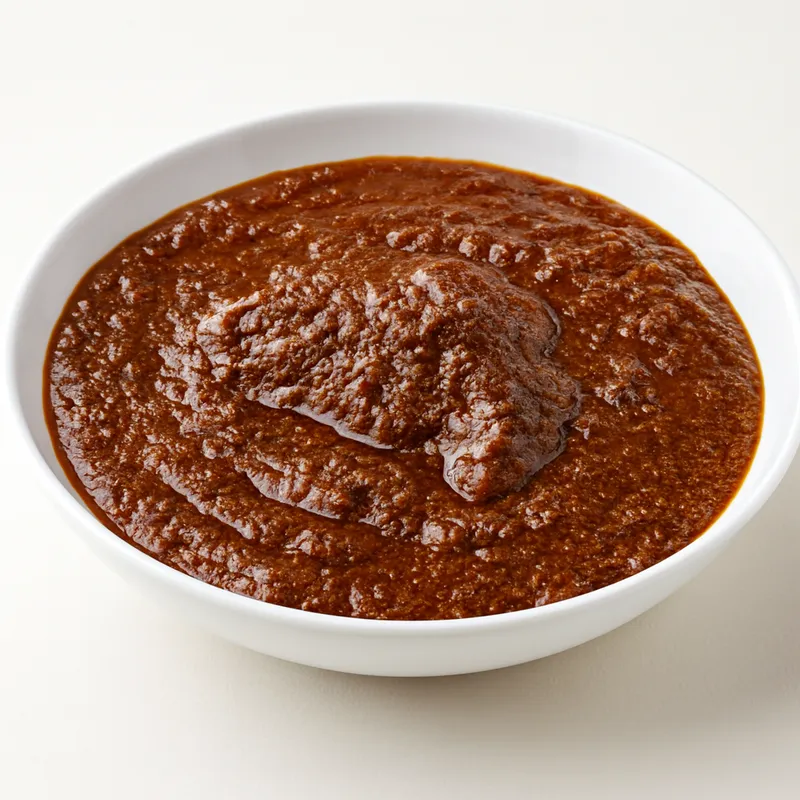
A rich and flavorful stew made with pomegranate syrup and walnuts.
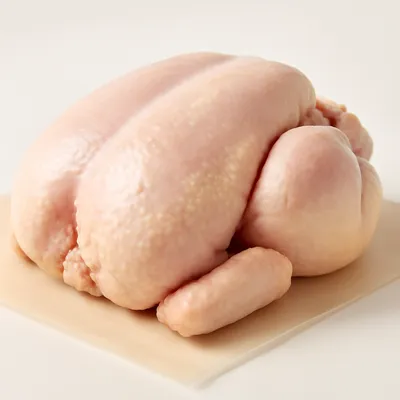


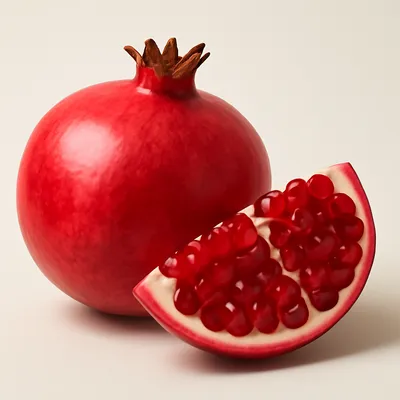
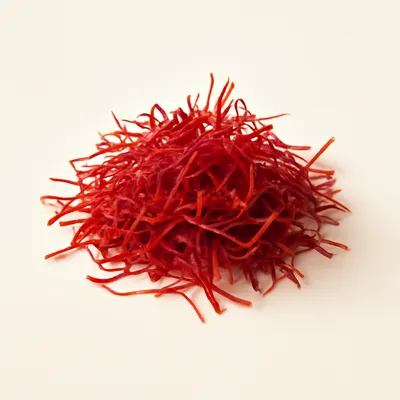
A northern dish from Gilan and Mazandaran along the Caspian coast, where walnut groves and sour pomegranates both grow; the use of walnuts and pomegranates to thicken and flavor stews traces back to the Sassanid period (224–651 CE), while the earliest documented written reference to fesenjan itself is in Mirza Ali-Akbar Khan Ashpazbashi's Sofra-ye At'ema (1881), which lists ten varieties and is still the centerpiece of Yalda night, the winter-solstice dinner.
Northern Iran's Gilan/Mazandaran khoresh — toasted ground walnuts simmered three to four hours with pomegranate molasses until the oil splits and the sauce darkens chocolate-brown. Traditionally duck or pheasant; chicken is the modern shortcut. Tart-to-sweet ratio is the cook's signature.
A near-black stew thick enough to hold a spoon upright, with chicken pieces (or duck, or meatballs) submerged in it. The flavor is sweet-sour-bitter at once, with a fine grit on the tongue from ground walnut. Served over saffron rice; you take a spoonful of stew, a spoonful of rice, and chase it with raw herbs. The color comes from oxidized walnut oil and reduced pomegranate molasses, not from any browning.
The walnuts must be ground fine and toasted slowly in their own oil for an hour or more before any liquid goes in — that long roast develops the dark color and tames the raw bitterness. Pomegranate molasses (rob-e anar) goes in late and gets adjusted by taste: sour in spring, sweet in winter. A grey, oily fesenjan means the walnuts weren't toasted enough; a thin one means the molasses overpowered the fat.
Variations
Northern (Gilani) version is sour-forward with sour pomegranate molasses; Tehran version sweetens with sugar; duck (fesenjan-e ordak) is the Caspian aristocratic original; meatball (koofteh-fesenjan) is a Khuzestan take; vegetarian eggplant fesenjan is a modern Tehran adaptation.
On the Palate
Where Fesenjan sits in the Persian flavor cloud
Ingredients


How it's made
4 steps · 30 min active + 1 hour 30 min waiting
- 15 min
In a large pan, toast the walnuts over medium heat until they release their oil and become fragrant, stirring frequently to avoid burning.
Watch outThe walnuts are ready when they've gone deep brown, smell toasty and rich, and a slick of their own oil beads out — not before.
- 210 min
Add finely chopped onions to the pan and sauté until golden brown, allowing their sweetness to develop and meld with the walnuts.
Watch outSauté the onions to a real golden brown so their sweetness comes up and melts into the nuts.
- 35 min
Stir in the pomegranate syrup and spices, then add the chicken pieces. Coat the chicken well with the sauce.
Watch outMake sure the chicken is evenly coated to absorb the flavors.
- 410 min
Reduce the heat to low, cover the pan, and let the stew simmer gently for about 1-2 hours until the chicken is tender and the sauce is thickened.
Watch outDone means the sauce is thick and glossy and the chicken pulls apart easily — a thin sauce says the molasses beat the fat, a grey oily one says the nuts weren't toasted enough.
Archive tool suggestions — not reviewed
These legacy suggestions have not been evidence-reviewed and are not presented as required tools.