

An Igbo dish from southeastern Nigeria. Its exact origin is uncertain and variously told — some trace it to Mbaise in Imo State, where it is served with fresh raffia palm wine — but broadly it is rooted in Igbo village cooking, a way to make tough, cheap cow foot palatable that grew into a dish of celebration and hospitality. It is now a fixture of beer parlors and bars across the southeast, eaten with chilled lager or fresh palm wine. It shares its emulsified palm-oil-and-potash sauce with isi ewu (goat head), the older sibling Igbo delicacy; the two are often paired, though which came first, or modeled on which, is not settled.
Igbo beer-parlor cow foot in a thick orange palm-oil paste. Akanwu — potash from burnt plantain ash — is what triggers the saponification that turns the oil into a coat instead of a slick. Skip it and you get greasy cow foot in a puddle.
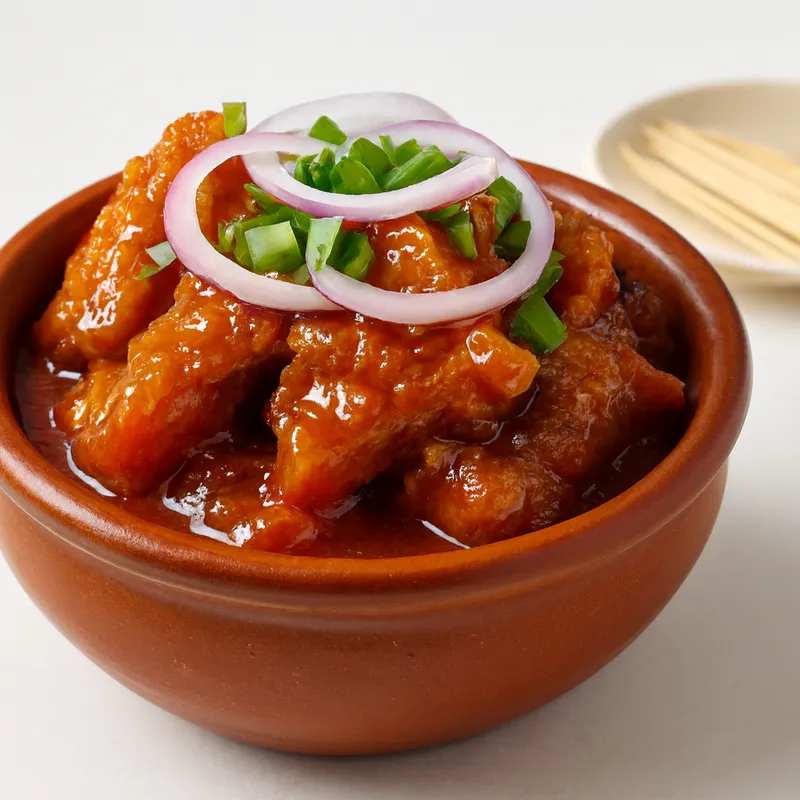
Chunks of cow foot — cartilage, skin, tendon — coated in a thick orange-red palm-oil paste, served warm in a small wooden mortar with a side of sliced raw onion and utazi leaves. The texture is the point: gelatinous, sticky, lip-coating. Eaten with the fingers in beer parlors. The leaves cut the richness; without them it's too much.
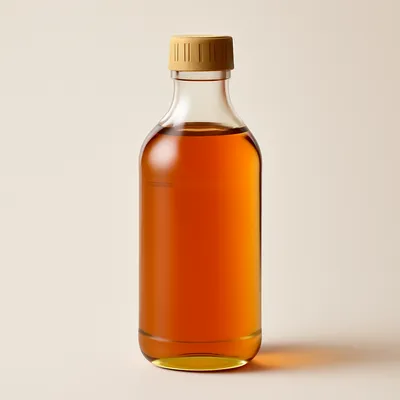
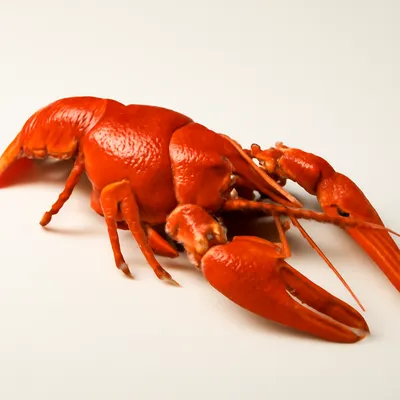
Edible potash (akanwu) — a carbonate alkali whose exact composition varies by source — is the load-bearing ingredient. Dissolved in water and whisked into red palm oil, it drives an alkali-emulsion that thickens the oil from a slick into a smooth paste and shifts its color from red toward yellow-orange. Skip it and the sauce breaks; the cow foot sits in greasy oil instead of holding a coat. Potash is traditionally substituted with palm-bunch ash (ngu) or the ash of burnt unripe-plantain peel. Ground calabash nutmeg (ehuru) and ground crayfish add the perfume.
Variations
Nkwobi (cow foot) is the standard; some versions add assorted offal and tripe for a fuller, mixed plate. Its close relative is isi ewu (goat head), which uses the same emulsified palm-oil-and-potash sauce and is the older Igbo sibling of the dish.
On the Palate
Where Nkwobi sits in the Nigerian flavor cloud
Getting the potash-and-palm-oil emulsion right is everything: whisk the strained potash water into the red palm oil until it thickens into a smooth yellow-orange paste, or the sauce breaks and the cow foot just sits in greasy oil.
Ingredients



How it's made
5 steps · 1 hour
- 145 min
Cut the cow foot into small pieces, removing any large bones. Place in a pot with salt, seasoning cubes, and chopped onions. Add just enough water to cover and simmer until tender.
Watch outEnsure the water covers the cow foot completely to avoid uneven cooking.
- 25 min
In a separate pot, dissolve potash in a cup of water, then strain. Add palm oil to the potash solution and stir vigorously until it thickens and turns yellow.
Watch outThe oil is ready the instant it thickens from a slick into a spreadable paste and the red turns yellow-orange, stop before it gets pasty and dull.
- 33 min
Add ground crayfish, boiled ugba, ground Cameroon pepper, and a seasoning cube to the palm oil mixture. Stir thoroughly to combine.
Watch outEnsure the spices are evenly distributed to avoid clumping.
- 45 min
Combine the cooked cow foot with the palm oil mixture, stirring to coat the meat evenly. Let it cook for another 5 minutes to absorb the flavors.
Watch outFold, don't stir hard: coat every piece of cow foot evenly so each holds a glossy jacket of sauce.
- 52 min
Serve the Nkwobi in a wooden bowl, garnished with sliced onions and utazi leaves for a traditional touch.
Archive tool suggestions — not reviewed
These legacy suggestions have not been evidence-reviewed and are not presented as required tools.