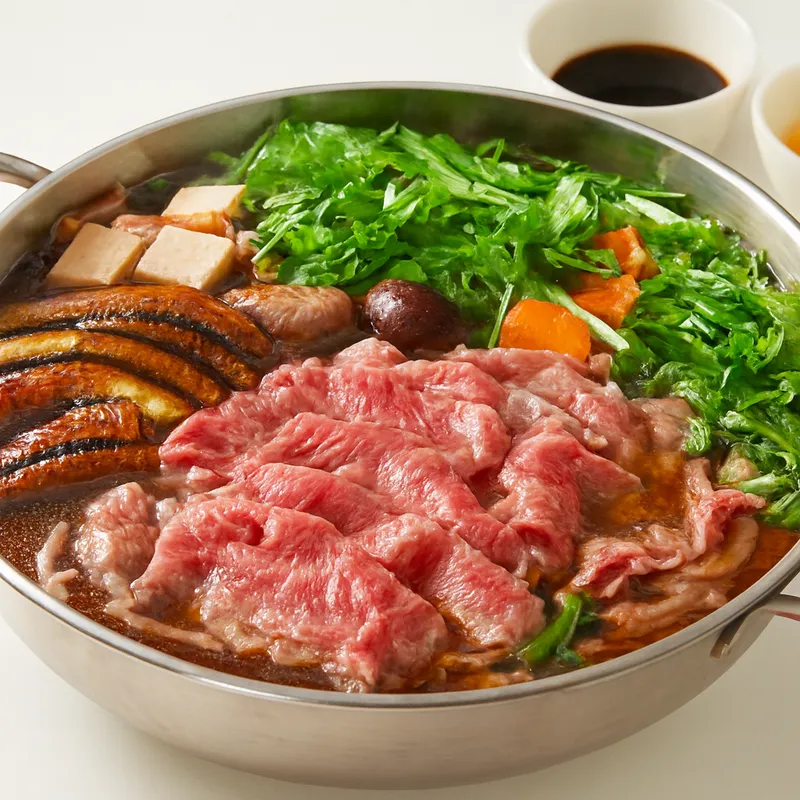






Gyudon descends from gyu-meshi, popularized in Tokyo around 1899 by Yoshinoya's first stall at the Nihonbashi fish market — meant to feed market workers a fast hot meal in five minutes flat. The simmer-in-broth technique came from gyunabe (beef hot pot), itself a Meiji-era novelty since Buddhist Japan had banned beef for over 1000 years until 1872.
Yoshinoya invented the modern bowl in 1899 Tokyo Nihonbashi fish-market — sliced beef simmered in dashi-shoyu-mirin-sugar (warishita) over rice. The chain still uses the same warishita ratio.
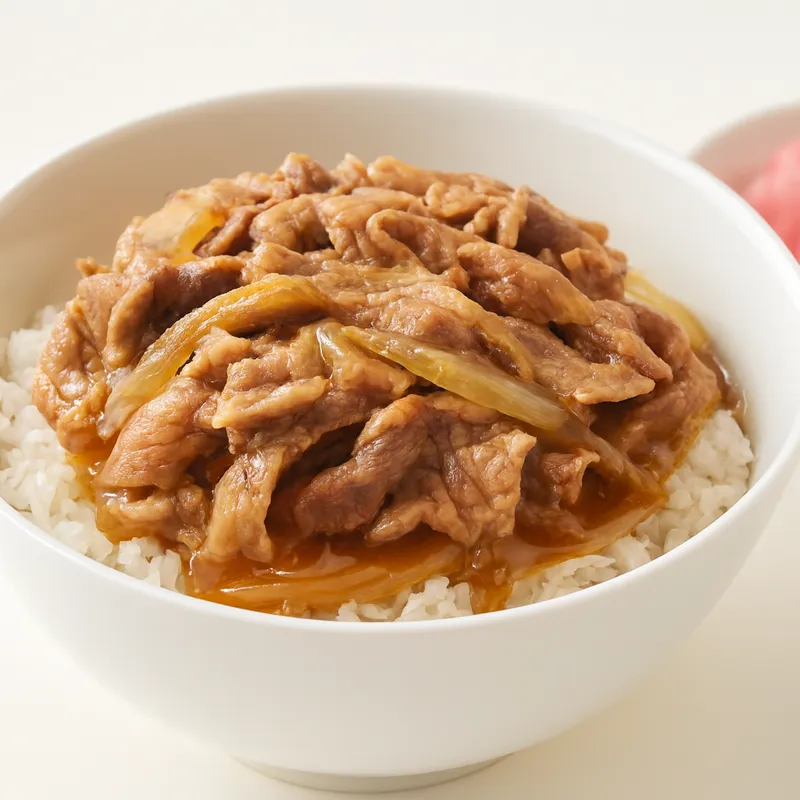
A bowl of plain white rice topped with thin-sliced beef and onion ribbons that have simmered in soy, mirin, sake, sugar, and dashi until the onion goes translucent and the meat just turns. Pickled red ginger (beni shoga) sits to one side; a raw egg yolk often goes on top. Eat fast — the broth pools at the bottom and the rice gets soupy if you stall.
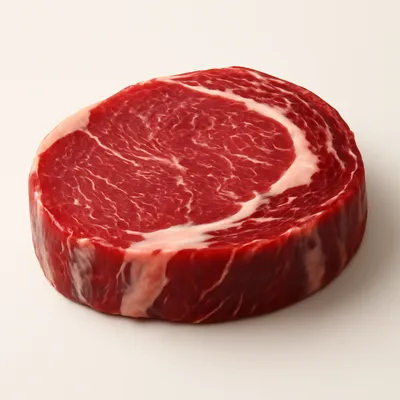
The broth is built so the meat barely cooks. Beef is sliced paper-thin (0.8-1.2mm) frozen, then dropped into already-simmering onion broth for 30-60 seconds — overcooking turns it gray and stringy. The ratio of soy to mirin to sugar tunes the bowl's character: Yoshinoya runs sweeter, Sukiya saltier, Matsuya in between. Day-old broth from the previous service makes the best base.
Variations
Yoshinoya keeps the original 1899 lean recipe; Sukiya tops with cheese or kimchi for variants; Matsuya serves miso soup gratis; negi-tama gyudon adds raw egg and scallion.
On the Palate
Where Gyudon sits in the Japanese flavor cloud
Don't cook the beef, warm it: slice it paper-thin, drop it into broth that's already simmering, and pull the pan the moment the pink is gone — 30 to 60 seconds. Any longer and the thin slices seize up gray and stringy.
Ingredients





How it's made
5 steps · 20 min
- 15 min
Thinly slice the onion and beef, aiming for uniformity to ensure even cooking. The onion should be translucent and tender, while the beef should remain juicy and soft.
- 25 min
In a medium saucepan, combine the dashi, soy sauce, and sugar. Bring the mixture to a gentle simmer over medium heat until the sugar dissolves, filling the air with a sweet, umami aroma.
Watch outEnsure the mixture does not boil vigorously, as this can alter the flavor.
- 35 min
Add the sliced onion to the simmering sauce. Cook until the onion is soft and translucent, absorbing the flavors of the broth.
Watch outLet the onion go fully soft and translucent before the meat — it should look glassy and taste sweet, having drunk up the broth.
- 43 min
Introduce the beef slices to the pan, spreading them evenly. Simmer gently until the beef is just cooked through, tender and infused with the sauce.
Watch outSpread the slices flat and pull the pan the instant the last of the pink turns — they keep cooking in the hot broth after the heat's off.
- 52 min
Serve the cooked beef and onion over a bowl of hot rice. Garnish with pickled ginger and shichimi if desired for an extra kick.
Archive tool suggestions — not reviewed
These legacy suggestions have not been evidence-reviewed and are not presented as required tools.