Tsukune is a yakitori-style chicken meatball made by working ground chicken with egg and a little starch, often with finely chopped soft cartilage (nankotsu), scallion, ginger, or shiso folded through. The seasoned mince is molded by hand around bamboo skewers and grilled over charcoal, then either basted repeatedly with tare (a sweet soy-mirin glaze) or simply seasoned with salt (shio). At izakaya and dedicated yakitori shops it is most often served with a raw egg yolk on the side, the hot skewer dragged through the yolk before each bite. The same mince is also dropped as loose balls into hot pot (nabe) and soups, but the grilled skewer is the standard izakaya form.



The name tsukune derives from the verb tsukuneru, meaning to knead and shape something by hand, describing how the seasoned mince is worked and molded; this distinguishes it from tsumire, whose name comes from tsumi-ireru (to pinch off and drop in), referring to fish-paste balls dropped unshaped straight into soup. The precise origin of tsukune as a named dish is unrecorded, but it belongs to the broader history of grilled-skewer food: skewered grilled birds were sold at Edo-period (17th–19th century) stalls and the word yakitori appears in an Edo cookbook, though chicken itself was a luxury and the meat was often sparrow, quail, or other small birds. After the lifting of meat-eating restrictions in the Meiji era (1868–1912), yakitori stalls proliferated in working-class districts, and the sweet tare glaze and the casual izakaya dining style that frame tsukune today took their modern shape in the postwar period.
A good tsukune is springy and bouncy rather than crumbly, with a faintly bursting juiciness; when cartilage is folded in, soft pops of crunch break up the smooth meat. The charcoal leaves a smoky char on the surface, and the tare builds into a glossy, sticky, sweet-salty lacquer (or the shio version stays cleaner and more savory, letting the chicken read clearly). Dragged through raw egg yolk, the skewer picks up a glossy, fatty coating that rounds off the salt. Worked too little or grilled too long and it turns dense, dry, and grainy instead of cohesive and juicy.
Working the ground chicken — kneading and slapping the mince — extracts and cross-links the muscle protein myosin, which sets into an elastic network on heating and gives the springy, bouncy bite; egg and a little starch reinforce this binding and hold moisture so the ball stays juicy rather than crumbling. Fat from the chicken (and any added skin) lubricates the matrix and carries flavor, while finely minced soft cartilage stays firm where the protein turns tender, supplying contrasting crunch. Tare — soy sauce, mirin, sake, and sugar simmered down — is brushed on in repeated coats over the charcoal; its sugars and amino acids brown through the Maillard reaction and caramelization into a sticky, aromatic lacquer, and the smoke from fat dripping onto the coals adds further aroma. The raw egg yolk coats each bite with emulsified fat and protein, adding richness and softening the salt and char.
Variations
The two basic finishes are tare (sweet soy glaze) and shio (salt). Texture is varied by folding in chopped soft cartilage (nankotsu) for crunch, or grated lotus root or chopped shiso for freshness; chopped scallion and ginger are common aromatics. Beyond the skewer, the same mince is cooked as loose balls in hot pot (nabe) or simmered in soup (tsukune-jiru). While chicken is standard, some versions use pork or a chicken-pork blend. The accompanying raw egg yolk is an izakaya signature but optional.
On the Palate
Where Tsukune sits in the Japanese flavor cloud
Ingredients
Serves 4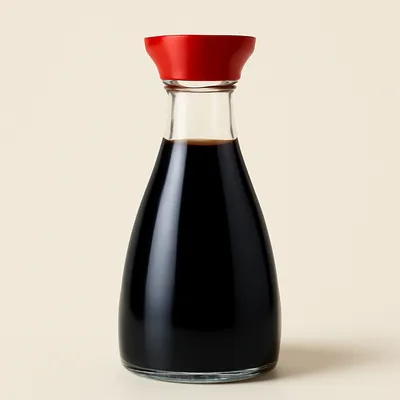


How it's made
8 steps · 25 min active + 5 min waiting
- 110 min
Make the tare: simmer equal parts soy sauce and mirin with sake and sugar over medium heat until reduced by about a third into a syrupy, lightly thickened glaze, then set aside.
Watch outReduce the tare by about a third until it's syrupy and lightly thickened — thin tare slides off the skewers instead of building lacquered coats.
- 24 min
Mince any soft cartilage finely and finely chop the scallion and ginger.
- 32 min
Combine the ground chicken, egg, potato starch, cartilage, scallion, ginger, and a pinch of salt in a bowl.
- 44 min
Knead and slap the mince vigorously for 3-5 minutes until it turns pale, sticky, and elastic — this builds the springy bind.
Watch outKnead and slap the mince 3-5 minutes until it turns pale, sticky and elastic — that worked protein bind is what gives tsukune its springy bounce.
- 54 min
With wet hands, mold the mince into ovals around bamboo skewers, pressing firmly so they hold.
- 67 min
Grill over hot charcoal (or a hot grill pan), turning, until cooked through and lightly charred, about 6-8 minutes.
- 74 min
For tare skewers, brush on the glaze and return to the heat repeatedly, building several sticky, lacquered coats; for shio, season with salt instead.
Watch outBrush the tare and return to the heat again and again, building several sticky coats — one pass leaves it thin; the lacquer comes from repeated layering.
- 81 min
Serve hot with a raw egg yolk on the side for dipping.
Archive tool suggestions — not reviewed
These legacy suggestions have not been evidence-reviewed and are not presented as required tools.