
Rista is a Kashmiri banquet dish of hand-pounded mutton meatballs cooked in a smooth red gravy. Lean mutton and fat are beaten on a stone with a wooden mallet into a fine, springy paste, shaped into large balls, and simmered in a thin sauce coloured deep red by Kashmiri chilli and natural dyes such as ratan jot, scented with fennel, dried ginger and asafoetida. It is one of the set courses of the Wazwan, the formal multi-course Kashmiri feast, and is the red-gravy sibling of Goshtaba, which is made from the same pounded meat but finished in a white yogurt gravy. It is served with plain rice.



Rista belongs to the Wazwan, the ceremonial Kashmiri feast cooked by the Wazas, hereditary cooks whose craft carries a Persian and Central Asian inheritance. Within the Wazwan's sequence of courses it is one of the established meat dishes, served alongside or before the closing Goshtaba; the two are made from identical pounded meat and distinguished chiefly by their gravies — Rista red and chilli-forward, Goshtaba white and yogurt-based. The name is commonly traced to a Persian root for the rich juice or gravy that bathes the meatballs, though this etymology is repeated in cookery sources rather than firmly documented. The deep red of the sauce comes from Kashmiri chillies together with ratan jot (alkanet root) and, traditionally, mawal (cockscomb flower).
Two or three large, pale-cored meatballs sitting in a clear, oily, deep-red sauce. The meatball is the point: dense and smooth, with a distinct springy bounce when bitten, never crumbly or grainy. The gravy is thin rather than creamy, fragrant with fennel and dried ginger, warmly spiced but more aromatic than searingly hot. Eaten over rice, spooning the red sauce across each mouthful; the texture of the meat is what separates a good Rista from an ordinary kofta.
Rista lives or dies on the pounding. Mutton with some fat is beaten on a stone slab with a wooden mallet for the better part of an hour, far longer than mincing, until it becomes a tacky, cohesive paste. The mechanical work extracts and aligns myosin, the muscle protein that cross-links into the elastic gel behind the bounce of sausages and fish cake; this is why a properly pounded ball springs back instead of falling apart, and why a food processor only approximates it. The balls are gently simmered, not boiled hard, so they cook through and swell without breaking, and the red colour is set by Kashmiri chilli and ratan jot, whose pigment leaches into the fat and water.
Variations
The closest sibling is Goshtaba, the same pounded meat finished in a white yogurt-and-fennel gravy and served as the Wazwan's final course; serving any dish after Goshtaba is held to be discourteous to the guest. Smaller, plainer meatballs in a lighter broth are made as kofta yakhni, and the Lucknowi galouti kebab reaches a comparable melting softness by using papaya enzyme rather than pounding. Cooks vary the red dyes and the fat content, but the long hand-pounding is what marks an authentic Wazas' Rista.
On the Palate
Where Rista sits in the Indian flavor cloud
Ingredients
Serves 4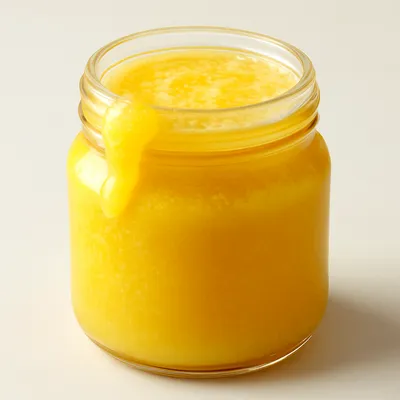
How it's made
7 steps · 40 min
- 150 min
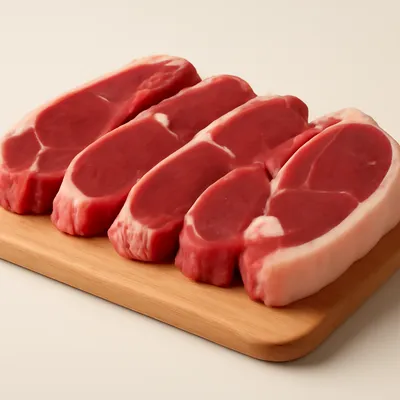
Trim lean mutton and a portion of fat, and pound together on a stone slab with a wooden mallet until smooth, springy and cohesive.
Watch outPound the mutton and fat until it's smooth, springy and cohesive — this long beating aligns the myosin so the balls spring back instead of crumbling; a quick mince won't do it.
- 212 min
Work fennel powder, dried ginger, a little asafoetida and salt into the paste, then wet your palms and shape into large balls.
- 38 min
Bring water to a gentle simmer with the ground spices, Kashmiri chilli and a little ratan jot for colour.
- 425 min
Lower the meatballs in and simmer gently so they cook through and swell without breaking apart.
Watch outLower the meatballs into a gentle simmer, never a hard boil — a rolling boil breaks them; gentle heat cooks them through and swells them whole.
- 56 min
Bloom more Kashmiri chilli and whole spices in hot ghee, then stir this tempering into the gravy.
- 615 min
Simmer until the sauce turns clear, oily and deep red and lightly coats the meatballs.
Watch outSimmer until the sauce turns clear, oily and deep red and just coats the balls — that surfacing red oil is the sign the gravy's ready.
- 74 min
Adjust seasoning and serve hot over plain rice, spooning the red gravy over each ball.
Archive tool suggestions — not reviewed
These legacy suggestions have not been evidence-reviewed and are not presented as required tools.


