Da Nang's signature roll-your-own pork dish: a platter of boiled pork belly cut from thit heo hai dau da, a section with skin running along both edges of each slice, sliced wafer-thin and laid out beside a small mountain of fresh herbs, green banana, star fruit and cucumber. Each diner softens a sheet of rice paper, piles on meat and greenery, rolls it into a tight cylinder and dunks it in mam nem, the thick, funky fermented-anchovy sauce that defines the dish. There is no cooking at the table beyond assembly, so the appeal rests entirely on the quality of the pork, the freshness of the herbs and the punch of the dip. It is everyday food in Da Nang and Quang Nam, eaten in noisy specialist shops where the rolling never stops.



The dish belongs to Da Nang and the surrounding Quang Nam countryside in central Vietnam, where pasture-raised pork, home-grown herbs and locally made rice paper were all close at hand. It grew out of rural family eating rather than any restaurant or named cook, so no firm founding date is recorded; it is best understood as a regional folk specialty that later spread into the city's dedicated shops. The defining elements are local: banh trang le, a chewy rice paper from Quang, and mam nem, the central-coast fermented-anchovy sauce. Today it is treated as one of the emblematic dishes of Quang cuisine, served at family meals, festivals and as a taste of home for people from the region.
The pork carries three textures in one bite: a thin band of springy skin, a layer of soft, barely-there fat and firm sweet lean, all of it clean-tasting from a careful boil. Against that the herbs hit loud and green, the green banana and star fruit add astringency and a sour edge, and the cucumber keeps everything cool and crisp. Then comes the mam nem, salty and deeply fishy with a funky fermented hum, brightened with lime, sugar, chili and garlic. The rice paper holds it together with a gentle chew, so each roll is a moving target of soft, crunchy, sour, fresh and pungent at once.
Everything turns on two things: a gentle boil and a properly balanced dip. The pork is simmered, not hard-boiled, near 90 to 95 degrees Celsius with ginger and shallot so the skin sets firm while the fat softens and the lean stays juicy; a plunge into cold water afterward tightens the skin and keeps slices from drying out. Cutting across the grain into thin slices is what lets the meat stay tender in the roll. The dip is the real engine: mam nem is made from whole fermented anchovies rather than the strained liquid of ordinary fish sauce, which is why it is thick, dark and far more pungent, loaded with the glutamates and amino acids of long fermentation. Cutting it with pineapple, lime, sugar, garlic and chili tames the salt and aroma into something rounded, and the green banana and star fruit add tannins and acid that slice through the fat.
Variations
Across Quang Nam and Da Nang shops the pork can be straight boiled belly or the prized two-skinned cut, and some places add a little luoc (boiled) shoulder for leaner eaters. The herb plate is regional and generous, typically lettuce, perilla, fish mint, Vietnamese coriander, basil and young mustard or fig leaves used to line the rice paper. A few versions stretch toward a sister dish, banh xeo or nem lui, eaten with the same wraps and herbs. The non-negotiable is mam nem; using ordinary nuoc cham instead is considered a different, lesser dish by locals.
On the Palate
Where Banh Trang Cuon Thit Heo sits in the Vietnamese flavor cloud
Ingredients
Serves 4


How it's made
8 steps · 25 min active + 15 min waiting
- 15 min
Rinse a slab of pork belly and bring it to a gentle simmer in water with smashed ginger, shallot and a little salt.
- 228 min
Cook at a bare simmer, around 90 to 95 degrees Celsius, for 25 to 30 minutes until just cooked through, skimming any foam.
Watch outHold the pork at a bare simmer, not a hard boil — gentle heat sets the skin firm while keeping the lean juicy; a rolling boil dries it out.
- 35 min
Lift the pork into iced water for a few minutes to firm the skin, then drain and rest.
Watch outPlunge the just-cooked pork into iced water for a few minutes — the shock tightens the skin so the slices don't dry out.
- 48 min
Slice the cooled pork across the grain into thin slices that show the band of skin, fat and lean.
Watch outSlice across the grain, thin enough to show the band of skin, fat and lean — cut with the grain and it turns chewy in the roll.
- 510 min
Wash and dry the herbs, then slice cucumber, green banana and star fruit thinly and arrange everything on a platter.
- 65 min
Season the mam nem to taste with crushed pineapple, lime juice, sugar, minced garlic and chili.
- 72 min
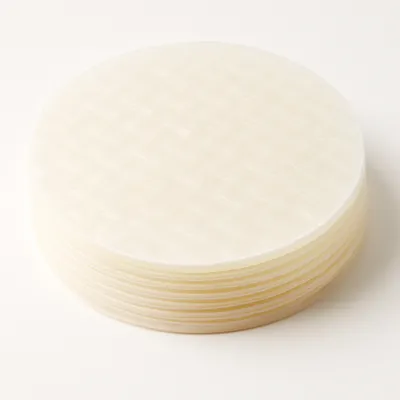
Set out a stack of rice paper sheets with a bowl of warm water for softening.
- 810 min
At the table, each diner dips a sheet, lays on a herb leaf, meat and fruit, rolls it tight and dips in the mam nem.
Archive tool suggestions — not reviewed
These legacy suggestions have not been evidence-reviewed and are not presented as required tools.