
Chueotang is a thick, earthy Korean soup built on pond loach, a small freshwater bottom-fish. In the Namwon style of North Jeolla the loaches are boiled and then ground and sieved into a smooth, bone-free broth thickened with perilla and based on doenjang, set apart from the Seoul style, which keeps the loaches whole. It is loaded with dried radish greens, taro stems and outer cabbage leaves, and finished at the table with a pinch of sancho, the prickly-ash powder that is the southern signature. Eaten as a restorative, it is most prized in autumn when the loach are at their fattest.





Koreans have eaten loach for centuries, but chueotang as a named, recorded preparation is more recent, with the whole-loach and ground-loach methods appearing in early-twentieth-century cookbooks; an older relative, a dish of live loaches burrowing into a block of tofu, is recorded in a nineteenth-century miscellany. Regional schools diverged: Seoul keeps the loaches whole in a beef or tripe broth and even calls the dish chu-tang, while Namwon and the Gyeongsang region grind the loach into a doenjang soup. Namwon, set among the Sobaek range and Jirisan where the Yocheon and Seomjingang tributaries make rich loach habitat, became the national capital of the ground style; a chueotang street grew up beside its Gwanghallu garden, and a restaurant founded there in 1959 is widely credited with launching the city's fame, though that origin is a single local account. A folk etymology ties the character chu to autumn, since loach fatten when the paddies are drained at harvest, but linguistically the autumn sense is a later reading.
Thick and almost porridge-like from the perilla, with a clean, savory-nutty rusticity that hides any trace of the fish itself. The base is earthy and faintly muddy-sweet, the loach long gone to a smooth body, the greens giving soft, slightly chewy bulk. Then the sancho lands: a numbing, citrus-pine aromatic stirred in at the table that lifts the whole bowl and cuts the richness. It is comfort food that warms from the inside, eaten with rice and a sour kimchi on the side.
Grinding the whole boiled loach and sieving out the bone does three things: it gives the soup a smooth, thick body, it dissolves the small bones into the broth as calcium, and it lets the whole-fish nutrition fully incorporate; the ground method also originally helped diners get past the sight of whole fish. Loach is rich in fat, protein and vitamin A, comparable to eel, which underwrites its billing as a restorative. The earthy, muddy character of the fish is tamed by three agents working together: doenjang masks the earthiness, perilla adds nutty richness and body, and the prickly-ash sancho, traditionally held essential, cuts the smell. The loaches are purged in clean water and rubbed with salt to shed their slime before cooking.
Variations
Beyond the Namwon ground-and-perilla bowl, the Gyeongsang version is ground but spicier with added gochujang, Wonju uses highland dried radish greens, and Seoul's chu-tang keeps the loaches whole in a beef broth with tofu and squash. The same fish is battered and deep-fried whole as chueo-twigim, often tucked into a green chili, the classic side ordered alongside the soup, or poached and dressed as chueo-sukhoe. A different loach species, firmer and better whole, is preferred for these whole-fish dishes, while the one used ground goes into the soup.
On the Palate
Where Chueotang sits in the Korean flavor cloud
Ingredients
Serves 4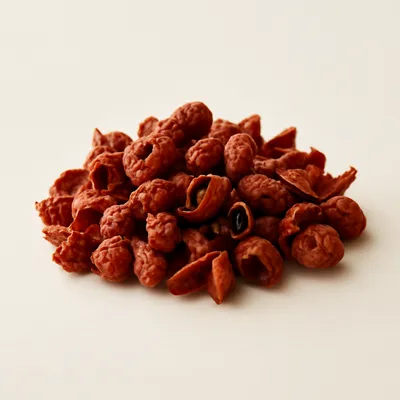
How it's made
9 steps · 1 hour
- 160 min
Soak the live loaches in clean water for about a day so they disgorge their mud.
Watch outGive the live loaches a full day in clean water so they spit out their mud — skip this and the whole soup tastes gritty and muddy.
- 210 min
Drain and sprinkle the loaches with salt so they thrash and shed their slime, then scrub them clean under running water.
- 320 min
Boil the loaches thoroughly until soft.
- 415 min
Grind or blend the boiled loaches and press them through a sieve, keeping only the flesh and broth and discarding bone and skin.
Watch outPress the boiled loach through the sieve until only smooth flesh and broth pass and the bones stay behind — that fine sieving is what gives the soup its silky body.
- 55 min
Make the seasoning paste by grinding perilla, red chili, doenjang and ginger together.
- 612 min
Parboil the dried radish greens, outer cabbage leaves and taro stems, chop them, and dress with the seasoning.
- 725 min
Combine the sieved loach, the greens and the seasoning and simmer well, salting to taste.
- 82 min
Garnish with green chili, scallion and garlic.
- 91 min
Serve hot with sancho powder added at the table to taste.
Archive tool suggestions — not reviewed
These legacy suggestions have not been evidence-reviewed and are not presented as required tools.


