A Cantonese siu laap icon — a whole chicken steeped in soy-caramel master stock until mahogany and tender, finished with a splash of rose petal spirit for a floral depth no other bird achieves.
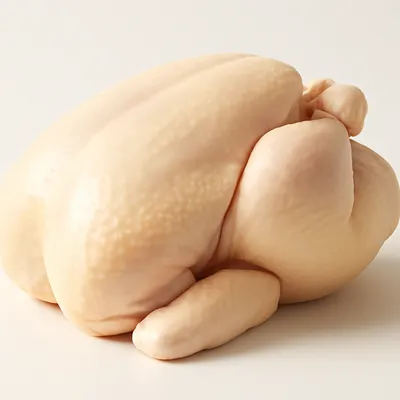

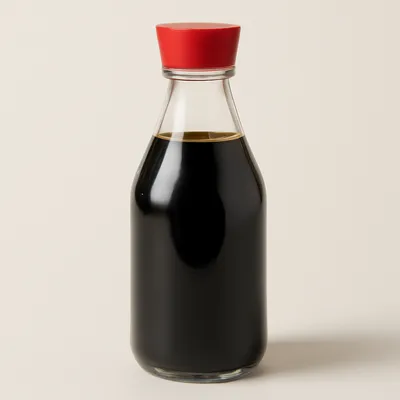



Soy sauce chicken belongs to the Cantonese siu laap (燒臘) tradition and appears in Hong Kong's roasted-meat shops alongside roast goose, char siu, and white-cut chicken, despite involving no roasting at all. The defining touch — 玫瑰露酒, a Lingnan-style rice spirit infused with dried rose petals, roughly 54% abv — was already recorded in Cantonese roast meat handbooks from the late Qing and early Republican era as the irreplaceable finishing step. The best birds are 清远鸡 (Qingyuan chicken, prized for thin skin and firm, sweet flesh) or 湛江鸡, weighing 1.5–2 jin, three months old.
The skin is lacquer-thin, taut, and glistening — it snaps at the first bite, releasing a rush of soy-caramel fragrance cut through with the faintest floral rose note. Beneath it, the meat is juicy and yielding, with the mild sweetness of a well-raised village chicken.
The core technique is 浸鸡 (steeping/poaching), not boiling: the chicken is lowered into near-simmering master stock, brought briefly to a low boil, then removed from heat and steeped in residual heat at around 85–90°C. At this temperature, muscle protein denaturation is gentler than at a rolling boil; collagen partially converts to gelatin rather than fully contracting, preserving more moisture. Maillard reactions between the soy sauce amino acids and reducing sugars from the rock sugar create the mahogany color and complex soy-caramel aromas on the skin. The high-proof rose wine (玫瑰露酒) splashed on at the end carries volatile aromatic esters in a burst of evaporation that enrobes the skin in floral fragrance.
Variations
Shaoxing wine (花雕酒) can substitute for rose wine, though it lacks the floral intensity. Some chefs maintain a perpetual 'master stock' (老卤/母卤), replenishing spices and soy sauce after each use; the stock deepens in complexity over months and years. Duck can be prepared by the same method with a longer steeping time.
On the Palate
Where Rose Wine Soy Sauce Chicken sits in the Chinese flavor cloud
Ingredients
Serves 4

How it's made
8 steps · 1 hour 35 min
- 112 min
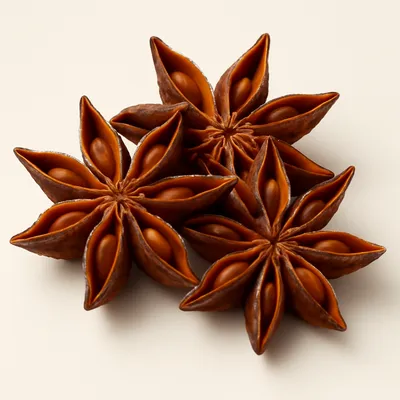
Combine light soy sauce, dark soy sauce, rock sugar, star anise, cinnamon, and 800ml water in a large pot; bring to a boil, stirring until sugar dissolves. Reduce to a simmer for 10 minutes to develop the master stock.
- 25 min
Clean the whole chicken inside and out; pat completely dry with paper towels. Stuff the cavity with ginger slices and scallion stalks.
- 38 min
Gently lower the whole chicken breast-side up into the simmering master stock; bring back to a low boil and cook 5 minutes.
- 425 min
Cover the pot; turn off the heat completely. Steep in residual heat for 25 minutes — do not lift the lid.
Watch outKill the heat and steep with the lid on — hold it around 85-90°C, not a boil, so the flesh stays juicy; a rolling boil toughens the meat and cracks the skin.
- 520 min
Uncover; return to medium heat; flip the chicken breast-side down. Bring back to a low boil for 3 minutes, then turn off heat and steep for 15 more minutes.
- 65 min
Carefully lift the chicken from the pot; hold it over the pot and slowly pour 30ml rose wine (玫瑰露酒) over the skin — it will sizzle and the floral aroma will bloom.
Watch outPour the rose wine over the hot skin so it sizzles and the aroma blooms — do it while the bird is still steaming or the fragrance just evaporates flat.
- 712 min
Rest the chicken on a rack for 10 minutes; brush the skin with chicken oil skimmed from the master stock surface for a glossy sheen.
- 88 min
Chop Chinese-style through the bone into serving pieces; arrange on a platter with a small bowl of the master stock as dipping sauce alongside ginger-scallion condiment.
Archive tool suggestions — not reviewed
These legacy suggestions have not been evidence-reviewed and are not presented as required tools.



