Guangrao's spiced cold donkey meat from Dongying, Shandong carries one of the longest documented pedigrees of any Chinese cured meat, with claims reaching back to the Southern Song dynasty. Stewed in aged broth with seventeen aromatic herbs and spices — then pressed under stone and slow-braised for hours — the meat emerges deep purple-red, dense and intensely fragrant: firm enough to slice paper-thin yet yielding at first bite.



Local records trace Guangrao spiced donkey meat to the Southern Song dynasty, when it was presented at the banquet celebrating the completion of the Le'an Guan Di Temple in 1128 (Jianyan 2nd year) and proclaimed the finest of a hundred dishes. In 1873 — the twelfth year of the Tongzhi reign — the martial-arts champion Cui Wanqing from Village 11 of Guangrao County recommended it to the Ministry of War in Beijing; the court issued an edict that it be supplied to the imperial kitchen, a status reportedly maintained for years. During the Guangxu reign, the reformist scholar Kang Youwei is said to have tasted it on a visit and written a poem in praise, spreading its fame nationally. The authentic lineage descends from the Cui family butcher shop in Village 11 of Guangrao County. Designated Dongying municipal intangible cultural heritage in 2006.
Sliced paper-thin and served at room temperature, the meat has an almost mineral density — earthy, deeply savory, with the resinous warmth of white angelica root threading through fat-free flesh. The surface shimmers with a lacquered amber-brown glaze laid down by the old-broth soak, and the finish is clean, long, and herbal — never heavy, despite the intensity of the cooking.
Guangrao donkey meat undergoes a deliberate two-stage heat protocol: vigorous boiling for three hours extracts collagen from the connective tissue and opens the muscle fiber structure; then a stone-weighted slow braise (four to five hours) allows the seventeen-spice broth to penetrate deeply while the pressure-assisted confinement tenderizes without disintegration. The aged broth (老汤), accumulated across generations, carries concentrated Maillard-reaction products, free glutamates, and aromatic compounds at levels impossible to replicate with fresh spices — it is the irreplaceable soul of the dish.
Variations
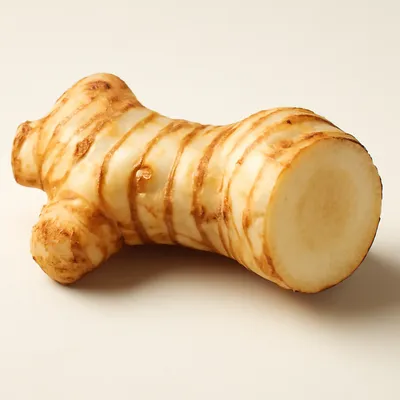
A winter "hot cut" variant simmers the meat with a higher proportion of warming spices (galangal, ginger, black pepper) and serves it slightly warm from the broth rather than cold. Modern vacuum-packaged commercial versions from Guangrao omit the aged broth and rely on synthetic spice extracts; locals regard these as a pale substitute for the Cui family original.
On the Palate
Where Guangrao Spiced Donkey Meat sits in the Chinese flavor cloud
Ingredients
Serves 8
How it's made
7 steps · 1 hour 5 min active + 10 hours 5 min waiting
- 115 min
Wash donkey meat under cold water; cut into large 400g chunks; rinse repeatedly until the water runs fully clear.
- 240 min
Line the pot bottom with split donkey bones; layer meat on top; add cold water to cover; bring to a vigorous boil, skim the foam thoroughly, cook 30 minutes, then discard the first broth entirely.
Watch outSkim the scum off hard as the first pot boils, then dump that whole first broth — that discarded liquid carries the blood and gaminess that would otherwise muddy the aged brine.
- 35 min
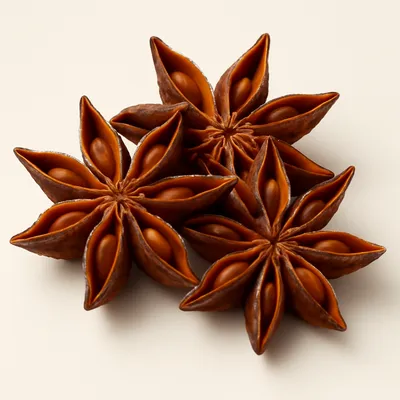
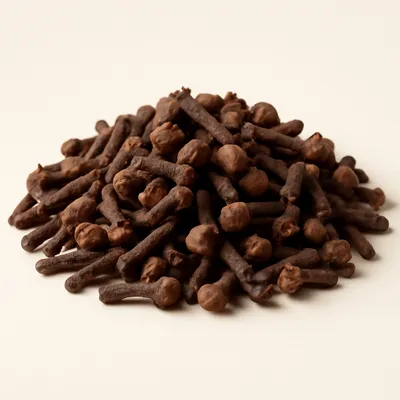
Make a spice sachet containing white angelica root, star anise, nutmeg, cloves, cinnamon, galangal, black pepper, and nine additional aromatics; place in the pot with the meat.
- 4180 min
Add fresh water and a generous ladle of aged broth (老汤) to cover; season with salt; bring to a vigorous boil and maintain vigorous bubbling for 3 full hours, skimming rendered fat as needed.
- 5300 min
Reduce to the lowest possible flame; place a clean heavy stone or weighted lid directly on the meat to press it fully submerged; braise undisturbed for 4–5 hours.
Watch outDrop to the barest flame and weight the meat down with a stone so it stays fully submerged — press it under and the seventeen-spice brine soaks clear through without the chunks falling apart.
- 6120 min
Remove from heat; cool the meat in the cooking broth for 2 hours until the broth begins to set at the surface — a sign the gelatin is concentrating.
Watch outLet the meat cool in its broth until the surface just begins to set to jelly — that skin forming means the gelatin has concentrated enough to slice paper-thin.
- 710 min
Lift the meat; cool completely at room temperature; slice thin across the grain into paper-thin pieces; serve cold with raw garlic paste and sesame flatbread.
Archive tool suggestions — not reviewed
These legacy suggestions have not been evidence-reviewed and are not presented as required tools.


